Canoe-In Hunting on Ontario Crown Land
The thought of a truly remote hunting adventure in Ontario, far from the road hunters and crowded bush lots, is a dream for many of us. But actually planning and executing a canoe-in hunt on Ontario's vast Crown Land can feel incredibly daunting, often leading hunters to stick to more accessible, and sometimes less rewarding, spots. This guide is here to walk you through everything you need to know to confidently plan, prepare for, and enjoy a successful canoe-in hunting trip, connecting you with the wild, unpressured corners of Ontario.
The Allure of Canoe-In Hunting on Ontario Crown Land
There’s something undeniably primal and incredibly rewarding about earning your hunt, and a canoe-in trip epitomizes that spirit. It’s not just about the harvest; it’s about the journey, the challenge, and the deep immersion in nature.
Why Go Remote? Escaping the Crowds
Let’s be honest, hunting accessible land in Ontario, especially during popular seasons like the deer gun opener, can sometimes feel more like a competition than a wilderness experience. You scout a perfect pinch point, hang your stand, and then opening morning arrives only to find three other trucks parked near your planned access, or worse, you hear shots from multiple directions before legal light. It’s frustrating, and it dilutes the very reason many of us seek the woods: solitude and a true connection to the wild.
The beauty of canoe-in hunting is that it immediately filters out a huge percentage of the hunting population. Most hunters aren’t willing to paddle for hours, navigate tricky portages, and commit to days or even weeks in the backcountry. This means the areas you can reach by canoe often hold game that sees significantly less pressure. Less pressure often translates to more natural animal behavior, bigger bucks that haven't been pushed out of the area, and a more peaceful hunting experience overall. You're not just getting away from other hunters; you're getting into areas where the animals are less wary, less nocturnal, and more likely to respond to calls or appear during daylight hours.
Understanding Ontario's Crown Land Access
Ontario is incredibly fortunate to have an immense amount of Crown Land – public land that is owned by the province and generally open for recreational use, including hunting. This isn’t like some jurisdictions where public land is a postage stamp here and there; we're talking about millions of acres, especially as you head north. This vastness is what makes remote canoe-in hunting not just possible, but incredibly diverse in its offerings.
However, accessing this land isn’t always as simple as pulling off the highway. While much of it is truly open access, specific rules apply, especially concerning camping, vehicle use, and sensitive ecological areas. Understanding these nuances is crucial for a smooth and legal trip. Often, the best canoe-in hunting opportunities lie deep within these remote tracts, accessible only by navigating chains of lakes and rivers, or by traversing several portages. It’s this multi-modal travel that truly unlocks the untouched wilderness, allowing you to access sections of the Public Hunting Land in Ontario that others simply drive past. These areas are truly some of the last bastions of wild Ontario, offering a hunting experience that harkens back to simpler times.
Planning Your Canoe-In Adventure
A successful canoe-in hunt is built on meticulous planning. You can't just throw a paddle in the truck and hope for the best. The more detailed your preparations, the safer and more enjoyable your remote experience will be.
Scouting Your Target Waterways and WMUs
This is where the real adventure begins long before you even leave home. The first step is deep dive into maps. Topographic maps are your best friend, revealing elevation changes, water depths, rapids, and potential portage routes. Satellite imagery, which can be found through platforms like Google Earth or dedicated hunting apps like GoHunt, is invaluable for identifying clearings, old logging cuts, beaver ponds, and potential game travel corridors along shorelines or between lakes. You're looking for choke points, food sources, and bedding areas that are connected by water.
Focus on specific Wildlife Management Units (WMUs) that are known for the species you’re targeting and have a good mix of water access and remote bush. Identify your entry and exit points, plan your paddling routes, and meticulously map out every single portage, noting its length and difficulty. Remember, a 500-meter portage with a heavy pack and a canoe is a whole different beast than a casual stroll. You’ll also want to study historical water levels and current conditions if possible, as these can drastically impact your journey. If you're a non-resident, be extra mindful of Rules for Non-Residents Hunting Ontario when picking your WMU. Leveraging tools for Scouting With Satellite Imagery in Ontario can provide an unparalleled advantage in finding these hidden gems. Familiarize yourself with how to precisely locate areas by learning Reading an Ontario WMU Map Before You Go.
Essential Gear for a Remote Trip
Your gear list for a canoe-in hunt needs to be robust, reliable, and tailored to both the journey and the hunt itself. This isn't a day trip to the local pond; you’re venturing into areas where failure of equipment can lead to serious trouble.
- Canoe & Paddles: A durable canoe is non-negotiable. An aluminum or sturdy royalex canoe is often preferred over fiberglass for its resilience against rocks and unforgiving shorelines. Consider the weight and capacity – can it hold all your gear, and potentially, game meat? Bring spare paddles, secured in the canoe, and ensure everyone has a properly fitted PFD (Personal Flotation Device).
- Navigation & Communication: GPS units are critical, but always have a compass and waterproof maps as backups. A satellite communication device (like a Garmin InReach or Spot) for emergencies is paramount where cell service is non-existent, which it almost certainly will be.
- Camping Gear: A robust, all-season tent, warm sleeping bags, sleeping pads, and a tarp for extra shelter are essential. Think about lightweight, compact cooking gear, a bear-resistant food barrel or bag system, and water filtration.
- Hunting Gear: Beyond your firearm or bow, think about optics (binoculars, spotting scope), calls, scent control, and field dressing tools. Remember to pack it all in dry bags or waterproof barrels to protect it from splashes, rain, and accidental capsizes.
- Safety & Emergency: A comprehensive first-aid kit, fire-starting supplies (multiple redundant methods), emergency shelter, repair kits for your canoe and gear, and plenty of cordage are absolute musts. Headlamps with spare batteries are also critical.
Permitting and Regulatory Considerations
Before you even dip a paddle, make sure all your paperwork is in order. Hunting in Ontario requires several key pieces of identification and licensing. You'll need an Ontario's Outdoors Card Explained and a valid hunting licence for the species you intend to pursue. These can typically be purchased through the Fish and Wildlife Licensing Service portal.
For non-residents, an additional Crown Land Camping Permit may be required if you plan to camp on Crown Land north of the French and Mattawa Rivers. This permit helps manage use in more remote areas. Always double-check the specific regulations for your chosen WMU, as season dates, bag limits, and specific rules (like those for controlled deer hunts or antlerless tags) can vary. Ensure your firearm or bow is legal for the species you're hunting and that you understand all transportation rules. A quick review of the Ontario Hunting Licences and What They Cost will ensure you budget accordingly for all required permits and tags. It's better to be over-prepared with knowledge than under-prepared when an MNR officer asks for your documents.
Strategies for a Successful Canoe-In Hunt
Once the planning is done and you're actually on the water, different strategies come into play to make your remote hunt successful. It's about combining your paddling prowess with keen hunting instincts.
Choosing Your Species: What Thrives in Remote Waterways?
Canoe-in hunting is particularly effective for certain game species that thrive in or around Ontario's vast network of lakes, rivers, and wetlands.
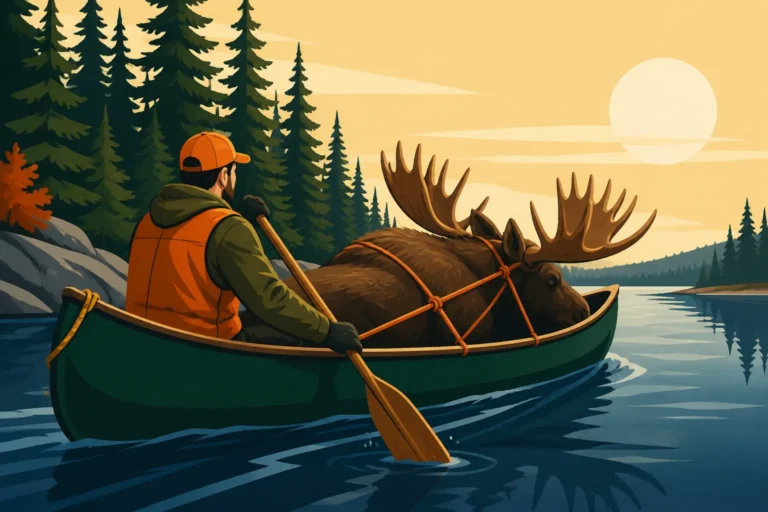
- Moose: This is arguably the quintessential canoe-in quarry. Moose are often found near water, browsing on aquatic vegetation and using shorelines for travel. Calling moose from a canoe, especially during the rut, can be incredibly effective, allowing you to cover vast distances quietly. Remote lakes and river systems offer unpressured moose habitat where you might encounter a bull that hasn't heard a grunt or rake in years. Our detailed guide on Moose in Ontario's Boreal Forest offers more insights into their habits and preferred habitats.
- Black Bear: Bear frequent remote areas, especially those with good berry crops and natural food sources. Setting up a remote bait site (where legal) can be done via canoe, or simply still-hunting remote shorelines and clearings where bears might be foraging can yield results. Accessing deep into bear country often means leaving the road, and a canoe is your best ticket. Learn more about their behavior in Black Bears Across Ontario's Bush Country.
- Waterfowl: Remote lakes, beaver ponds, and marshy river sections that see little human disturbance can offer incredible waterfowl hunting. You can paddle into untouched pockets where ducks and geese raft up without constant harassment.
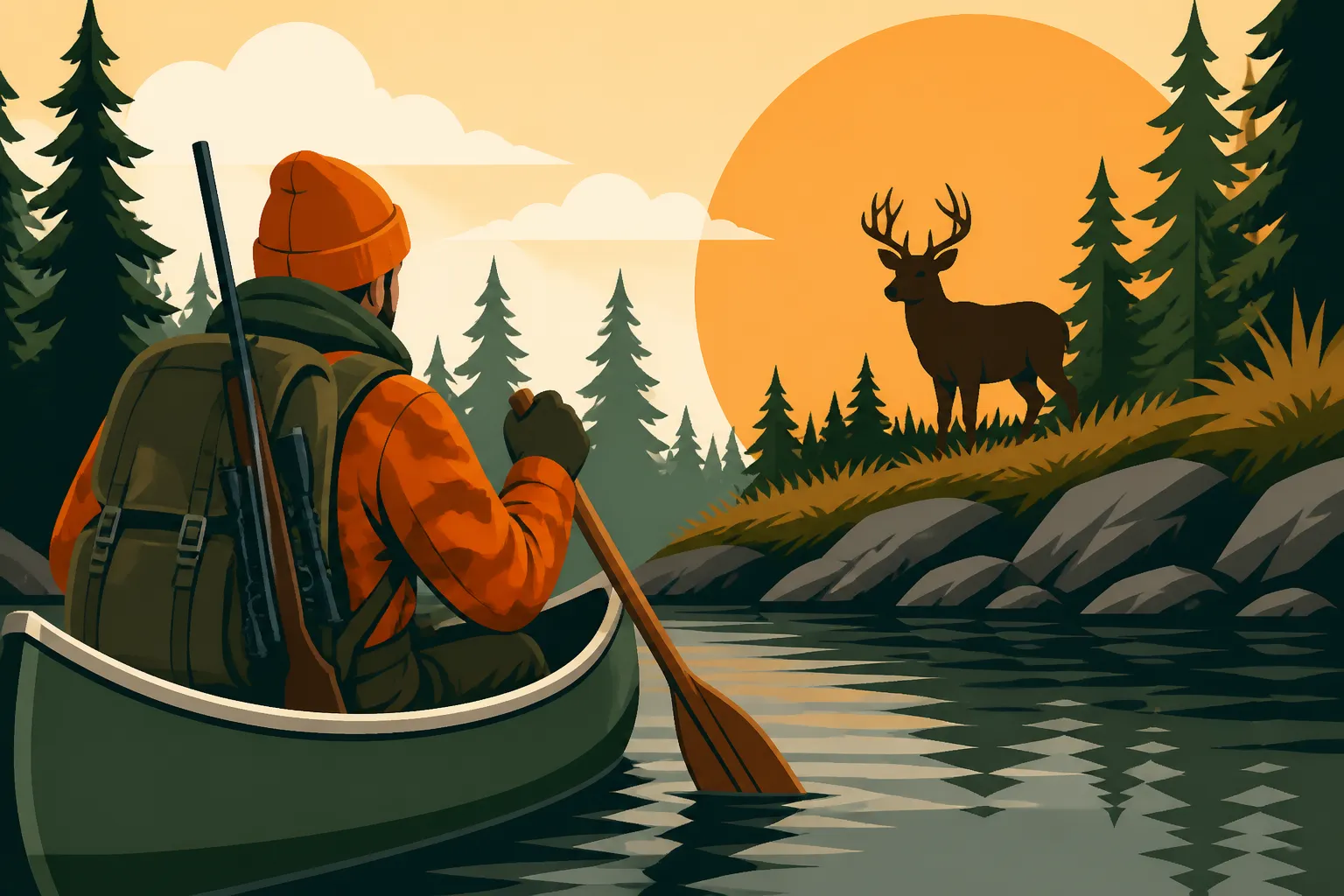
- Whitetail Deer: While less common than moose or bear, northern whitetails often use lake edges, river bottoms, and islands for travel and bedding, especially in areas with deep snow or where water provides a barrier to predators. A canoe allows you to access these overlooked pockets.
The key is to select a WMU and an area that aligns with the natural habitat of your target species. GoHunt can be particularly useful here, helping you overlay habitat maps with water features to pinpoint prime zones.
Setting Up Your Remote Camp
Your remote camp is your base of operations, and its location and setup are critical for comfort, safety, and hunting success.
Firstly, adhere to "Leave No Trace" principles. You want to leave the campsite as, or better than, you found it. Look for elevated, well-drained spots with some natural shelter from wind and rain. Proximity to fresh water is crucial, but don’t set up right on a water source to avoid contaminating it. Consider wind direction for cooking fires and for your hunting scent if you plan to hunt close to camp.
Bear safety is paramount. All food, toiletries, and anything with a scent must be stored securely away from camp. A bear barrel is ideal, or you can use a bear hang system. Cook away from your sleeping area and clean up immediately. Be mindful of game processing near camp; if you harvest an animal, clean it well away from your sleeping area to avoid attracting predators. Building a small, contained fire for warmth and cooking can be a welcome luxury, but always have a shovel and plenty of water nearby to ensure it's completely extinguished before you leave it unattended or break camp.
Hunting Tactics From the Water's Edge
Your canoe isn't just transport; it's a strategic tool for hunting in these remote environments.
- Still-Hunting Shorelines: Glide quietly along shorelines, using binoculars to scan for game. Moose will often feed along the edge of lakes and rivers, and bears might be spotted foraging for berries or fish. Be ready for a quick, stable shot if an opportunity arises. The quiet approach of a canoe gives you a huge advantage over a noisy ATV or foot travel through crunching leaves.
- Ambush Points: Identify pinch points where game trails meet the water, or natural crossings between islands or along narrow stretches of river. Set up an ambush point well in advance of daylight or dusk, tucking your canoe out of sight. Deer and moose regularly use these natural funnels.
- Calling from the Water: This is particularly effective for moose. You can move silently to different calling locations, set up near a point or a bay, and use cow calls or bull grunts. The sound travels incredibly well across water, potentially drawing in bulls from afar. This strategy is covered in more detail in Hunting Moose From a Boat or Canoe and Calling Moose in Ontario's Boreal Forest. Remember that the vastness of the wilderness means moose often respond less timidly than those in more pressured areas.
- Glassing Openings: Use your optics to scan distant shorelines, beaver meadows, and old clearings accessible from the water. Often, large animals will utilize these openings at dawn and dusk. The elevated perspective from a canoe or a shoreline vantage point can give you a better view than being deep in the thick bush.
Overcoming Challenges and Ensuring Safety
Remote canoe-in hunting offers incredible rewards, but it also comes with significant challenges. Being prepared for these hurdles is critical for a safe and successful trip.
Navigating the Bush and Water
Navigating chains of lakes and rivers, especially with portages, requires a different skillset than simply walking a trail. Weather can change rapidly in Ontario's north, turning calm waters into dangerous whitecaps in minutes. Always keep an eye on the sky and be willing to pull over and wait out rough weather. Know how to read water – identifying rapids, shoals, and safe passages.
Portaging, the act of carrying your canoe and gear overland between waterways, is perhaps the biggest physical challenge. These trails can be muddy, rocky, steep, and overgrown. Pack your gear into manageable loads, ensure your canoe is balanced for carrying, and take frequent breaks. A good harness or yoke for your canoe will save your shoulders. Always travel with a reliable GPS, a compass, and detailed waterproof maps. Mark your portage entry and exit points carefully. If you're using an app like GoHunt, ensure you have offline maps downloaded, as cell service will be nonexistent. Getting turned around in the bush, especially when carrying heavy gear, can quickly escalate into a serious situation.
Game Recovery and Meat Care in the Backcountry
This is often the most underestimated challenge of a remote hunt. Congratulations, you’ve harvested a moose! Now what? Getting a several-hundred-pound animal out of the remote bush and back to your canoe, then across portages, is an immense undertaking.
- Field Dressing and Quartering: Prompt and thorough field dressing is crucial to begin cooling the meat. For large animals like moose or bear, you'll need to quarter the animal on the spot. This means breaking it down into manageable sections. Carrying sturdy game bags is essential to protect the meat from flies, dirt, and debris. Learn how to perform Quartering a Moose Alone in the Bush efficiently.
- Cooling the Meat: In warmer early fall seasons, cooling is paramount to prevent spoilage. Hang quarters in the shade, allowing air to circulate. If temperatures are consistently warm, consider ways to cool the meat in cold water, but be mindful of cleanliness. This ties directly into Meat Care in Ontario's Warm Early Seasons.
- Transporting Meat: This is where the canoe earns its keep, or becomes a real challenge. You'll need to load quarters into your canoe, distributing weight evenly. For portages, you might need to make multiple trips, carrying meat separately from your other gear. This is where having a hunting partner or two makes a huge difference. Consider sturdy backpacking frames to ease the burden of carrying heavy quarters over rough terrain.
Emergency Preparedness
When you’re hours, or even days, away from the nearest road or settlement, you are truly on your own. Comprehensive emergency preparedness isn’t just good practice; it's a necessity.
- Satellite Communication: As mentioned, a satellite messenger or phone is critical for calling for help in a medical emergency or if you become lost. Test it before you leave.
- First-Aid: A well-stocked first-aid kit capable of handling severe injuries (deep cuts, broken bones) is non-negotiable. Knowing basic wilderness first aid is also crucial.
- Emergency Shelter & Fire: Always carry a lightweight emergency tarp or bivy and reliable fire-starting tools (waterproof matches, lighter, ferro rod). A fire can provide warmth, psychological comfort, and a signal.
- Signaling: A whistle, signal mirror, and bright flagging tape can help rescuers find you if you are lost or injured.
- Contingency Plans: Discuss with your hunting partners what to do if someone gets injured, if a canoe is damaged, or if you encounter unexpected delays. Have a detailed float plan left with someone reliable back home, including your exact route, planned campsites, and estimated return date.
Maximizing Your Experience and Minimizing Impact
Canoe-in hunting is more than just a means to an end; it’s an immersive wilderness experience. To truly appreciate it and ensure these opportunities remain for future generations, conscious effort is required.
The "Leave No Trace" Ethos
This philosophy is particularly vital in remote, pristine areas. The goal is to leave no physical evidence of your visit.
- Pack It In, Pack It Out: This means everything. All your garbage, food scraps, and even human waste (if using a wag bag system in sensitive areas) must be packed out with you. Don't bury garbage; animals will dig it up.
- Minimize Campfire Impacts: Use established fire rings where possible. If not, build small fires that leave minimal ash and completely extinguish them until cold to the touch. Don't use non-native wood or leave partially burned logs.
- Respect Wildlife: Observe animals from a distance. Do not disturb nesting birds or denning animals. Secure your food to prevent habituating wildlife, especially bears, to human presence.
- Travel and Camp on Durable Surfaces: Stick to existing trails and campsites. If none exist, choose rocky areas, dry grasses, or areas where your impact will be minimal. Avoid trampling vegetation. By following these principles, you help preserve the wild character of the land for future adventurers.
Enjoying the Solitude and Wildness
Beyond the immediate goal of harvesting an animal, canoe-in hunting offers an unparalleled opportunity for solitude and a profound connection with nature. There's a peace that comes from being truly disconnected from the everyday grind, where the only sounds are the dip of your paddle, the cry of a loon, or the rustle of leaves.
Take the time to appreciate the incredible landscapes you’re paddling through – the ancient rock formations of the Canadian Shield, the vibrant fall colours, the pristine waters. Capture these moments, not just with your camera, but with your senses. Observe the smaller details: the tracks along a muddy shore, the unique call of an unfamiliar bird, the way the light filters through the boreal forest at dawn. This deep immersion is the real trophy of a remote hunt, offering a reset for your soul that few other experiences can provide.
Continuous Learning and Future Trips
Every canoe-in trip, successful or not in terms of harvest, is a valuable learning experience. Take the time after each adventure to debrief. What worked well? What gear was essential, and what could have been left behind? Were your navigation skills adequate? How could your game recovery plan be improved?
Use this knowledge to refine your strategies and gear for future expeditions. Perhaps you'll explore a different chain of lakes, or target a different species. GoHunt or similar mapping services can help you identify new WMUs and waterways based on what you learned. The beauty of Ontario's vast Crown Land is that there's always another remote lake, another river system, and another untamed wilderness waiting to be explored. Keep pushing your boundaries, keep learning, and keep embracing the wild heart of Ontario.
| Canoe Type | Pros | Cons | Ideal Use Case |
|---|---|---|---|
| Aluminum | Highly durable, requires little maintenance, good for rough conditions. | Noisy, heavier, can get hot/cold, less maneuverable. | Bush bashing, rocky rivers, heavy loads, extreme durability required. |
| Royalex | Durable, quiet, good balance of weight/strength, good glide. | Can be expensive, less common now (production ceased). | All-around tripping, moderate portages, good balance of performance. |
| Fiberglass | Lightweight, quiet, excellent glide, very maneuverable. | Less durable, prone to damage from rocks, requires careful handling. | Long paddles, open water, minimal portaging, focus on speed/efficiency. |
| Tandem (17'+) | High capacity for gear/meat, stable, efficient with two paddlers. | Heavy for portaging, requires coordinated paddling, harder for solo. | Multi-day trips, partners, hauling significant game or gear. |
| Solo (12-14') | Lightweight, easy to portage, highly maneuverable for one person. | Limited capacity, less stable, only for one hunter. | Short trips, single hunter, tight waterways, numerous portages. |
Disclaimer
The information provided in this guide is for general informational purposes only and does not constitute legal advice. Hunting regulations and conditions can change rapidly. Always consult the most current Ontario Hunting Regulations Summary and local authorities before planning any hunting trip. Ensure you have all necessary licenses, permits, and landowner permissions. Hunting is an inherently risky activity, and proper safety precautions, training, and equipment are essential. The author and publisher assume no responsibility for any accidents, injuries, or legal infractions incurred as a result of following the information in this guide.