Group Size and Hunter to Guide Ratio
One of the most exciting parts of planning a guided hunt in Ontario is imagining yourself out in the bush, but then the practical questions start to hit you: how many people are going to be with me? Will I have the guide all to myself, or will I be sharing? These seemingly small details, like group size and hunter-to-guide ratio, can drastically change your entire hunting experience, influencing everything from the pace of the day to the number of shot opportunities you might get. This guide is here to demystify these ratios and help you understand what each option means for your next adventure.
Understanding Hunter-to-Guide Ratios
When you start looking at guided hunt packages in Ontario, you’ll often see terms like "1-on-1" or "2-on-1." These aren't just industry jargon; they describe a fundamental aspect of your hunting trip: how much dedicated attention you'll receive from your professional guide. It's a critical factor to consider, as it directly influences the flow of your hunt, the strategies employed, and ultimately, your overall enjoyment and success.
What "1-on-1" Really Means
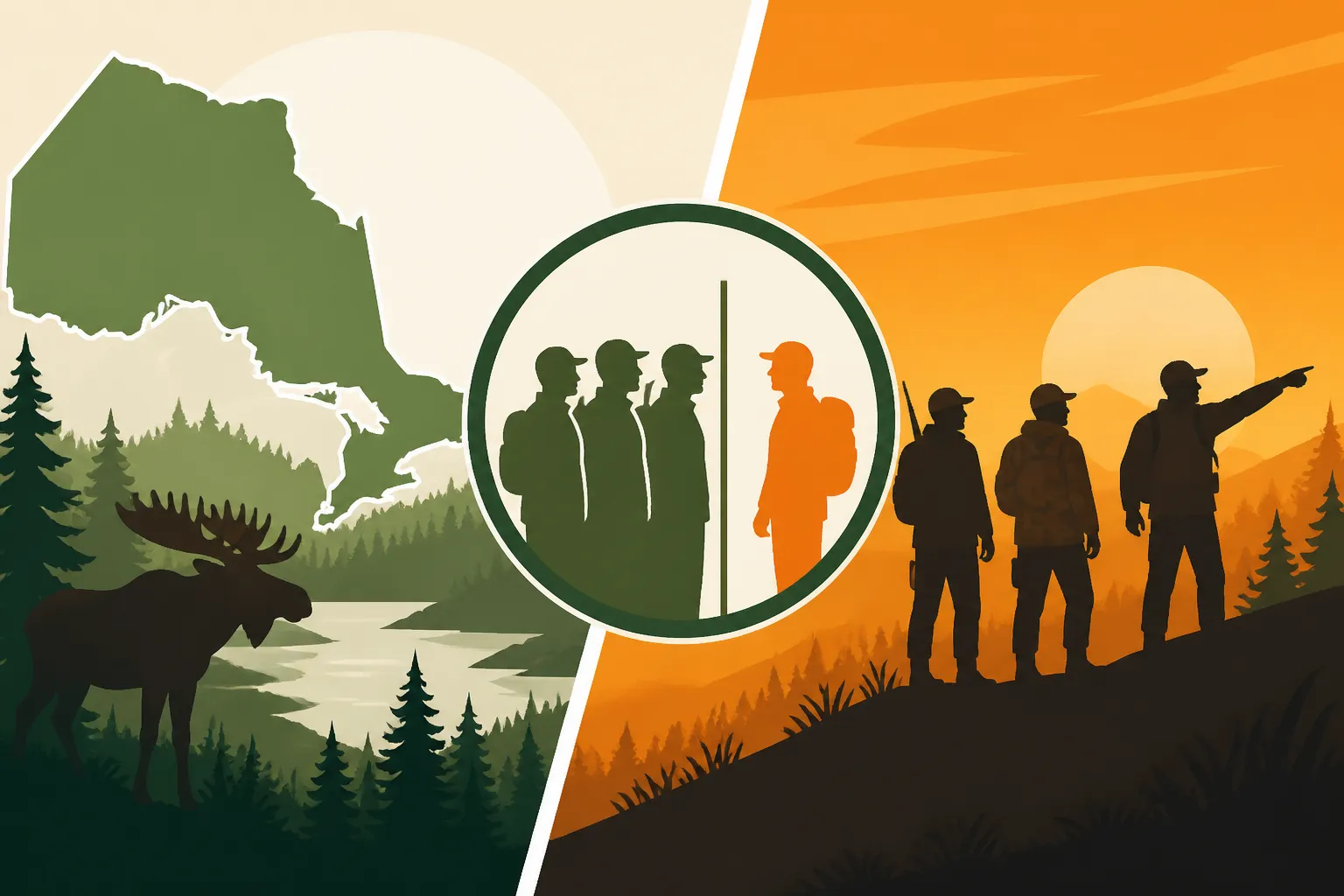
A 1-on-1 hunter-to-guide ratio means exactly what it sounds like: one hunter, one guide. This is often considered the pinnacle of a guided hunting experience, offering the most personalized and intensive approach. With a dedicated guide, every decision, every stalk, every call is focused entirely on your hunt.
Imagine you're deep in northern Ontario, tracking a massive bull moose. Your guide is reading every track, every broken branch, and every rub specifically for you. They can adjust their pace to match yours, communicate whispers and hand signals without concern for another hunter, and position you for the perfect shot based on your unique abilities and preferences. If you need a moment to catch your breath or review a map, the hunt pauses for you. This kind of individual attention can be invaluable, especially for nuanced hunts like spot-and-stalk deer in the hardwoods or calling a big bull in the boreal forest. The investment in a 1-on-1 hunt is typically higher, but many hunters find the exclusive focus and tailored experience well worth it. It’s also often ideal for a first-time big game hunter who might need more hands-on instruction and reassurance in the field.
The "2-on-1" Experience
The 2-on-1 ratio is arguably the most common setup for guided big game hunts in Ontario, especially for species like moose and bear. Here, two hunters share one guide. This arrangement offers a balance between personalized attention and a more accessible price point.
When you're hunting 2-on-1, teamwork becomes a significant part of the experience. For instance, if you're moose hunting, one hunter might be set up to call while the other watches a prime funnel, or you might both be positioned on opposite sides of a clear-cut, waiting for a bear to come to bait. The guide is managing both hunters, communicating strategies, and ensuring everyone has a fair chance. There are times when this works incredibly well – think of two friends sharing the excitement of a morning duck hunt or working together to field dress a deer. However, it also means compromising. If one hunter is slower or has different physical capabilities, the pace might need to be adjusted for both. Shot opportunities might also need to be managed, requiring the guide to decide who gets the first chance at an animal. It’s a great option for a pair of hunting buddies or a parent and child who enjoy sharing the adventure and don't mind the collaborative aspect of the hunt. You'll find many outfitters offer this as their standard package. How an Ontario Moose Hunt Party Works is a great resource if you're considering a moose hunt with a partner.
Larger Group Scenarios (3-on-1 or more)
While less common for individual big game pursuits like moose or bear, larger group scenarios, such as 3-on-1 or even more hunters per guide, are very typical and often preferred for certain types of hunts. Waterfowl hunting, small game excursions like grouse or rabbit, or even some deer drives often fall into this category.
Consider a goose hunt in an Ontario stubble field: a group of six hunters might have two guides managing the decoy spread, calling, and logistics. Everyone is sharing the experience, the camaraderie is high, and the guides are focused on ensuring the overall success and safety of the group. Similarly, for a ruffed grouse hunt, a guide might lead a group of three or four hunters and their dogs through prime cover, focusing on flushing birds and ensuring everyone gets shooting opportunities. The cost per hunter in these larger groups is generally much lower, making it an excellent option for a larger group of friends or family looking for a social hunting trip. The focus shifts from highly personalized attention to a collective experience, where the guide acts more as a coordinator and safety officer, maximizing the group's chances within the specific hunting style. This can be a fantastic way to enjoy the outdoors with multiple companions and build lasting memories together.
How Group Size Impacts Your Ontario Hunt
The number of hunters per guide isn't just a number on a brochure; it weaves its way into almost every aspect of your hunting trip in Ontario. From the financial commitment to the actual feeling of being in the bush, these ratios shape your experience in profound ways. Understanding these impacts upfront can save you from surprises and help you make a choice that truly aligns with your expectations.
The Economics of Guide Ratios
Let's be real: hunting can be an expensive passion, and guided hunts represent a significant investment. The hunter-to-guide ratio plays a crucial role in the overall cost. Generally, the more hunters sharing a single guide, the lower the individual cost per hunter. This is simply because the outfitter's expenses (guide's salary, fuel, vehicle use, camp costs) are spread across more clients.
A 1-on-1 hunt, while offering unparalleled attention, will always be at the higher end of the price spectrum. You're essentially paying for exclusive access to the guide's time, expertise, and resources. A 2-on-1 hunt provides a noticeable cost savings, making it a popular choice for many, as it still offers a good level of personal attention without the premium price tag of a solo experience. Larger group hunts for waterfowl or small game are typically the most economical per person. When considering your budget, it's vital to think about the value you place on personalized service versus cost savings. Remember to factor in all potential expenses beyond the base package, such as tags, licenses, and potential meat processing. You might want to check What an Ontario Guided Hunt Costs to get a better sense of the financial commitment before you begin narrowing down your options.
The Quality of the Hunting Experience
Beyond just the cost, the hunter-to-guide ratio directly influences the qualitative aspects of your hunt. A 1-on-1 scenario allows for maximum stealth and flexibility. You and your guide can move silently, respond instantly to fresh sign, and change strategies on a dime. The guide can spend more time teaching you about the local flora and fauna, explaining animal behaviour, or refining your tracking skills. This can be an incredibly rich, educational experience.
In a 2-on-1 setting, while still intimate, some compromises are inherent. Two hunters moving through the bush will inevitably make more noise than one. The guide needs to manage two sets of expectations and physical abilities, which might slow things down or require more planning. Communication in the field becomes more crucial, often involving silent signals or whispered instructions. Shot opportunities may need to be discussed and agreed upon between the hunters, which can add a layer of complexity or even stress if not handled well. For larger groups, the experience becomes more communal. The guide's role shifts from a personal coach to a team leader, orchestrating movements and ensuring everyone in the group has a safe and enjoyable time, even if individual interaction is less frequent. Each ratio offers a different flavour of hunting, and none is inherently "better" – it simply depends on what you seek from your time in the Ontario wilderness.
Logistics and Personal Preference
The practical logistics of a hunt are also heavily influenced by group size. Travel to and from hunting locations, seating in vehicles or boats, and even arrangements within the camp are all affected. In a 1-on-1 situation, travel is often more direct and flexible. If you’re hunting moose from a boat or canoe, your guide can focus solely on your comfort and safety.
In a 2-on-1, sharing means being considerate of your hunting partner. Are they an early riser? Do they prefer different meals? These aren't minor details when you're spending days together in close quarters. For example, if you're staying in a housekeeping camp, sharing chores and responsibilities becomes part of the deal. Larger groups, while offering cost savings, require even more coordination. Dinner times, departure schedules, and even who rides in which vehicle need to be ironed out. Ultimately, your personal preference for companionship is a huge factor. Are you someone who enjoys solitude and quiet reflection in the woods? A 1-on-1 might be ideal. Do you thrive on shared experiences, conversation, and mutual support? A 2-on-1 or larger group could be perfect. Some hunters use platforms like BookYourHunt or GoHunt to filter for outfitters that specifically cater to smaller, more intimate groups, allowing them to better match their personal hunting style and social preferences with the available options. Considering whether you're an introvert or an extrovert might sound silly for a hunt, but it truly impacts your satisfaction.
Choosing the Right Ratio for Your Ontario Adventure
Deciding on the perfect hunter-to-guide ratio isn't about finding a universal "best" option; it's about finding what's best for you and your specific hunting goals. Just like picking the right gear, it requires a bit of self-reflection and careful research into what Ontario outfitters truly offer. Get clear on your expectations, and you'll be much happier with the outcome.
Defining Your Hunting Goals
Before you even start browsing outfitter websites, take a moment to define what you want out of this hunting trip. Are you a seasoned hunter chasing a specific trophy animal, perhaps an elusive Ontario whitetail or a massive bull moose, where every advantage counts? Or are you a newer hunter looking for a rich learning experience, hands-on instruction, and perhaps the guidance needed to fill your first big game tag? Maybe you're looking for a social getaway with friends or family, where the camaraderie and shared experience are just as important as the harvest itself.
For instance, if you're a first-time hunter, or perhaps someone bringing a youth hunter, a 1-on-1 or even a 2-on-1 with a patient guide can make a world of difference. The guide can focus on teaching proper technique, shot placement, and ethical hunting practices. Guided Hunts for a First-Time Hunter are incredibly valuable for setting good habits. If it's a social trip, a larger group might be fantastic, as long as you're comfortable with the potential trade-offs in individual attention. Your goals will be the compass that points you towards the most suitable ratio. Don't be afraid to be honest with yourself about what you truly value on a hunt.
Researching Outfitter Offerings
Once you have a clearer picture of your own goals, it's time to dive into the research. Most reputable Ontario outfitters will clearly state their standard hunter-to-guide ratios in their package descriptions. However, it's absolutely crucial to not just read the headlines but to dig into the details. What does that 2-on-1 actually entail? Does it mean two hunters are always together, or will there be times when one hunter sits a stand while the other stalks with the guide?
Don't hesitate to ask outfitters direct questions during your initial inquiries. Ask about a typical day's schedule for your desired ratio, what happens if one hunter in a 2-on-1 scenario fills their tag early, or how they manage shot opportunities. Platforms like BookYourHunt and GoHunt can be excellent starting points for finding outfitters and reading reviews, but always follow up with direct communication. Pay attention to how quickly and thoroughly outfitters respond, as this can give you a good indication of their professionalism and customer service. Always confirm what specific services are included for each hunter at that ratio. The more detailed your questions, the fewer surprises you'll encounter down the road. Questions to Ask Before Booking is a very helpful post to guide you through this process.
Planning for Flexibility and Contingencies
Life, and hunting, rarely go exactly as planned. Weather can change rapidly in Ontario, animals can be elusive, and sometimes, even within a group, individual situations arise. It’s wise to discuss with your outfitter how they handle contingencies related to your chosen guide ratio.
For example, what if you've booked a 2-on-1 hunt with a buddy, and one of you suddenly falls ill or has an emergency and can't make the trip? Will the outfitter still accommodate the single hunter at the same price, or will they need to switch you to a 1-on-1 rate? Or, if a hunter in a 2-on-1 group fills their tag on the first day, what does the remaining hunter's experience look like for the rest of the trip? Will they then receive 1-on-1 attention, or will the guide continue to scout for the group and focus on recovery tasks? Having these conversations upfront can prevent misunderstandings and frustrations later. While no outfitter can control every variable, a good one will have clear policies and be transparent about their procedures. Understand what happens if a trip is unexpectedly cut short or plans change; the post on Getting a Refund When a Guide Cancels offers great advice on this.
Real-World Scenarios and Practical Advice
Let's get down to some practical scenarios. Thinking through how different guide ratios play out in real life can help solidify your decision. Each setup offers unique advantages and challenges, and what works beautifully for one hunter might be completely unsuitable for another.
Solo Hunter Considerations
For the solitary hunter, the kind who cherishes quiet reflection and deep immersion in nature, a 1-on-1 guided hunt is often the only way to go. You want to focus purely on the hunt, the animal, and your connection with the wilderness, without the distractions or compromises that come with sharing a guide.
While the cost is typically higher, the benefits are clear: the guide's undivided attention, the ability to tailor the pace precisely to your physical condition and hunting style, and the flexibility to pursue specific opportunities as they arise. Imagine a full week dedicated to pursuing a whitetail buck in Ontario's vast bush country, with your guide interpreting every sign, from subtle rubs to fresh tracks, without having to consult another hunter. The focus is entirely on your success and your learning. This is particularly valuable for experienced hunters seeking a challenging, bespoke experience, or for those who simply prefer a more personal and intense outdoor adventure.
Hunting with a Partner or Spouse
Hunting with a partner or spouse is a fantastic way to create shared memories, and the 2-on-1 ratio often strikes the perfect balance for this. It's more affordable than two separate 1-on-1 hunts, and it allows you to experience the highs and lows of the hunt together, whether it’s sitting a remote bear bait site or calling in a bull moose.
However, for a 2-on-1 to be truly successful, it's vital that both hunters have compatible hunting styles, similar physical abilities, and, most importantly, clear communication. You and your partner should discuss beforehand how you'll handle shot opportunities, who takes the lead on a stalk, or if one of you needs more breaks. A good guide will facilitate this, but having these conversations yourselves first can prevent friction in the field. This setup is perfect for couples or close friends who genuinely enjoy each other's company and are willing to collaborate for the shared experience. Think of a father and child trip, where the guide can teach both, allowing the parent to also focus on the child's experience. Booking a Father and Child Hunt can be incredibly rewarding.
Larger Hunting Parties
If you're planning a trip with a group of friends, multiple family members, or a corporate outing, larger group hunts (3-on-1, 4-on-1, or even more, with multiple guides) are usually the most practical and enjoyable. These scenarios are particularly well-suited for hunts like waterfowl, where a spread of decoys and multiple shooters are often deployed, or for organized deer drives where several hunters work together to move game.
The emphasis here shifts from individual pursuit to a collective endeavour. The fun often lies in the camaraderie, the shared stories back at camp, and celebrating group success. While each individual hunter might receive less direct, one-on-one time with a guide, the overall experience is designed for social interaction and teamwork. The guides become more like conductors, orchestrating the movements and strategies for the entire group, ensuring safety and efficiency. Clear communication channels, often with one or two designated group leaders who liaise with the outfitter, become essential for a smooth operation. This setup offers a unique blend of adventure and social connection, perfect for those who believe hunting is best enjoyed with good company. The energy of a group of hunters can be exhilarating, especially when Deer Drives With Three or Four Hunters are involved.
| Guide Ratio | Key Characteristics | Pros | Cons | Best Suited For |
|---|---|---|---|---|
| 1-on-1 | One hunter, one dedicated guide | Ultimate personalization, maximum flexibility, intensive learning, tailored pace, exclusive focus. | Highest cost, can be less social, all pressure falls on one hunter. | First-time big game hunters, trophy seekers, hunters wanting deep education, solo adventurers. |
| 2-on-1 | Two hunters, one shared guide | More affordable than 1-on-1, shared experience/camaraderie, good balance of attention. | Requires compromise/cooperation, guide's attention is split, potentially slower pace. | Hunting buddies, couples, parent/child, those balancing cost and personalized service. |
| 3+-on-1 | Three or more hunters, one or more guides | Most economical per hunter, highly social, group camaraderie, effective for specific hunt types. | Least individual attention, more logistical complexity, compromises for the group, less flexibility. | Waterfowl hunting, small game excursions, deer drives, large friend/family groups, corporate trips. |
Disclaimer
This article is for general informational purposes only and does not constitute professional advice. Laws, prices and regulations vary by location and change over time. Consult a qualified professional for guidance on your specific situation.