Hunting a Hardwood Ridge in Shield Country
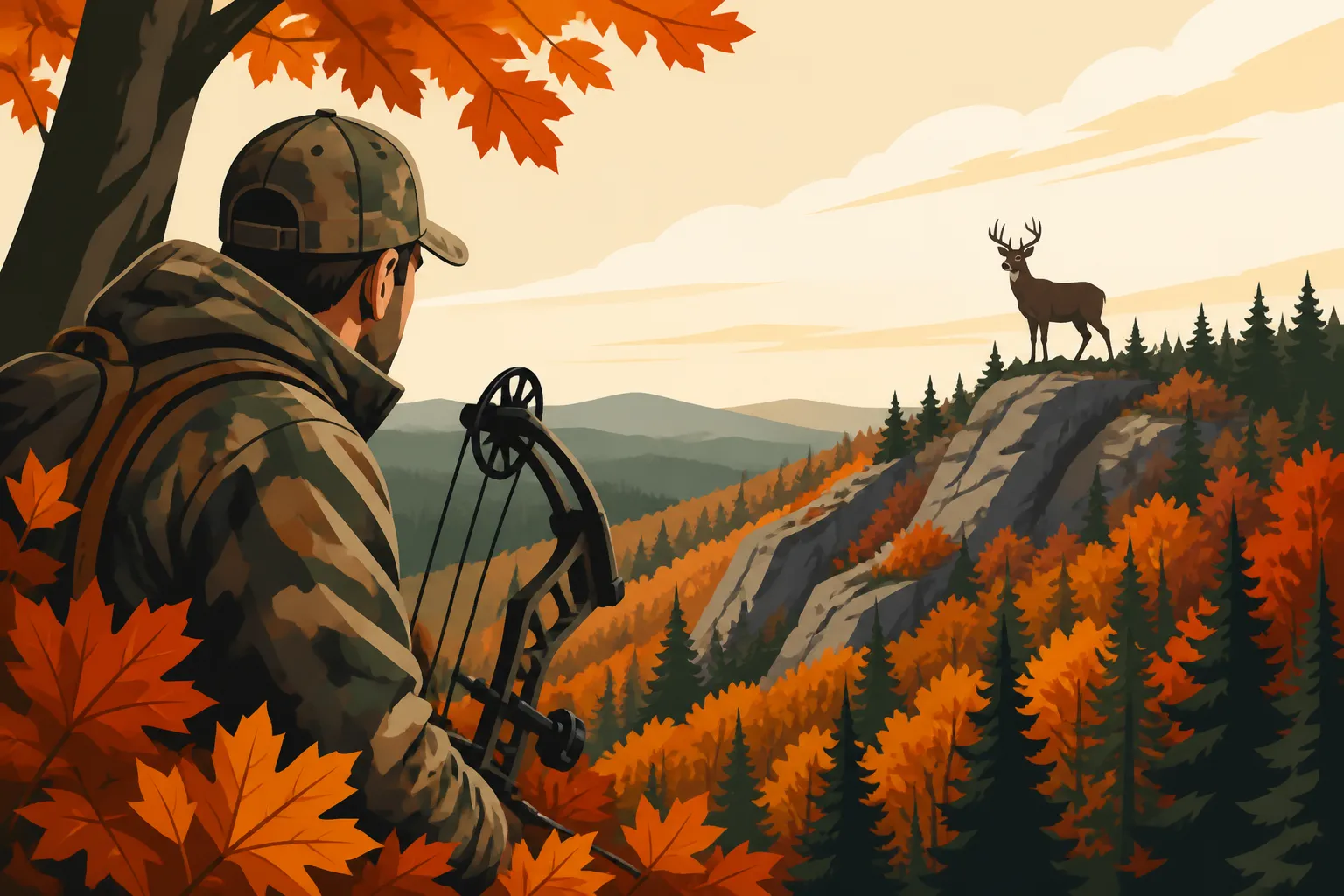
Hunting a hardwood ridge in Ontario's vast Shield Country can feel like trying to find a needle in a haystack, especially if you're used to more manicured landscapes. The sheer ruggedness, dense bush, and often subtle deer sign can leave even seasoned hunters scratching their heads. This guide will help you decipher the secrets of these ancient hills, teaching you how to locate, scout, and effectively hunt hardwood ridges for whitetails in this unique and challenging part of the province.
Understanding Ontario's Shield Country Hardwoods
The Canadian Shield, with its granite bedrock, countless lakes, and dense forests, is a formidable landscape. Yet, within this ruggedness, pockets of hardwood forests, often found atop ridges and hills, become magnets for whitetail deer. These aren't the sprawling, uniform hardwood tracts of some other regions; instead, they are often broken, interspersed with pine, spruce, cedar swamps, and rocky outcrops. Understanding this mixed terrain is the first step to success.
The Lay of the Land: Decoding the Rugged Topography
Imagine you're walking through a typical section of the Shield. You'll encounter granite outcroppings, maybe a swampy lowland, and then suddenly, the ground rises. These elevated areas, often covered in mature hardwoods like oak, maple, and sometimes beech, are critical deer habitat. These ridges offer strategic advantages to deer: elevation for spotting predators, dryer bedding areas away from wet lowlands, and crucial food sources. The terrain isn't flat; it's a series of undulations, small valleys, and steep climbs. What might look like a minor bump on a map could be a significant climb on foot. Deer, however, know these contours intimately, using saddles and benches as natural travel corridors, moving between bedding and feeding areas with efficiency. You'll often find these hardwood ridges bordering lakes, rivers, or transitioning into coniferous stands, creating valuable edge habitats.
Habitat & Food Sources: Why Deer Love These Hills
The draw of hardwood ridges for whitetails in the Shield largely comes down to food and shelter. Unlike the agricultural fields of southern Ontario, where deer might feed on corn and soybeans, in the Shield, their diet is more varied and dependent on the forest itself. Acorns from red and white oak trees are a high-energy powerhouse, especially in the fall, making oak ridges absolute hot spots. Beech nuts, though less common, are also highly prized. Beyond hard mast, deer will browse on maple, aspen, and various shrubs found among the hardwoods. The open understory often found in mature hardwood stands also allows for easier movement and provides natural clearings for sunlight to reach the forest floor, encouraging more browse. When these food sources are abundant, deer will concentrate on these ridges, creating a temporary haven. This is particularly true in the pre-rut and rut, when bucks are actively seeking does and energy reserves are crucial. You'll often find deer sign like rubs and scrapes concentrated in these areas.
Scouting Hardwood Ridges for Prime Hunting Spots
You can't just wander into the bush and expect to stumble upon the perfect ridge. Effective scouting, both digital and on-the-ground, is absolutely essential. The Shield doesn't give up its secrets easily, but with careful observation, you can uncover patterns and hot spots.
Pre-Season Digital Scouting: Your Eyes in the Sky
Before you even step foot in the woods, the power of modern mapping tools can save you countless hours. Platforms like onX Hunt and GoHunt are invaluable for identifying promising hardwood ridges. Start by looking for changes in elevation on topographic maps. Ridges will appear as elongated contours. Pay close attention to saddles (low points along a ridge) and funnels (narrow strips of cover or terrain that naturally constrict deer movement). These are natural travel corridors for deer. Use the satellite imagery to identify areas of deciduous trees (which will appear lighter green and lose leaves in the fall imagery) distinct from the darker, evergreen conifers. Look for areas where these hardwoods intersect with swamps, clearcuts, or water bodies – these edges are often high-traffic zones. You can mark potential bedding areas on south-facing slopes, which catch more sun, and feeding areas where you expect mast crops. Overlays showing Ontario's Wildlife Management Units are also critical to ensure you're scouting within legal hunting boundaries.
| Feature | Digital Scouting Clues | Ground Scouting Clues | Importance for Hunting |
|---|---|---|---|
| Ridges | Elevated contours, lighter green on satellite | High ground, good visibility, dry | Bedding, travel, vantage |
| Saddles | Low points on ridge lines, narrow pinch points | Concentrated tracks, rubs, scrapes | Major deer crossings |
| Funnels | Narrow strips of cover, terrain bottlenecks | Well-worn trails, fresh sign, natural travel routes | Ambush points |
| Oak Stands | Patches of lighter green, often near rocky areas | Acorns on ground, squirrel activity, heavy deer sign | Primary food source |
| Edges | Transitions between forest types/water | Heavy trails, browsing, transition zones | High traffic areas |
Boots-on-the-Ground Reconnaissance: Reading the Forest Floor
Once you've identified potential spots digitally, it's time to hit the ground. This is where you confirm your digital findings and uncover the subtle details that maps can't show. Walk the contours of the ridges, paying close attention to benches, which are small flat areas on a hillside that deer love to use as travel routes or bedding sites. Look for fresh deer sign: tracks, droppings, rubs on saplings, and scrapes. Fresh rubs indicate recent buck activity, while a line of rubs can show a travel corridor. Scrapes are often found under low-hanging branches, indicating a buck's communication hub. Pay particular attention to the downwind side of ridges for bedding areas, where deer can smell danger approaching from below. Also, scout any old logging roads or trails that crisscross the ridge; these provide easy travel for both you and the deer. Understanding Reading Whitetail Sign in Ontario Hardwoods is crucial here; distinguish between old and fresh sign. If you're scouting in the early fall, look for fallen acorns or beech nuts – a heavy mast crop means deer will be focused on that ridge.
Tactics for Hunting Hardwood Ridges in the Shield
Hunting these ridges effectively requires a blend of patience, strategic thinking, and adapting to the deer's patterns in this unique environment. It's not about covering miles quickly, but about moving deliberately and setting up smart.
Still-Hunting and Stand Placement: Patience is Key
Still-hunting is perhaps one of the most effective methods on hardwood ridges in the Shield. This involves moving incredibly slowly, stopping frequently to observe, listen, and glass the terrain ahead. Take one or two steps, then pause for several minutes, scanning every tree, shadow, and movement. The quiet leaf litter of the hardwoods in the fall can be noisy, so wearing soft, quiet clothing is paramount. Pay close attention to wind direction; always try to hunt into the wind or with a crosswind that carries your scent away from where you expect deer. When it comes to stand placement, focus on those saddles, funnels, and pinch points you identified during scouting. A stand overlooking a saddle between two ridges can be incredibly productive, as deer often use these as highways to cross between valleys or bedding and feeding areas. Placing a stand on a bench, especially if there are fresh rubs or scrapes, can also intercept deer moving along the contours. Remember to consider sun angle and visibility from your stand. Hanging a Stand on an Ontario Bush Edge principles still apply even on a ridge.
Calling Strategies: Adapting to the Landscape
Calling can be a powerful tool on hardwood ridges, especially during the rut. However, the thick, undulating terrain of the Shield can affect how sound travels. Grunt calls can be very effective at drawing in curious bucks, particularly when they are actively seeking does. A series of short, soft grunts can mimic a buck trailing a doe. During the peak of the rut, rattling antlers can simulate a fight between two bucks and sometimes draw in an aggressive monarch looking to assert dominance. The key, though, is to understand Rattling Volume in Thick Bush. Unlike open country where you might rattle loudly to carry sound a long distance, in the Shield, you often need to be more subtle, particularly if you suspect deer are close. Soft, intermittent rattling can sound more natural and less alarming. After rattling, stay absolutely still and scan intensely, as bucks can approach silently and quickly. Combine calls with a doe bleat to simulate a breeding pair, which can be irresistible to a cruising buck.
Seasonal Considerations for Ridge Hunting
The best time to hunt hardwood ridges in the Shield often aligns with specific seasonal deer behaviours and the availability of food.
Early Fall: Acorn and Beech Nut Feast
As the leaves begin to turn and the first hard frosts arrive, usually late September into October, deer will be heavily focused on any available mast crops. If you've located oak or beech ridges with a good nut crop, this is prime time. Deer will spend significant time feeding, often moving from bedding areas in dense cover to these food sources. Hunting during legal Ontario Deer Season Dates by WMU in these specific areas can be very productive. Be mindful that early fall can still be warm, so proper Meat Care in Ontario's Warm Early Seasons is important after a successful harvest.
The Rut: Bucks on the Move
Early to mid-November, as the rut kicks into high gear, hardwood ridges become even more critical. Bucks are less focused on food and more on finding does. They will travel extensively along these ridges, using saddles and benches as primary travel routes, checking scrapes and rubs, and scent-checking for receptive does. This is a fantastic time for still-hunting or sitting in a stand on a well-used travel corridor. Hunting the Rut in Early to Mid November on these ridges is a classic strategy. The cooler temperatures also make hunting more comfortable and game recovery easier.
Late Season: Wintering Strategies
As winter approaches and snow begins to accumulate, deer patterns on hardwood ridges can change. While some ridges might still offer browse or remaining mast, deer will increasingly seek thermal cover, often moving towards dense conifer stands or cedar swamps to escape the cold and deep snow. However, ridges can still serve as travel corridors to and from these wintering areas. Focus on transitional zones where hardwoods meet thick evergreens. Hunting Ontario Late When Snow Piles Up means understanding these shifts in deer behaviour.
Essential Gear for Hardwood Ridge Hunting
Hunting the Shield is not like hunting a manicured farm field. The terrain is demanding, the weather can be unpredictable, and getting lost is a real possibility. Your gear needs to be up to the challenge.
Footwear and Clothing: Built for the Bush
Your feet will take a beating on these rocky, uneven ridges. Invest in high-quality, waterproof, ankle-supporting boots with excellent traction. Think about what you'd wear for a rigorous hike. Quiet clothing is non-negotiable, especially for still-hunting. Avoid noisy fabrics that rustle with every step. Layering is crucial for comfort, as temperatures can fluctuate wildly, even during a single day. A good base layer to wick moisture, a warm insulating layer (fleece or down), and a waterproof/windproof outer shell will prepare you for anything the Ontario bush throws at you. Blaze orange requirements for How Much Blaze Orange Ontario Requires are also a must for safety during gun seasons.
Navigation and Safety: Don't Get Turned Around
It's easy to get disoriented in the vast, seemingly endless bush of the Shield. Always carry multiple navigation tools. A reliable GPS unit or a smartphone with detailed mapping apps like onX Hunt (with offline maps downloaded) is essential. However, always have a backup: a traditional compass and a physical map of your Scouting a Wildlife Management Unit area. Know how to use them! A headlamp or flashlight, a fire-starting kit, a basic first-aid kit, and enough water and high-energy snacks for more than just a day hunt should always be in your pack. Consider carrying a satellite messenger or a fully charged cell phone (though service can be spotty). Understanding What to Do If You Get Turned Around is not just smart; it's a necessity for hunting in remote areas. Finally, ensure you are familiar with Legal Rifle Calibres for Big Game if you are hunting with a firearm, and that your equipment is sighted in and capable of accurate shots in varied terrain.
Disclaimer
This article is for general informational purposes only and does not constitute professional advice. Laws, prices and regulations vary by location and change over time. Consult a qualified professional for guidance on your specific situation.