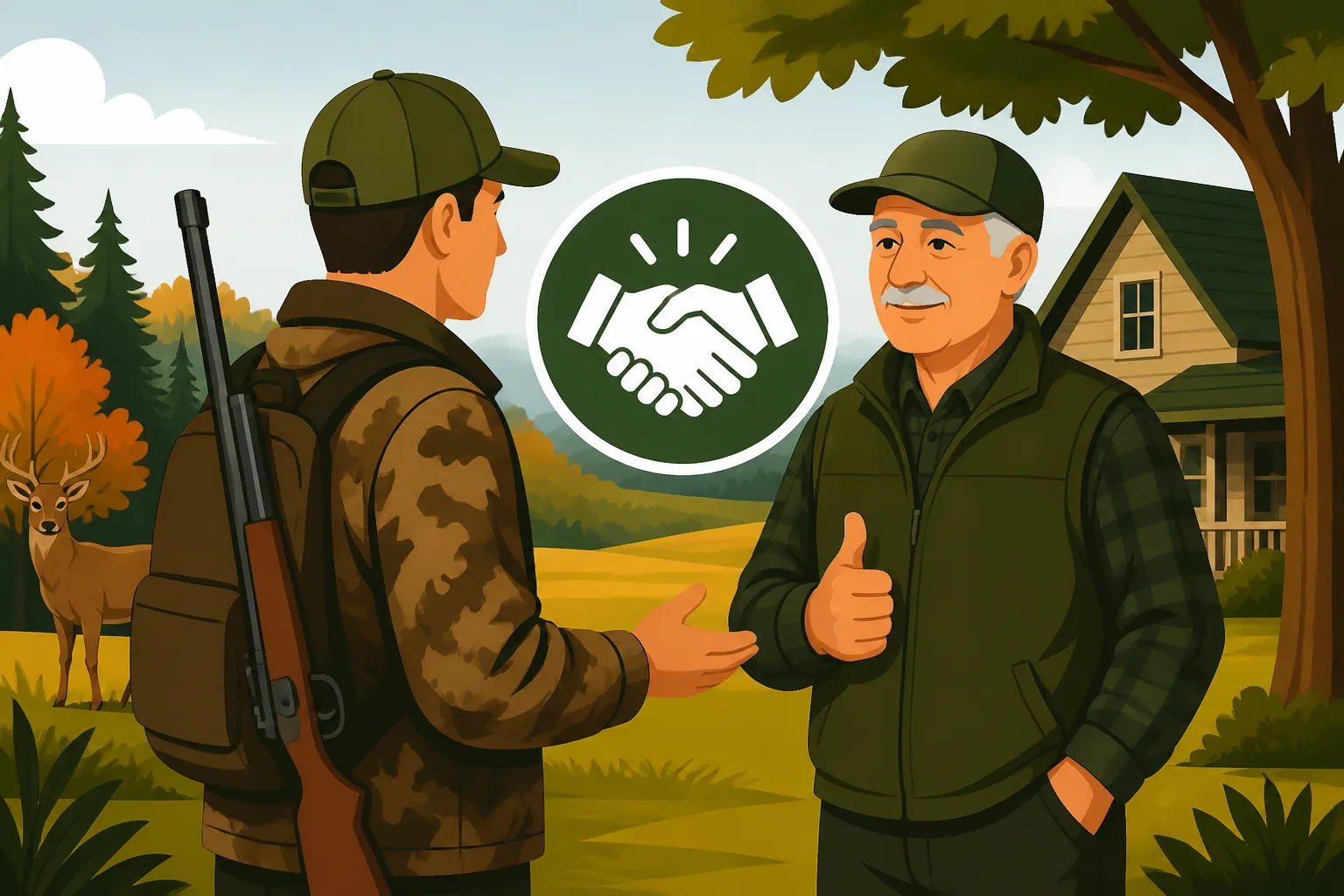
Asking an Ontario Landowner for Permission
Finding good hunting ground in Ontario can feel like an uphill battle, especially when you're looking beyond the vast stretches of Crown Land. Many of us know the frustration of driving past prime habitat, seeing deer sign everywhere, only to find "No Trespassing" signs plastered on every tree. This guide is all about giving you the tools, confidence, and strategy to respectfully approach private landowners and, hopefully, unlock new hunting opportunities.
Understanding the Landscape of Private Land Hunting in Ontario
Hunting private land in Ontario isn't just a matter of showing up; it's about understanding the unique dynamics at play. Unlike public lands where access is generally permitted (with some exceptions), private land requires explicit permission. This distinction is crucial, and respecting it is the first step towards success.
Why Private Land is So Appealing
Let's be honest, private land often holds some of the best hunting opportunities, especially for species like whitetail deer and wild turkey. You often find a blend of agriculture, woodlots, and natural corridors that provide abundant food, cover, and less hunting pressure than popular Crown Land areas. Think about those rich agricultural fields in Southern Ontario, providing endless food sources, or those secluded woodlots acting as perfect bedding areas. Hunting Deer in Southern Ontario Farmland is a prime example of where private land shines. Animals on private land, particularly those less pressured, can be more predictable, allowing for more consistent scouting and hunting strategies. Furthermore, gaining exclusive access means you don't have to worry about other hunters interfering with your setup or spooking your game. It offers a more intimate and often more productive hunting experience, free from the crowds that can sometimes flock to public areas during peak seasons.
The Realities of Access and Competition
While the allure of private land is strong, the reality is that gaining access can be challenging. Many landowners are wary of granting permission due to past negative experiences with irresponsible hunters – gates left open, litter, damage to crops, or even unsafe shooting practices. There's also the simple fact that prime properties often already have hunters, whether they're family, friends, or long-term leaseholders. You might be competing with neighbours, local hunt clubs, or even outfitters who have established relationships. This means your approach needs to be respectful, patient, and differentiate you positively. It’s not just about asking for a spot; it’s about presenting yourself as a responsible, trustworthy individual who will be an asset, not a liability, to their property. Understanding that you might hear "no" more often than "yes" is part of the process, but don't let it deter you from trying.
Legalities to Keep in Mind
Before you even think about knocking on a door, you need to understand Ontario's trespass laws. Simply put, hunting on private property without permission is illegal and can lead to fines, loss of hunting privileges, and a significant tarnishing of a hunter's reputation. It's not just about formal "No Trespassing" signs; permission is required regardless of signage. Always assume land is private unless you have definitive proof it's public. Familiarize yourself with Ontario Trespass Law for Hunters. Landowners have the right to deny entry and can call authorities if someone is trespassing. Knowing your rights and, more importantly, a landowner's rights, will guide your interactions. It also helps to be aware of Ontario Posted Land and Signage Rules so you understand what landowners may have already done to mark their property. The onus is always on the hunter to know where they are and to have explicit permission for private land.
The Art of the Ask: Preparing for Your Conversation
Approaching a landowner isn't something you should do on a whim. It requires preparation, respect, and a clear understanding of what you're asking for. Think of it as a job interview where you're trying to prove you're the best candidate for the privilege of access.
Doing Your Homework: Researching the Property
Before you even step foot near a farmer's lane, do your scouting. This isn't just about finding deer tracks; it's about understanding the property itself and who owns it. Utilize online mapping tools like onX Hunt or even municipal property tax maps to identify property boundaries and owner information. This allows you to confirm you're approaching the correct person and to understand the lay of the land. Is it a mixed farm with cash crops and woodlots? Is it primarily cattle pasture? Knowing this helps you tailor your request. For example, if you see a beautiful Hunting a Fencerow Between Two Fields that looks like a deer highway, you can specifically mention that feature. Pay attention to crops – you wouldn't want to hunt a field actively being worked. Scouting With Satellite Imagery in Ontario can provide invaluable insights into field types, woodlot compositions, and potential travel corridors, helping you pinpoint high-potential areas and demonstrate your knowledge. Knowing the landowner's name before you knock shows respect and initiative.
Crafting Your Approach: What to Say and How to Look
First impressions are everything. Dress neatly and respectfully – no camo or muddy boots when you're making your initial contact, unless you're literally stopping by while working on your own farm. Think casual but clean attire, something you'd wear to meet a new neighbour. When you initiate conversation, be polite and friendly. Start by introducing yourself, mentioning where you're from, and why you're there. Don't immediately jump into asking for permission to hunt. Perhaps start by complimenting their land or asking a general question about the area. Maybe you've noticed a nice Hunting an Apple Orchard Edge and can comment on the good deer sign. Explain that you're a responsible hunter looking for a place to pursue your passion ethically. Have a clear, concise "elevator pitch" ready. What type of hunting are you interested in (e.g., deer, turkey, small game)? When would you like to hunt (e.g., archery season, late season, etc.)? Be prepared to share references if they ask, and even offer a copy of your Outdoors Card and hunting licence.
Building Trust: What Landowners Are Looking For
Landowners value respect, responsibility, and reliability above all else. They want to know you're not going to be a nuisance or a liability.
Consider these points that help build trust:
- Respect for Property: Emphasize that you will treat their land as your own. This means no littering, closing gates, avoiding crops, respecting fences, and parking where requested.
- Safety: Reassure them of your commitment to safety. Mention safe shooting angles, awareness of buildings and livestock, and adherence to all regulations. If you're hunting with a rifle, explain how you ensure a safe backstop.
- Communication: Offer to keep them informed. Tell them when you plan to be on the property and when you've left. Perhaps even offer to share any interesting wildlife sightings or observations you make while there.
- Helpfulness: This is a big one. Can you offer to help with anything around the farm? Maybe mend a fence, help with a chore, or keep an eye on things when they're away? This shows you're not just taking but are willing to contribute. Many farmers in the Hunting the Norfolk Sand Plain appreciate an extra set of eyes.
- Insurance: Some hunters carry personal liability insurance specifically for hunting. While not mandatory, offering to show proof of such insurance can be a huge trust builder, alleviating a landowner's concerns about potential accidents.
The Conversation Itself: Tips for Success
You've done your homework, you're looking presentable, and you've got your pitch ready. Now it's time for the actual conversation. This is where your interpersonal skills really come into play.
The First Impression and Initial Contact
The best time to approach a landowner is when they're not busy, and certainly not during meal times or late in the evening. Mid-morning or early afternoon on a weekday is often a good bet. If you see them working in the yard or near the barn, approach slowly and respectfully, waiting for them to acknowledge you. Don't just walk straight up to their door. Start with a warm greeting and a brief introduction. "Hi, my name is [Your Name], and I live over in [Your Town]. I was hoping to speak with you for a few minutes if you have the time." Keep it brief and to the point. State your purpose clearly, but gently. "I'm a hunter, and I've noticed you have some fantastic looking woodlots/fields here, and I was wondering if you ever allow respectful hunters on your property." Be prepared for them to be busy or uninterested, and always thank them for their time regardless of the outcome.
Addressing Concerns and Offering Solutions
Landowners often have valid concerns. Be prepared to listen actively and address them head-on.
- "I've had bad experiences before." Acknowledge their past issues. "I completely understand that, and it's a shame that some people don't respect private property. That's exactly why I try to build a good relationship with landowners. I promise to be extremely careful and respectful of your land, as if it were my own."
- "What about my livestock/pets?" Reassure them that you're an ethical hunter who prioritizes safety above all else. "My priority is always safety. I always identify my target and what's beyond it. I would never shoot in the direction of your animals or buildings. I'm happy to avoid certain areas you designate."
- "What do you hunt?" Be specific. "I'm primarily interested in bowhunting whitetail deer during the archery season, perhaps focusing on that bush lot along the back. I'd be happy to show you exactly where I'd be set up if you'd like." Mentioning your specific interest, like Hunting a Standing Corn Field Edge, can help define the scope of your request.
- "When would you hunt?" Provide clear timeframes. "I'd mostly be in early mornings or late afternoons, usually on weekends, and I'll always let you know when I plan to be here."
Consider bringing a simple written agreement or "permission slip" with you. This doesn't need to be formal or legalistic, just something that outlines the terms of your access – what you're hunting, when, and any specific areas to avoid. This shows professionalism and can put a landowner at ease.
Follow-Up and Maintaining the Relationship
If you get permission, consider it a privilege, not a right. Before you leave, thank them profusely and confirm the agreed-upon terms. "So, just to confirm, I have permission to bowhunt deer in the back woods, avoiding the main pasture, and I'll call or text you each time I come out. Is that right?" This clarifies expectations.
After your hunt:
- Report back: Even if you didn't see anything or didn't get a shot, check in with the landowner. Let them know you were there and whether you saw any game. If you filled your tag, offer to share some of the meat (a great gesture!).
- Offer assistance: Periodically check in, even outside of hunting season. "Just checking in, hope you're doing well. Is there anything I can lend a hand with around the property?" A small gesture like helping stack firewood or bringing them some fresh produce from your garden can go a long way.
- Respect boundaries: Stick strictly to the areas you were given permission for. Don't expand your hunting area without explicit discussion and approval.
- Gifts of appreciation: A small, thoughtful gift at the end of the season or around Christmas can really solidify the relationship. It doesn't have to be expensive – a gift basket, a homemade pie, or a gift certificate to a local store.
Remember, this is about building a long-term relationship. Treat the landowner and their property with the utmost respect, and you might just secure a hunting spot for years to come.
Navigating Challenges and Embracing Persistence
Not every knock on a door will result in a "yes," and that's perfectly normal. The key is to handle rejection gracefully and to learn from every interaction. Building a network of private land access is a marathon, not a sprint.
Dealing with Rejection Gracefully
It can be disheartening to hear "no," especially after you've put in the effort. However, how you handle rejection is just as important as how you make your initial request. If a landowner declines, thank them sincerely for their time and understanding. "I completely understand. Thanks so much for taking the time to chat with me. I appreciate it." Leave them with a positive impression. You never know; circumstances might change in the future, or they might recommend you to a neighbour. Becoming upset or arguing will only solidify their decision and potentially damage your reputation in the local community. Sometimes, the "no" isn't personal; they might have liability concerns, simply not want hunting on their land, or already have hunters. Respect their decision and move on.
Alternative Strategies for Gaining Access
If direct door-knocking isn't yielding results, don't give up! There are other avenues to explore:
- Leasing Agreements: For highly desirable properties, particularly larger parcels with excellent habitat, a hunting lease might be an option. This usually involves a monetary payment for exclusive hunting rights for a defined period. While an investment, it guarantees access and can be a good option for a group of hunters.
- Local Connections: Talk to people in the community – at the local diner, feed mill, or hardware store. Often, a friendly local can introduce you to a landowner or give you a lead. Sometimes, asking around about Ontario Landowner Hunting Privileges can lead to finding out about available properties.
- Online Platforms: Some platforms connect hunters with landowners, though these are less common for traditional hunting leases in Ontario.
- Conservation Authorities and Managed Forests: Some Conservation Authorities or privately managed forest lands may allow hunting under specific permits or regulations. These aren't private landowner permissions in the traditional sense, but they can offer controlled access.
- Farm Assistance: Offer your services to local farmers. Help with chores, fence mending, or even just general labour during busy seasons. Sometimes, helping a farmer in need can lead to an offer of hunting access as a gesture of thanks.
The Long-Term Benefits of Being a Good Neighbour
Think beyond just the hunt. Becoming a trusted individual in the rural community can open doors you never expected. If you consistently prove yourself to be responsible, respectful, and helpful, your reputation will precede you. Landowners talk to each other. A positive word from one landowner can be far more effective than dozens of cold calls.
Over time, you might accumulate several permissions, giving you a diverse range of hunting opportunities. You'll also gain invaluable knowledge about local deer patterns, turkey roosts, or even small game habits by building these relationships. The trust you build isn't just about hunting; it's about becoming a part of the fabric of the rural community, fostering positive relationships between hunters and landowners, and ensuring hunting remains a valued tradition in Ontario for generations to come. Having access to multiple private properties means you can adjust your strategy, perhaps focusing on a particular Hunting a Bush Lot Beside a Farm during one part of the season and a different Hunting a Cedar Swamp Edge when the weather changes. The effort you put into being a good neighbour will almost certainly pay off in spades.
| Strategy Type | Description | Pros | Cons |
|---|---|---|---|
| Direct Ask | Approaching landowners in person, introducing yourself, and respectfully requesting permission to hunt their property. | Personal connection, immediate feedback, can build long-term relationships. | Requires confidence, high rejection rate, can be time-consuming, landowner may be busy or unwelcoming. |
| Volunteer/Help | Offering assistance with farm chores, property maintenance, or other tasks in exchange for potential hunting access. | Builds strong trust and goodwill, demonstrates responsibility, can lead to exclusive access. | Requires significant time commitment, no guarantee of access, may involve physical labour. |
| Leasing | Entering into a formal agreement to pay for exclusive hunting rights on a property for a specified period, often yearly. | Guaranteed exclusive access, clear terms, minimal competition. | Can be expensive, requires legal agreement, limits flexibility if hunting conditions change. |
| Networking/Referrals | Asking local residents, fellow hunters, or community contacts if they know of landowners who might grant permission or would be open to the idea. | Warm introduction from a trusted source, often higher success rate than cold calls. | Relies on existing connections, may take time to build a network, not always reliable. |
| Online Scouting | Using satellite imagery and land ownership maps (e.g., onX Hunt, GoHunt) to identify potential properties and landowners before making contact. | Efficient way to identify promising areas, helps tailor your pitch, saves driving time. | Still requires direct contact, information may be outdated, doesn't replace in-person observation. |
Disclaimer
This article is for general informational purposes only and does not constitute professional advice. Laws, prices and regulations vary by location and change over time. Consult a qualified professional for guidance on your specific situation.