Why Deer Move Into Standing Corn
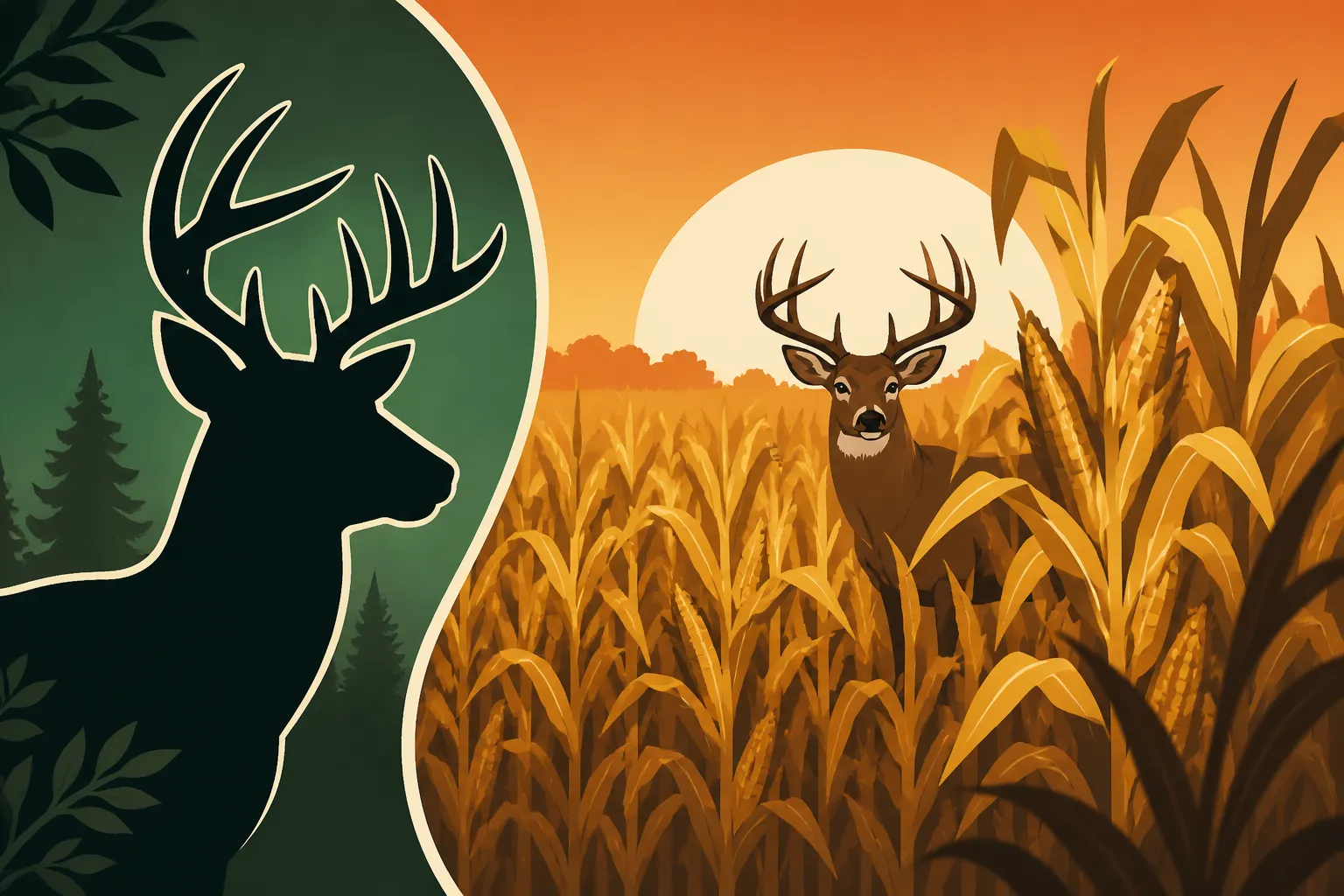
That moment you crest a hill, scanning the vast expanse of a southern Ontario farm, and catch a glimpse of movement disappearing into a towering field of standing corn – it’s a familiar sight for many hunters. But have you ever truly stopped to consider why deer are so drawn to these agricultural giants? It's more than just a quick snack; standing cornfields are an irresistible magnet for whitetails, offering a unique blend of sustenance and sanctuary that shapes their entire seasonal behaviour. This guide will peel back the stalks to reveal the multifaceted reasons deer depend on these fields, and what that means for us as hunters trying to understand their movements.
The Allure of Standing Corn: More Than Just Food
It's easy to look at a cornfield and just see food, but for a whitetail, it's a dynamic ecosystem. These fields aren't just temporary cafeterias; they're fortresses, hideouts, and critical staging areas. Understanding this dual role is key to unlocking the mysteries of deer movement in agricultural landscapes, particularly in places like southwestern Ontario where these fields dominate.
A Buffet of Nutrients and Energy
Let's be honest, who doesn't love a good buffet? For deer, a standing cornfield is exactly that, offering a feast that’s hard to pass up. As the corn matures through late summer and into fall, the kernels pack on carbohydrates, energy, and a good dose of fat – all absolutely crucial for deer to build up their reserves. This is especially vital as they head into the breeding season (the rut) and, even more so, as they prepare for the lean, cold months of winter.
Think about it: in the fall, a deer's natural forage often starts to dwindle or lose its nutritional punch. Browsing on twigs and leaves provides some sustenance, but nothing compares to the concentrated energy bomb found in a corn kernel. Deer will actively seek out fields where the corn is ripening, often breaking off ears, or waiting for them to drop, to get at that sweet, starchy goodness. It's an essential part of their diet during these critical periods, providing the caloric intake needed to fuel rutting activity for bucks and sustain does through pregnancy. This is a primary reason Why Farm Country Bucks Grow Faster is such a common observation; abundant, rich food sources like corn provide the building blocks for bigger bodies and impressive antlers.
Unparalleled Thermal and Security Cover
Beyond the incredible food source, standing corn offers something almost equally important, especially in wide-open agricultural settings: supreme cover. Imagine being a deer in a landscape of short stubble fields or sparse woodlots. You’re exposed, vulnerable to predators, and battling the elements. Now, picture slipping into a dense, 10-foot-tall wall of corn. It's a game-changer.
This thick vegetation provides an almost impenetrable visual barrier, allowing deer to move, bed, and feed with a profound sense of security. Hunters walking the edges often can't see more than a few feet in, which means a deer tucked deep inside is virtually invisible. This security cover is paramount, protecting them not just from human hunters, but also from coyotes and other predators. It's a place where fawns can hide, and bucks can lay up unnoticed during the day, waiting for the cover of darkness to venture out. This is a huge factor when considering Hunting a Standing Corn Field Edge.
Furthermore, standing corn offers excellent thermal protection. On a scorching August day, the dense canopy creates shade and traps cooler air, providing relief from the heat. Conversely, as winter approaches and the winds begin to bite, those tall stalks act as a natural windbreak, creating pockets of calmer, warmer air within the field. And when the snow starts to fly, the standing corn can hold up the snowpack, creating shallower conditions underneath that make travel easier for deer compared to deep drifts in open areas. It truly is a year-round, multi-functional sanctuary.
Seasonal Movements and Cornfield Utilization
The relationship between deer and standing corn isn't static; it evolves with the seasons, reflecting the deer's changing needs for food, cover, and breeding opportunities. Understanding these shifts is crucial for any hunter hoping to intercept a whitetail near one of these agricultural havens.
Early Season: Summer and Archery Opportunities
Even before the corn is fully mature, deer are already making good use of these fields. Throughout the summer, young corn plants provide succulent browse, and as the stalks grow taller, they offer invaluable cover for does with fawns. A doe can tuck her fawns deep within the emerging corn, knowing they'll be hidden from prying eyes. It's a nursery, a safe haven where young deer can grow relatively unmolested.
As the When Ontario's Archery Season Opens rolls around in late September, the corn is often reaching its peak height and starting to dry down, the kernels hardening and becoming incredibly appealing. During this time, deer will establish predictable patterns, often entering the corn at specific points from nearby woodlots or fencerows to feed throughout the night and into the early morning. They might then bed down within the corn or move back to thicker cover during the day. This early season use can offer some fantastic archery opportunities, especially if you can identify these entry and exit points and set up with a favourable wind. The key is observing which fields are being used and how deer are accessing them, often by glassing from a distance during low-light conditions.
Fall Transition: Pre-Rut and Rut Activity
As October rolls into November, the focus on standing corn intensifies, becoming a major player in the pre-rut and rut phases. Bucks, driven by increasing testosterone and the urge to breed, need a massive amount of energy to fuel their relentless searching and sparring. The high-calorie corn provides exactly that. You’ll often find mature bucks cruising the edges of cornfields, checking for does that are feeding or staging within. These edges become high-traffic highways, riddled with scrapes and rubs as bucks mark their territory and communicate their presence.
Does, too, are packing on weight for the breeding season and the upcoming winter, making cornfields a prime feeding ground. When a doe comes into estrus, she’ll often seek out the safety of the corn, and any interested buck will follow her in. This means that during the peak of the rut, especially around Hunting the Rut in Early to Mid November, a standing cornfield can be an incredibly dynamic environment. Bucks might chase does through the rows, or bed down deep inside after a night of activity. The sheer density of the cover means a buck can be literally feet away from you and remain undetected if you're not careful with your approach and wind.
Late Season: Winter Survival and Shelter
Once the rut winds down and winter’s chill truly sets in, standing cornfields take on an even more critical role: that of a survival fortress. As temperatures drop and snow blankets the landscape, accessible food sources become scarce. The corn, even if it's been standing for months, offers a concentrated food source that helps deer maintain body temperature and energy reserves.
More than just food, these fields provide vital shelter from harsh winter winds and deep snow. In areas where traditional wintering yards, like dense cedar swamps or thick pines, might be miles away or simply non-existent, a standing cornfield can act as a de facto yard. Deer will bed down in the thick stalks, sometimes creating well-worn paths through the snow-laden rows. This allows them to conserve energy by reducing exposure to the elements and limiting travel through deep snow. For hunters participating in late season hunts, understanding that Where Ontario Whitetails Yard in Deep Snow might sometimes include these agricultural havens can drastically change your approach and increase your chances of success. They provide warmth, food, and cover when all other resources are scarce, making them indispensable for whitetail survival.
Tactical Considerations for Hunting Cornfields
Hunting standing cornfields presents a unique set of challenges and opportunities. Their dense nature, combined with the deer's reliance on them, demands a thoughtful and strategic approach. It's not just about showing up; it's about meticulous planning, careful execution, and understanding the nuances of deer behaviour within this specific environment.
Scouting and Entry/Exit Strategies
The first step to successfully hunting a standing cornfield is rigorous scouting. You can't just guess where the deer are entering or exiting; you need to know. Before the season, spend time glassing the edges of cornfields from a distance, preferably during the early morning and late evening. Look for well-used trails leading into the corn from adjacent woodlots, fencerows, or bedding areas. Pay attention to specific points where deer consistently enter or exit, often identifiable by broken stalks, tracks, and droppings.
Modern tools like the GoHunt app or other mapping software can be invaluable here. Use satellite imagery to identify natural funnels, pinch points, or changes in vegetation density around the cornfield. Pin potential entry/exit points and plan your routes. Remember, deer are incredibly sensitive to disturbance, so your entry and exit to and from your stand or blind must be as quiet and undetected as possible. Always plan your approach based on the wind direction, ensuring your scent doesn't blow into the field or across known travel corridors. A silent approach means taking your time, wearing appropriate clothing, and sometimes even walking an extra mile around a field just to get to your setup undetected. Effective Scouting With Satellite Imagery in Ontario can save you countless hours and prevent you from blowing out an entire field before you even step foot in it.
Stand Placement and Hunting Methods
Once you've identified key areas, it's time to think about your setup. Given the tall, dense nature of corn, visibility can be extremely limited, making stand placement critical.
Edges and Funnels: The most common strategy is to hunt the edges of the cornfield, especially where trails enter or exit, or where a natural bottleneck pushes deer past a specific point. Treestands offer an elevated view over the corn, increasing your visibility and helping to carry your scent away. Ground blinds can also be effective, particularly if placed in a fencerow or thick brush at a key intersection.
Internal Strategies: For the truly adventurous, or in very large cornfields, considering a setup inside the corn can pay dividends. This is where methods like still-hunting slowly down a known deer trail or setting up a ground blind at an internal junction might work. However, this is incredibly challenging due to scent control, limited visibility, and the difficulty of getting a shot. Sometimes, for very large fields, Deer Drives With Three or Four Hunters can be an effective way to push deer out, but this requires careful planning, communication, and safety protocols to ensure everyone knows where other hunters are located.
Here’s a quick overview of pros and cons:
| Aspect | Pros of Hunting Standing Corn | Cons of Hunting Standing Corn |
|---|---|---|
| Cover | Excellent visual and thermal cover for deer, making them feel secure. Offers great ambush opportunities if entry/exit known. | Extremely limited visibility for hunters, making shot opportunities brief and tracking difficult. |
| Food Source | High-energy, high-calorie food source, especially crucial in fall and winter. Attracts deer consistently. | Deer can be anywhere within the field, not just on the edges, making them harder to pattern within the rows. |
| Movement Patterns | Predictable entry/exit points (usually), especially in early season. | Can be unpredictable inside the field. Deer move silently through stalks. Wind swirls can be a problem. |
| Hunting Methods | Edges are prime spots for treestands. Drives can be effective for large fields. | Still-hunting inside is difficult. Tracking a wounded deer inside is a nightmare. |
| Scent Control | Deer feel secure, less wary of subtle scent outside the dense interior. | Wind can swirl unpredictably inside the corn, making scent control challenging. |
The Harvest and Post-Harvest Shift
The moment the combines roll into a cornfield, everything changes for the deer. The impenetrable fortress instantly becomes an open, exposed landscape. Their sense of security vanishes, and their patterns shift dramatically, often overnight.
Initially, deer will still visit the harvested field to glean fallen kernels. This can create a fantastic opportunity for hunters, as deer are now much more visible. Setting up along fencerows or woodlot edges bordering a recently cut cornfield can be highly productive. However, this phase doesn’t last long. As the easy pickings dwindle, and especially as hunting pressure mounts, deer will quickly abandon the now-exposed field for denser cover. They will likely retreat to nearby woodlots, thicker bush, or other unharvested fields, such as soybeans. Understanding this, shifting your focus to adjacent cover becomes paramount. Scouting immediately after a harvest is vital to identify new travel routes and bedding areas. You might find that where deer once bedded in the corn, they now bed next to it in a thicket, moving out at dusk to quickly pick through the remnants. This is when tactics for Hunting a Soybean Field at Dusk or focusing on thicker cover really come into play.
Ultimately, standing cornfields are an undeniable magnet for whitetails in Ontario’s agricultural regions. They offer a potent combination of high-energy food and unparalleled security, making them indispensable habitats throughout much of the hunting season. For us hunters, understanding why deer utilize these fields so heavily, and how their patterns change with the seasons and the harvest, is the key to successful strategy. It requires careful observation, smart scouting, meticulous planning, and a deep respect for the whitetail's instincts. So next time you see those tall, rustling stalks, remember: you’re looking at a dynamic landscape, ripe with opportunity for those who learn to read its secrets.
Disclaimer
This article is for general informational purposes only and does not constitute professional advice. Laws, prices and regulations vary by location and change over time. Consult a qualified professional for guidance on your specific situation.