How Many Elk Ontario Holds Now
It’s a natural question for anyone fascinated by Ontario’s magnificent wildlife: just how many elk are truly roaming our vast landscapes today? For years, the idea of wild elk in Ontario felt like a dream, a whisper from a bygone era. If you’ve been wondering if these majestic animals are truly thriving, or if their numbers are still struggling after decades of restoration efforts, you're not alone. It can be incredibly difficult to get a clear picture of exact population figures for any wildlife, and elk are no exception, but this guide will shed light on what we know about Ontario’s current elk populations, where they live, and the incredible journey they've made back to our province.
The Journey Back: Ontario's Elk Restoration Story
To understand how many elk we have now, it's really important to look back at their remarkable history in Ontario. Most people don't realize that elk were once widespread across much of the province. They were a common sight, grazing in forests and meadows, until unregulated hunting and habitat loss in the late 1800s and early 1900s led to their complete disappearance from the wild by around 1898. It's a sad chapter in our wildlife history, a stark reminder of how quickly even the largest of species can vanish without proper management and respect for the land.
Fast forward to the early 20th century, and there were a few attempts to reintroduce elk. Some animals were brought in from western Canada and the United States, primarily to areas like Algonquin Provincial Park and around North Bay. While these initial efforts saw some limited success, creating small, localized herds, they often faced challenges like disease, poor habitat suitability, and a lack of sustained management. It was a learning curve, to say the least, and it showed just how complex bringing back a large ungulate species could be. This long and often challenging process eventually led to the more successful, scientifically-backed restoration efforts we see today. If you're curious about the journey, a good read is How Elk Came Back to Ontario, which details these early struggles and later triumphs.
The significant push for a robust, self-sustaining elk population began in the late 1990s and early 2000s. This more modern approach was much more strategic, focusing on specific release sites with ideal habitat, careful monitoring, and community involvement. Animals were sourced from other healthy populations, primarily from Alberta and also from Elk Island National Park, a place known for its healthy, disease-free herds. These elk were released into several designated areas, carefully chosen for their blend of forest cover, open areas for grazing, and proximity to water, all while aiming to minimize conflict with agriculture and existing human settlements. This initiative wasn't just about dropping animals off; it was a decades-long commitment to making sure these magnificent creatures could truly thrive once more. You can delve deeper into this monumental undertaking by reading Why the Elk Restoration Took Decades.
Counting the Herd: What We Know About Ontario's Elk Numbers Today
Alright, let's get to the heart of the matter – how many elk are actually out there? The truth is, getting an exact, real-time count of any wild animal is incredibly difficult. Elk are large, yes, but they live in dense bush, they move around, and they're masters of blending into their environment. Wildlife biologists and conservation officers rely on a combination of aerial surveys, ground observations, trail cameras, and population modeling to estimate numbers. These estimates provide a valuable snapshot, but they're always just that: estimates, often with a range. This is where tools like GoHunt, with its detailed mapping capabilities, can be a real asset for anyone trying to understand wildlife distribution on a more granular level.
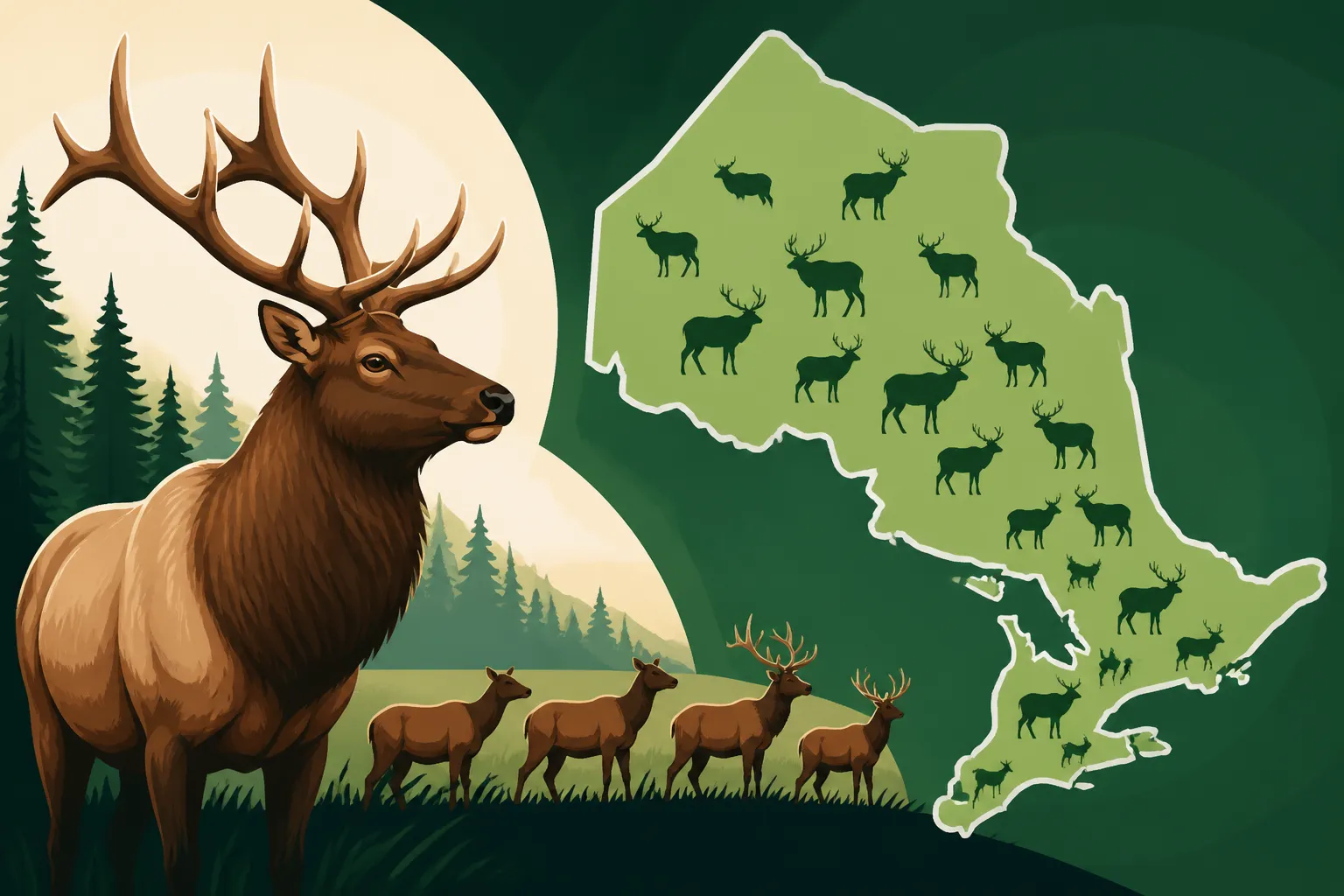
As of the most recent publicly available information, Ontario is home to several distinct elk herds, and their combined population is estimated to be in the range of several hundred animals. We're not talking thousands or tens of thousands like some Western provinces, but a solid, growing population that represents a huge conservation success. These numbers fluctuate, of course, with births, natural mortality, and any hunting opportunities playing a role. The goal isn't just to have elk, but to have healthy, genetically diverse herds that contribute to the ecosystem.
For clarity, here's a general overview of the main herds and their characteristics:
| Elk Herd Region | General Location | Estimated Population Size (Range) | Status | Hunting Opportunities |
|---|---|---|---|---|
| Lake Huron North Shore | East of Sault Ste. Marie, around Elliot Lake | Healthy, growing | Limited draw | |
| Bancroft-North Hastings | East of Algonquin Park, around Bancroft | Good, stable | Limited draw | |
| Nipissing-French River | South of Lake Nipissing, near French River | Stable to growing | Limited draw | |
| Cambridge-North Dumfries | Small, localized, more experimental | Small, monitored | No hunting | |
| Quinte | Around Belleville, more recent reintroduction | Small, emerging | No hunting |
Note: Population numbers are generalized estimates and can change. Always consult the official Ontario hunting regulations for the most current information.
The biggest and most well-established herds are generally found in the Bancroft-North Hastings area and the Lake Huron North Shore region. These areas have seen the most consistent growth and are where most of the limited hunting opportunities occur. For those dreaming of an Ontario elk hunt, understanding these population hubs is crucial.
Where the Wild Things Roam: Geographic Distribution of Ontario's Elk
Knowing the overall numbers is one thing, but understanding where these animals live is key for anyone interested in observing them or, for the lucky few, pursuing a tag. Ontario's elk herds are not evenly distributed; they are concentrated in specific regions that offer the right blend of habitat and management support. This patchwork distribution is a direct result of the targeted reintroduction efforts and the natural spread of the animals over time.
The Bancroft-North Hastings herd is perhaps the most famous, and certainly the most accessible for many Ontario residents. This area, located in Central Ontario, offers a diverse landscape of mixed forests, rocky Canadian Shield terrain, and some agricultural fringe. It provides excellent forage and cover, allowing the elk to thrive. This herd has been a shining example of successful restoration. If you've been reading up, you'll know that Hunting Elk Around Bancroft is a dream for many, but opportunities are very limited. Using resources like GoHunt can help you zero in on specific Wildlife Management Units (WMUs) that are known to hold elk, but remember, they are large animals that move, so diligence in scouting is paramount.
Further west, the Lake Huron North Shore herd spans a vast territory, generally situated east of Sault Ste. Marie and stretching towards Elliot Lake. This region is characterized by extensive boreal forest, numerous lakes, and rugged terrain. It's wilder country, offering vast expanses for elk to roam with less human disturbance than some southern areas. This herd has also shown strong growth and resilience, adapting well to the northern environment. Understanding Ontario's Wildlife Management Units is absolutely essential when you're looking at these larger, more remote areas, as elk populations can vary significantly even within a single WMU group.
The Nipissing-French River herd, located south of Lake Nipissing, also contributes to the provincial total. This herd benefits from a mix of Crown land and private woodlots, offering a blend of habitat types. While perhaps not as numerically large as Bancroft or the North Shore, it represents another vital component of Ontario's elk comeback. Smaller, more nascent herds, like the one in the Cambridge-North Dumfries area or the more recent reintroductions in the Quinte region, are currently under close monitoring, with no hunting opportunities available as they establish themselves. These smaller groups are crucial for potential future expansion, but they highlight the ongoing need for careful management and protection.
When you're looking at areas for potential viewing or even future hunting, understanding the topography and habitat is crucial. Elk prefer a mosaic of open fields for grazing, dense forest for cover and bedding, and access to water. They are adaptable, but certain areas simply provide a better year-round environment. For any serious scout, knowing how to interpret maps and understand habitat types is key, whether you're trying to figure out Hunting a Hardwood Ridge for Whitetails or identifying prime elk country.
Managing the Future: Conservation and Hunting Elk in Ontario
The story of Ontario's elk is one of conservation success, but it's an ongoing journey. Maintaining and growing these populations requires continuous effort, smart management, and the cooperation of landowners, hunters, and the general public. There are always challenges, from habitat fragmentation due to development, to ensuring genetic diversity, and managing potential conflicts with agriculture.
Conservation efforts are multi-faceted. They involve habitat improvement projects, such as creating new openings for forage or enhancing existing forest stands. Monitoring disease is also critical, as is conducting regular population surveys to keep track of numbers and health. Public education plays a huge role too, helping people understand the importance of elk and how to coexist with them. Organizations often work with local communities to mitigate any issues that arise, ensuring that elk are seen as an asset to the landscape, not a problem.
For hunters, the opportunity to pursue an elk in Ontario is truly a once-in-a-lifetime draw. Given the relatively small population numbers compared to other big game species, hunting tags are extremely limited. They are allocated through a highly competitive draw system, which is exclusively for Ontario residents. This controlled approach ensures that hunting pressure remains minimal and sustainable, allowing the herds to continue their growth trajectory. If you're a hopeful resident hunter, you'll want to read all about Ontario's Resident-Only Elk Draw and understand the application process.
Successfully drawing a tag is just the first step. Elk hunting in Ontario, especially in the larger, wilder units, can be incredibly challenging. These animals are large – What an Ontario Bull Elk Weighs can be impressive – but they are also elusive and require significant scouting and woodcraft. Being prepared means knowing your gear, understanding elk behaviour, and often, being ready for a physically demanding hunt in rugged terrain. If you're one of the fortunate few to get a tag, you'll find plenty of valuable information in guides like What to Do After Drawing an Ontario Elk Tag to help you prepare for such a momentous occasion.
The province aims to expand elk populations where feasible, but always with a careful eye on ecological carrying capacity and social acceptance. This means future numbers will depend on continued habitat availability, ongoing public support, and responsible hunting management. It's a testament to dedicated conservation work that Ontario can now boast these magnificent animals once again, a true highlight for anyone who values wild spaces and the incredible creatures that call them home. As with all hunting, proper preparation and adherence to regulations are paramount, starting with foundational knowledge found in resources like Ontario Hunter Education Requirements.
Disclaimer
This article is for general informational purposes only and does not constitute professional advice. Laws, prices and regulations vary by location and change over time. Consult a qualified professional for guidance on your specific situation.