Cottontails in Southern Ontario
It can feel daunting to get started in the world of hunting, especially when you're looking for accessible opportunities close to home in Southern Ontario. Many hunters, new and seasoned alike, sometimes overlook the fantastic chance that cottontail rabbits present – an engaging, challenging, and delicious pursuit that doesn't require a remote wilderness trip or a special draw. This guide is all about diving deep into the world of cottontail hunting right here in Southern Ontario, from understanding these speedy little game animals to the best ways to find and hunt them ethically and successfully.
Understanding Southern Ontario's Cottontail Rabbits
Cottontail rabbits are far more than just cute critters hopping through your backyard; they're resilient, plentiful, and offer an exciting hunting experience. For many, they're the first game animal they ever pursue, and for good reason. They teach valuable lessons in tracking, stalking, and shooting in a dynamic, fast-paced environment.
The Life and Times of the Eastern Cottontail
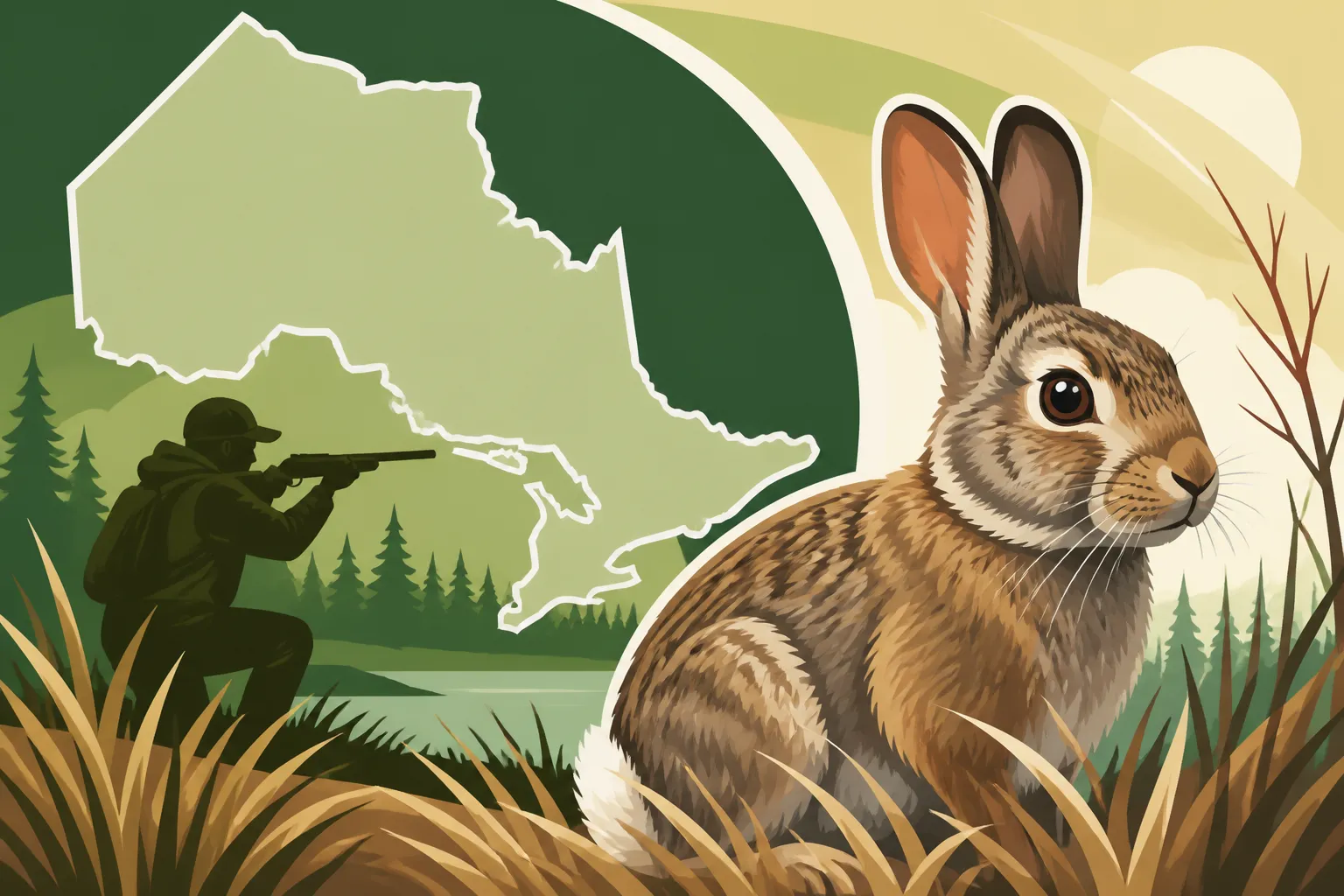
The Eastern Cottontail (Sylvilagus floridanus) is the most common rabbit species you'll encounter across Southern Ontario. They're characterized by their soft, brownish-grey fur, large hind legs, and that iconic puffy white "cotton" tail they flash when they bolt. Unlike their northern cousins, the snowshoe hare, cottontails don't turn white in winter, which can sometimes make them a little harder to spot against a snowy backdrop, but not impossible. They thrive in areas with a mix of open fields, brushy cover, and woodlands – essentially, prime agricultural and edge habitats that are abundant across Southern Ontario.
These rabbits are incredibly prolific, capable of having multiple litters throughout the warmer months, often starting as early as March and continuing through to September. Each litter can consist of anywhere from four to eight young, which means their populations can rebound quickly even with hunting pressure. This rapid reproduction is why they're such a sustainable small game species, providing consistent opportunities for hunters year after year. Understanding their breeding cycles can give you an edge, as you'll often find more rabbits, particularly juveniles, in late summer and early fall once the initial broods have matured.
Where Cottontails Call Home in Southern Ontario
Cottontails are truly creatures of the edge. They love transitional zones where different types of habitat meet, offering them both food and immediate escape cover. Think about those fencerows bordering a farmer's field, the thick tangled briar patches along an old woodlot, or even overgrown abandoned farmsteads. These areas provide a buffet of vegetation for them to browse on, from grasses and clover to the bark of young saplings in winter, coupled with dense cover to hide from predators like coyotes, foxes, and raptors.
You'll rarely find cottontails deep within a dense, unbroken forest, nor will you find them in the middle of a wide-open field without any nearby cover. They need that quick sprint to safety. This means focusing your scouting efforts on brush piles, multiflora rose thickets, overgrown hedgerows, and the fringes of agricultural land. Areas with heavy thorny growth are especially attractive to them, as they can navigate these spaces much more easily than larger predators, providing a natural fortress. Using tools like GoHunt can help you identify these specific habitat types on maps, letting you zoom in on potential rabbit hotspots before you even set foot in the field.
Regulations and Licensing for Cottontail Hunting
Before you even think about loading up your shotgun or air rifle, you absolutely need to understand the rules and regulations. Ontario has specific requirements for small game hunting, and knowing them inside out is not just about staying legal, it’s about respecting the resource and fellow outdoors enthusiasts.
Getting Your Ontario Outdoors Card and Small Game Licence
To legally hunt cottontails in Ontario, you'll need two main things: an Ontario Outdoors Card and an Ontario Small Game Licence. The Outdoors Card is essentially your identification as a licensed hunter in the province, valid for a set number of years. It's the first step for anyone looking to get into hunting here. Once you have that, you can then purchase your Small Game Licence. This licence specifically covers species like cottontail rabbits, squirrels, and various upland birds.
The process of getting these can be done through the provincial online portal or at authorized licence issuers. It’s always a good idea to check the current regulations and fees before you buy, as things can occasionally change. Don't forget, if you're new to hunting in Ontario, you'll likely need to complete the Ontario Hunter Education Requirements first, which is a fantastic program that teaches safety, ethics, and conservation. Make sure you carry your Outdoors Card and Small Game Licence with you whenever you are hunting, as conservation officers can ask to see them at any time.
Season Dates and Bag Limits for Cottontails
One of the best things about cottontail hunting in Southern Ontario is the relatively generous season. Generally, the season opens in late September and can run right through to the end of February or early March, depending on the specific Wildlife Management Unit (WMU) you are in. This lengthy season gives you ample opportunity to get out, whether it's early fall when the leaves are still on the trees, or in the dead of winter when snow can make tracking easier.
Bag limits are also quite generous, usually allowing you to harvest a daily limit of several rabbits. This allows for a productive hunt if you find a good patch of cover. It's crucial to consult the Ontario Small Game Season Dates and Limits summary for the most up-to-date and specific information for your chosen WMU, as regulations can vary slightly by region. Always double-check before heading out, because ignorance of the law is no excuse.
Here's a generalized table for Southern Ontario Cottontail regulations, but always verify with official sources:
| Item | Requirement | Notes |
|---|---|---|
| Outdoors Card | Mandatory | Required for all hunting licences in Ontario |
| Small Game Licence | Mandatory | Specific licence for cottontails and other small game |
| Season Dates | Late September to end of February (approx.) | Varies by WMU; always check current year's summary |
| Daily Bag Limit | Typically 6-10 rabbits | Always verify for your specific WMU |
| Possession Limit | Typically twice the daily bag limit (approx.) | Always verify for your specific WMU |
| Legal Firearms | Shotguns (various gauges), rimfire rifles, air rifles | Check specific calibre/gauge restrictions for your area and game |
| Blaze Orange | Recommended, often required during gun seasons | Required during big game gun seasons in WMU; good practice always |
| Hunter Education | Required for first-time hunters | Ontario Hunter Education Course or recognized equivalent |
Effective Hunting Strategies for Cottontails
Cottontail hunting is an active pursuit that often involves a good bit of walking, quick thinking, and patience. There are several ways to go about it, each with its own advantages and challenges.
Stalking and Still-Hunting Techniques
One of the most common and accessible methods for hunting cottontails, especially for solo hunters or those without dogs, is still-hunting or stalking. This involves moving slowly and deliberately through good habitat, pausing frequently to scan for movement or the tell-tale shape of a rabbit hunkered down. Cottontails are masters of camouflage, often relying on their brown fur to blend perfectly with dead leaves, brush, or dried grasses. You'll often see them only when they make a sudden dart for cover.
Focus your efforts on those dense pockets of cover, like a brush pile or a thorny fencerow. Walk parallel to these cover lines, just close enough to encourage a rabbit to flush, but far enough back to give you a safe shooting lane. Pay close attention to the base of thorny bushes, thickets of multiflora rose, or tall, matted grasses. When a rabbit flushes, it will often run a short distance and then freeze, giving you a quick shot opportunity. This method is particularly effective after a fresh snow, as tracks can help you identify active areas, making your hunt for Reading Sign After a Fresh Snow much more productive.
Driving Bush and Working Cover
For groups of two or more hunters, organized drives can be incredibly effective, especially in larger patches of dense cover. This involves one or more hunters (the "drivers") pushing through a section of habitat, while others (the "posters") position themselves at the likely escape routes or edges of the cover. The idea is to flush the rabbits out towards the waiting posters. This is a common tactic for Small Game Hunting in Ontario.
When planning a drive, it's crucial to communicate clearly and have a pre-determined plan for safety and shooting lanes. Know where everyone is at all times. Drivers should move systematically, kicking brush piles and pushing through thickets. Posters should remain still and alert, ready for a fast-moving target. This method is especially useful in areas like a Hunting a Bush Lot Beside a Farm or a substantial Hunting a Cedar Swamp Edge where rabbits might be concentrated. Safety is paramount during drives, so always know your target and what's beyond it.
Hunting with Dogs
For many experienced rabbit hunters, a hunt isn't complete without a good dog. Beagles, known for their incredible noses and relentless pursuit, are classic rabbit dogs. They'll pick up a scent, chase the rabbit in circles, often bringing it back right past the hunter. The sound of a beagle's baying on a hot trail is one of the most thrilling sounds in the small game world. Other breeds, like some flushing spaniels, can also be effective at routing out rabbits from dense cover.
When hunting with dogs, hunters usually position themselves in areas where they expect the rabbit to circle back, or along known escape routes. The dogs do the hard work of finding and flushing, while the hunter focuses on getting a clean shot when the rabbit comes into view. This is a much more active and exciting way to hunt, and it can be incredibly productive. It's different from Running Beagles on Ontario Snowshoe Hare in that cottontails often stay in smaller circles. If you're considering a dog, make sure they are well-trained and that you understand the specific rules for hunting with dogs in your chosen WMU. Using a flushing dog can be a highly efficient way to hunt these fast-moving targets.
Essential Gear and Equipment
While cottontail hunting doesn't require the same extensive gear list as a remote moose hunt, having the right equipment makes a huge difference in comfort, safety, and success.
Firearms and Ammunition Choices
For cottontails, shotguns are arguably the most popular choice. A 12-gauge or 20-gauge shotgun with a modified or improved cylinder choke is excellent, as it provides a good pattern for quick-moving targets at close range. Shot sizes typically range from #6 to #7.5 lead shot, which is more than sufficient for taking down a rabbit cleanly and humanely. A semi-automatic or pump-action shotgun allows for quick follow-up shots if needed.
Rimfire rifles, particularly a .22LR, are also a viable option, especially for more deliberate shots on still or slowly moving rabbits, or for those hunting in areas where shots might be longer and cover less dense, like when Hunting a Field Corner at Dusk. Accuracy is key with a rifle, as you're aiming for a head or chest shot. Air rifles with sufficient power can also be used, offering a quieter option for those who prefer it. Regardless of your choice, always ensure your firearm is safe, well-maintained, and that you are familiar with its operation and accuracy. Remember, legal firearm requirements are part of Ontario Hunter Education Requirements.
Clothing and Footwear for Southern Ontario Bush
Southern Ontario weather can be notoriously variable, especially during the long small game season. Layering is always a smart strategy. For early season hunts in September and October, lighter, breathable clothing that can resist briars and snags is ideal. As the season progresses into late fall and winter, warm, waterproof, and windproof outer layers become essential. A good pair of hunting pants or brush pants that can stand up to thorns and thickets will be your best friend.
Waterproof boots with good ankle support are non-negotiable. You'll be walking through wet grass, snowy fields, and potentially muddy or swampy areas along fencerows. Your feet will thank you. Consider gaiters to keep snow and debris out of your boots. And, as always, visible blaze orange is crucial, especially if you're hunting with a group or during the overlap with big game seasons. While not always legally required for small game, it's a critical safety measure when you're moving through dense cover.
Useful Accessories for the Rabbit Hunter
Beyond the basics, a few accessories can really enhance your cottontail hunt. A good game vest or small backpack is handy for carrying extra shells, water, snacks, and, most importantly, your harvested rabbits. Many game vests have a large, blood-proof pouch in the back specifically for this purpose. A sturdy pair of gloves that can protect your hands from thorns and cold is also a must-have.
Consider bringing a small first-aid kit, especially if you're going deep into brushy areas where scratches and minor cuts are common. For navigation, a GPS device or a reliable mapping app on your phone (like GoHunt, which helps with Scouting With Satellite Imagery in Ontario) can be invaluable, especially when trying to pinpoint public access points or understanding private land boundaries. A sharp knife for field dressing and a pair of game shears can make processing your harvest much easier and more hygienic in the field.
Finding and Accessing Hunting Land
One of the biggest hurdles for any hunter, especially those targeting small game in more populated areas like Southern Ontario, is finding suitable and legal places to hunt. Don't let this discourage you; opportunities are out there if you know where to look.
Scouting for Cottontail Hotspots
Effective scouting is the backbone of any successful hunt, and cottontails are no exception. Start by looking for the habitat they prefer: areas with a mix of cover and food sources. Think about old apple orchards, abandoned farmsteads with overgrown fields, fencerows, hedgerows, power line cuts, and the edges of woodlots next to agricultural fields. These are classic cottontail havens. Maps, particularly those showing topographical features and land cover, can be incredibly useful. Using a mapping application like GoHunt can help you identify these "edge" habitats and plan your routes.
Look for fresh sign: droppings, clipped vegetation, and most importantly, tracks after a fresh snowfall. Cottontail tracks are distinct and can lead you right to their preferred hiding spots. Spend time walking potential areas even before the season opens to identify dense cover, natural funnels, and escape routes. Remember, a cottontail rarely ventures far from cover, so focus your efforts where they can quickly disappear.
Public Land Opportunities in Southern Ontario
While Crown Land is more prevalent further north, Southern Ontario does offer some public hunting opportunities. These can include certain Conservation Authority lands, some municipal forest tracts, and specific designated public hunting areas. It's critical to research these areas thoroughly, as rules can vary greatly. Some conservation areas might permit hunting only during specific seasons or for certain species, and others might be archery-only or have specific safety zones.
Always check the regulations for the specific property you intend to hunt. Many of these areas will have maps and rules posted online or at access points. They can sometimes experience more hunting pressure due to their accessibility, so consider mid-week hunts or exploring deeper into less-trafficked sections. Tools like GoHunt can often highlight these public lands and their boundaries, helping you plan your hunt and avoid trespassing. Always carry a Reading an Ontario WMU Map Before You Go with you, whether digital or physical.
Gaining Permission on Private Land
For many Southern Ontario hunters, private land is where the best cottontail hunting lies. Farmers and landowners often welcome hunters who are respectful and responsible, especially if rabbits are causing crop damage or are simply abundant on their property. The key here is asking for permission. Don't just show up and assume.
Approach landowners well in advance of the season, ideally in person. Dress neatly, be polite, and clearly explain what you're hoping to do. Offer to share your harvest, or perhaps offer a hand with some chores. Provide references if you have them. Reassure them about safety, emphasize that you will be respectful of their property, gates, and livestock, and confirm that you understand What Ontario's Trespass Act Requires. A simple, laminated card with your name and phone number can be a nice touch, showing your professionalism. Building a good relationship with a landowner can open up consistent hunting opportunities for years to come. Many hunters find success by Asking an Ontario Landowner for Permission and then becoming a trusted presence on their property.
Field Dressing and Meat Care
Once you've successfully harvested a cottontail, the work isn't over. Proper field dressing and care are crucial for ensuring high-quality, delicious table fare.
Field Dressing Your Cottontail
Cottontails are relatively easy to field dress, and doing so quickly helps cool the meat and prevents spoilage, especially in warmer early season temperatures. The simplest method involves making a small incision across the rabbit's belly, from the breastbone to the pelvis. Be careful not to puncture the intestines. Once the cavity is open, you can reach in and remove the entrails. Pull them out and set them aside.
Many hunters also skin the rabbit in the field. This can be done by making an incision around the middle of the rabbit's back, then pulling the skin off like a jacket, working towards the head and then the tail. You'll need to cut off the head, feet, and tail. Once skinned and gutted, the rabbit can be placed in a game bag or cooler. Inspect the rabbit for any unusual growths or parasites, though these are relatively rare in healthy cottontails. If you have any concerns, it's best to discard the animal.
Transporting and Storing Your Harvest
After field dressing, the next step is to cool the rabbit meat as quickly as possible. In cooler weather, simply placing the skinned and gutted rabbits in a breathable game bag or even an old pillowcase will suffice, allowing air to circulate. If temperatures are mild or warm, you'll want to get them into a cooler with ice as soon as possible. Avoid piling them directly on top of each other in a plastic bag, as this can trap heat.
Once home, the rabbits can be rinsed thoroughly under cold water, patted dry, and then either butchered immediately or placed in the refrigerator for a day or two. For longer storage, rabbits freeze very well. Cut them into pieces (saddle, legs, and forequarters) or keep them whole. Vacuum sealing is ideal, but heavy-duty freezer bags with as much air removed as possible will also work. Properly cared for, frozen rabbit meat can last for several months without freezer burn, providing you with delicious meals long after the season closes.
Common Challenges and Solutions
Hunting cottontails is generally accessible, but it's not without its specific challenges, particularly in Southern Ontario's landscapes.
Dealing with Dense Cover and Thorns
Southern Ontario's cottontail habitat is often characterized by incredibly dense, thorny cover. Think about those impenetrable multiflora rose thickets, old raspberry patches, or tangled grapevines. These provide rabbits with excellent protection, but they can be a nightmare to navigate. The solution here is proper gear and strategic hunting. Invest in heavy-duty brush pants and a tough, briar-resistant jacket. Gloves are also essential to protect your hands.
When hunting these areas, approach them strategically. Instead of trying to bash your way through the absolute thickest part, try to walk the edges. Look for natural openings, old trails, or even deer runs that might give you a slightly easier path. Work with the wind if possible, as rabbits might be less likely to bolt if they don't smell you coming immediately. If you're hunting with a partner, one person can push through a dense section while the other posts on the downwind side or at an obvious escape point, like a Hunting a Fencerow Between Two Fields. Patience is key; sometimes, just standing still for a few minutes will make a rabbit that was hunkered down decide to make a move.
Overcoming Hunter Pressure
Due to the relatively accessible nature of Southern Ontario and the popularity of small game hunting, you might occasionally encounter other hunters in public access areas. This can reduce rabbit numbers or make them warier. The best solution is to seek out less-pressured areas. This might mean walking a bit further, exploring less obvious pockets of cover, or hunting mid-week when fewer people are out.
Don't be afraid to try knocking on doors and gaining private land permission; this is often where you'll find untouched rabbit populations. Using mapping tools like GoHunt can help you identify remote corners of public land or smaller, overlooked bush lots that other hunters might pass by. Always be courteous if you encounter other hunters, and perhaps ask if they've had any luck or if they're working a specific area. Sharing information (within reason) can sometimes lead to better hunting for everyone, but respect for each other's space is paramount.
Weather and Seasonal Considerations
The long cottontail season means you'll experience a wide range of weather conditions. Early fall can be warm, leading to concerns about meat spoilage if not handled quickly. Later in the season, deep snow and bitter cold become factors. Each presents its own set of challenges and opportunities. In early fall, focus on getting rabbits cooled down immediately after harvest. Hunters often deal with Meat Care in Ontario's Warm Early Seasons by carrying a small cooler.
When snow covers the ground, tracking becomes much easier. Fresh rabbit tracks can lead you directly to where rabbits are feeding and bedding. However, deep snow can also make walking difficult and reduce available cover. In very cold weather, rabbits tend to hunker down even more, making them harder to flush but potentially offering closer shots if you do find them. Dress appropriately for the conditions, and always let someone know where you're going and when you expect to return, especially in colder weather.
Disclaimer
This article is for general informational purposes only and does not constitute professional advice. Laws, prices and regulations vary by location and change over time. Consult a qualified professional for guidance on your specific situation.