Whether a Moose Tag Can Be Transferred
It's a familiar scenario for many Ontario moose hunters: after years, or maybe even decades, of accumulating points, you finally draw that coveted moose tag. Or perhaps you're part of a dedicated hunting party, and your leader drew a group tag. The excitement is palpable! But then, life happens. Someone in the group gets sick, an unexpected work commitment comes up, or personal circumstances change, leaving you wondering, "Can I just transfer this tag to someone else?" It's a common, completely understandable question, born from the desire not to waste such a valuable opportunity. This guide is here to cut through the confusion and explain the precise rules and realities of moose tag transfers in Ontario, helping you understand what's truly possible and what's firmly off-limits.
Understanding Ontario's Moose Tag System Fundamentals
Before we dive into the nitty-gritty of transfers, it's essential to grasp how Ontario's moose tag system works. It’s not just a piece of paper; it’s a carefully managed resource, allocated to ensure sustainable hunting and fair access for all residents. This system is designed to be equitable, which directly impacts the rules around transferring tags.
The Personal Nature of an Ontario Moose Tag
When you successfully apply and draw an individual moose tag in Ontario, that tag is inherently personal. It's tied directly to your Outdoors Card number and your unique hunter profile within the Ministry of Natural Resources and Forestry (MNRF) licensing system. Think of it like your driver's license – it identifies you and your privilege to operate a vehicle, not just any vehicle. Similarly, a moose tag identifies you and your privilege to harvest a specific type of moose (bull, cow, calf) in a particular Wildlife Management Unit (WMU) during a designated season.
This personal connection is fundamental to the province’s tag allocation. The draw system, where hunters accumulate points over time, is designed around individual participation. Your accumulated points are a reflection of your consistent effort to gain a tag, and the tag itself is the reward for that individual or party's long-term commitment. Attempting to transfer it bypasses this core principle. If you're looking for more details on this process, our guide on Ontario's Moose Tag Allocation Process provides a deep dive into how tags are distributed and how points play a role.
Group Moose Tags and Their Specific Rules
The concept of a "group moose tag" often leads to some of the confusion around transfers, as it introduces a layer of shared responsibility. With a group moose tag, one designated hunter acts as the "Group Leader," but the tag itself is issued to the entire hunting party. All eligible members of that party are listed on the group application. When the group is successful in the draw, the tag is effectively held by the group, not just the leader.
The crucial distinction here is that while multiple hunters are associated with one tag, the tag itself is not being transferred between individuals. Instead, the members listed on the application are authorized to participate in the harvest under the umbrella of that single group tag. If a member of your party harvests a moose while hunting under a group tag, that moose counts towards the group's quota. Our article on Ontario Group Moose Tag Rules goes into much more detail about how these parties are structured and their responsibilities. This shared nature allows for flexibility within the pre-defined group but does not allow for a free exchange of the tag to an entirely new, unlisted individual once the draw is complete.
The Strict Reality of Moose Tag Transfers in Ontario
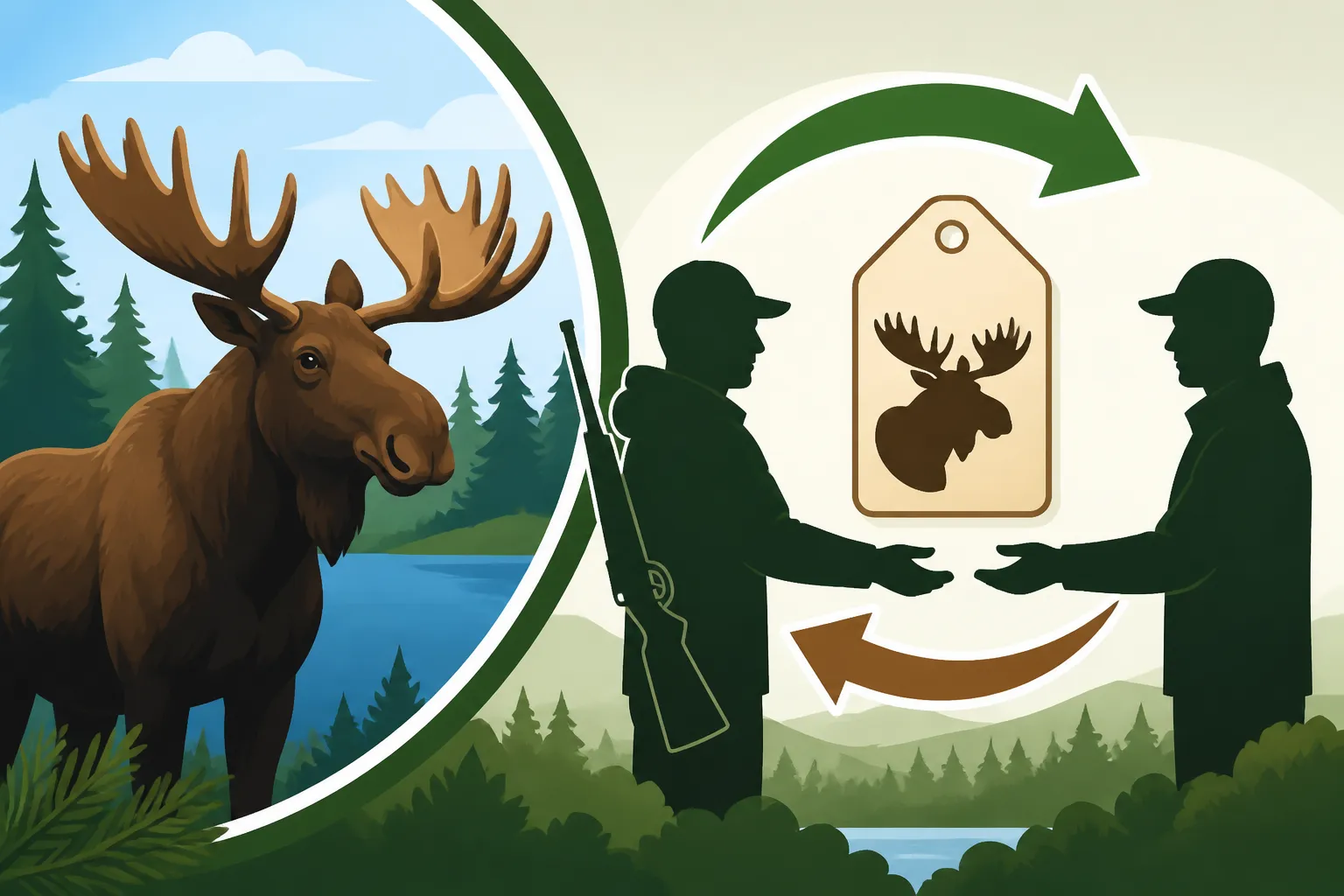
Let's get right to the heart of the matter: the general rule is that you cannot directly transfer a moose tag to another hunter in Ontario. While this might feel frustrating, especially after a successful draw, the Ministry of Natural Resources and Forestry has very specific reasons for this policy.
Why Direct Transfers Are Generally Not Permitted
Ontario's hunting regulations are designed to maintain fairness, prevent commercialization of wildlife, and ensure the integrity of the moose allocation system. Imagine the chaos if a drawn tag could simply be sold or given away on a whim! It would undermine the entire points system that hunters painstakingly build over many years. Your individual tag is explicitly issued to you, with your name and Outdoors Card number prominently displayed. This unique identifier is a legal document, and attempting to use it or transfer it to someone else is a violation of the Fish and Wildlife Conservation Act.
The MNRF's position is clear: the tag is yours to use, or not to use, for the season it was issued. There's no mechanism to legally "sell" your tag, "gift" it to a buddy who didn't draw, or exchange it for something else. This reality can sting, especially if unexpected circumstances arise after you've drawn that coveted tag. It’s a common frustration that feels counterintuitive sometimes – you have a tag, someone else wants to hunt, why can’t it just work? But the system is built on personal responsibility and a controlled allocation process. Any attempt at an illegal transfer could lead to significant fines, loss of hunting privileges, and even confiscation of equipment and game. It's just not worth the risk.
What Happens If You Cannot Use Your Tag?
If you find yourself in the unfortunate position of having drawn a moose tag but being unable to use it, you essentially have two options: use it or let it go. There isn't a third option of transferring it. This means that if you can't make your hunt, that tag will simply expire at the end of the season. It's a tough pill to swallow, especially knowing how many hunters are eagerly waiting for a chance.
However, there's a silver lining when it comes to your accumulated points. Unlike some scenarios where claiming a tag might reset your points, simply not using a drawn tag does not cause your points to be reset. You still retain your accumulated points for future draws, maintaining your position in the queue for another opportunity. This is an important distinction, as many hunters worry that letting a tag expire means losing all their progress. For more clarity on how your points are affected by tags, you can consult our article on When Claiming a Tag Resets Your Points. While it doesn't solve the immediate problem of a lost hunting opportunity, it at least preserves your long-term investment in the draw system.
The Role of GoHunt and Information Resources
Navigating Ontario's hunting regulations can be complex, and resources like GoHunt play a vital role in helping hunters understand the intricacies. While GoHunt primarily focuses on providing mapping, draw odds, and planning tools for Western U.S. states, the principle of using reliable, detailed information is universal. For Ontario hunters, the equivalent is diligently consulting the official Ontario Hunting Regulations Summary, the MNRF website, and reputable hunting forums or community groups that focus on local rules.
These resources, much like the detailed information found on platforms such as GoHunt for other regions, help hunters decipher licensing requirements, draw processes, and legal obligations. They provide clarity on topics like bag limits, season dates, and yes, tag transferability. It's about empowering yourself with knowledge so you can avoid costly mistakes and plan your hunts effectively. Always double-check information with the official MNRF guidelines, as regulations can change, but using comprehensive tools and resources is a smart way to stay informed about all aspects of Ontario Hunting Licences and What They Cost and other provincial specifics.
Permitted Scenarios and Considerations
While direct moose tag transfers between individuals are generally prohibited, there are nuances and specific situations within the group tag framework that often lead to confusion. Understanding these exceptions and how to plan effectively can save a lot of headaches down the road.
Adding or Removing Members from a Group Tag
This is perhaps the closest thing to "transferring" that Ontario's system allows, but it's important to be crystal clear: it’s not a transfer of the tag itself, but rather a modification of the party associated with a group tag. If your hunting party successfully draws a group moose tag, the Ministry of Natural Resources and Forestry (MNRF) allows for changes to the roster of hunters associated with that tag under very specific conditions and within strict deadlines.
Typically, a group leader can log into their online account on the Fish and Wildlife Licensing Service portal and add or remove members from their group application before the hunt actually begins and often before a certain administrative deadline. This flexibility is designed to accommodate unforeseen changes in a hunting party, such as a member becoming unavailable due to illness or personal reasons. However, the fundamental aspect remains: the tag itself, with its unique number and designated Wildlife Management Unit (WMU), stays with the group leader who applied. You're not transferring the tag to a new person; you're simply changing who is legally part of the group authorized to hunt under that tag. Our guide on How an Ontario Moose Hunt Party Works details this process, emphasizing the timelines and requirements involved. Always ensure these changes are made well in advance and confirmed through the official system, as last-minute adjustments are rarely permitted.
The Nuance of Hunting with Another Hunter's Tag
Let's address this directly: you absolutely cannot hunt with another individual's moose tag. This is a critical distinction that hunters must understand. Even if your buddy drew a tag and decided to give it to you because they couldn't go, it would be illegal for you to possess or attempt to use that tag. Each tag is serialized and linked to the specific hunter it was issued to.
However, the confusion often arises when discussing group tags. If you are a properly registered member of a group moose tag, you are authorized to harvest a moose on behalf of that group. In this scenario, you are not "hunting with another hunter's tag" in the illegal sense; you are contributing to the group's efforts and fulfilling the group's tag. Once a moose is harvested, the physical tag must be immediately notched, signed, and affixed to the animal in accordance with regulations, ensuring that all legal requirements for evidence of sex and harvest reporting are met. This is crucial for conservation officers, and our article on Ontario Tag Notching and Attachment Rules explains exactly how to do it correctly. The key here is proper authorization as part of a registered group, not a casual exchange of an individual tag.
Planning Ahead to Avoid the Need for Transfers
Given the strict rules against transferring moose tags, the best strategy is proactive planning. Preventing the need for a transfer is far easier than trying to navigate the impossible.
Here are some considerations for responsible planning:
- Confirm Availability Early: Before submitting a group application, have an honest conversation with all potential members about their commitment and availability for the entire season. Life happens, but a serious check-in can prevent last-minute surprises.
- Understand the Draw Odds: Use resources like those from GoHunt (for other species and regions) or official MNRF data to understand the draw odds for specific WMUs. This helps manage expectations and makes the commitment more concrete.
- Stay Informed on Regulations: Hunting regulations can change. Make it a habit to review the Ontario Hunting Regulations Summary annually. This includes checking season dates, tag rules, and any administrative deadlines for modifying group applications. Knowing the rules for Ontario's Wildlife Management Unit System is also essential, as tag details are WMU-specific.
- Build a Reliable Hunting Party: For group tags, choose your hunting partners wisely. A reliable, well-communicating group will face fewer unexpected issues that lead to needing tag modifications. Consider applying with a smaller, highly committed core if larger groups feel too volatile.
- Scouting and Preparation: Even before the draw, starting your scouting can make the commitment feel more real and solidify plans. Our article on Scouting a Wildlife Management Unit offers great tips for getting a lay of the land well in advance, reducing uncertainties.
By meticulously planning and understanding the rules from the outset, you can significantly reduce the chances of ending up with an unused tag or, worse, attempting to circumvent regulations.
Comparison: Individual vs. Group Moose Tags
To summarize the key differences regarding transferability and flexibility, here's a helpful table:
| Feature | Individual Moose Tag | Group Moose Tag |
|---|---|---|
| Recipient | One specific hunter (applicant). | A designated Group Leader, with listed party members. |
| Transferability | Not transferable to another individual. | Not directly transferable, but group member roster can be modified. |
| Harvest Authority | Only the individual named on the tag can harvest. | Any listed member of the group can harvest for the group. |
| Points Impact (Use) | Claiming a tag resets individual points. | Claiming a tag resets Group Leader's points (and group points). |
| Points Impact (No Use) | Not using the tag does not reset individual points. | Not using the tag does not reset Group Leader's points. |
| Flexibility | Minimal after issuance. | Limited flexibility to add/remove members pre-season. |
| Legal Status | Personal legal document for the named hunter. | Group legal document, managed by Group Leader. |
As you can see, the group tag offers a slight administrative flexibility in terms of who is part of the hunting party, but it doesn't allow for the wholesale transfer of the tag itself to an entirely new, unassociated individual or group.
Ultimately, while the desire to transfer a moose tag might come from good intentions, Ontario's regulations are quite clear. An individual moose tag is yours alone, and a group tag belongs to the pre-registered party. The system is designed to maintain order, fairness, and conservation. Understanding these rules fully, and planning your hunts with them in mind, is the most responsible way to approach moose hunting in our beautiful province. For non-residents, these rules are particularly important to understand, and our guide on Rules for Non-Residents Hunting Ontario can provide further context for those traveling to hunt here.
Disclaimer
The information provided in this guide is for general informational purposes only and does not constitute legal advice. Hunting regulations in Ontario are subject to change. Always consult the most current official Ontario Hunting Regulations Summary, the Ministry of Natural Resources and Forestry (MNRF) website, or contact a local MNRF office for the most accurate and up-to-date information before planning any hunting activity. Failure to comply with hunting regulations can result in significant penalties.