Who Needs the Ontario Hunter Education Course
It can feel like a bit of a bureaucratic puzzle when you're first getting into hunting in Ontario, especially when it comes to figuring out all the necessary courses and certifications. You hear about an Outdoors Card, a hunting licence, and then something about hunter education. It’s enough to make your head spin! This guide is here to clear up the confusion and lay out exactly who needs to take the Ontario Hunter Education Course, what it covers, and how you can get yourself properly certified to enjoy the province's incredible hunting opportunities.
Demystifying the Requirement: Who Must Take the Ontario Hunter Education Course?
Let's get right to it. The Ontario Hunter Education Course (OHSC) is a foundational step for many aspiring hunters in this province. It’s designed to ensure everyone participating in hunting understands safety, wildlife management, and ethical practices. Think of it as your essential roadmap to responsible hunting.
The Absolute Newbie: First-Time Hunters in Ontario
If you've never held an Ontario hunting licence before, or a recognized hunting certification from another Canadian province, territory, or an approved jurisdiction, then yes, this course is for you. This is the starting line for most new hunters. It doesn't matter if you've grown up around guns, spent your life in the bush, or have been fishing for decades; if you haven't got that official piece of paper proving you've completed hunter education, you'll need to take the OHSC. This includes anyone new to Canada or those simply picking up hunting for the first time as an adult. The course is designed to instill a baseline knowledge of hunting laws, ethics, and responsible behavior that's crucial for our diverse hunting landscape. It's not just about knowing how to shoot; it's about understanding the animals you pursue, their habitats, and your role in conservation.
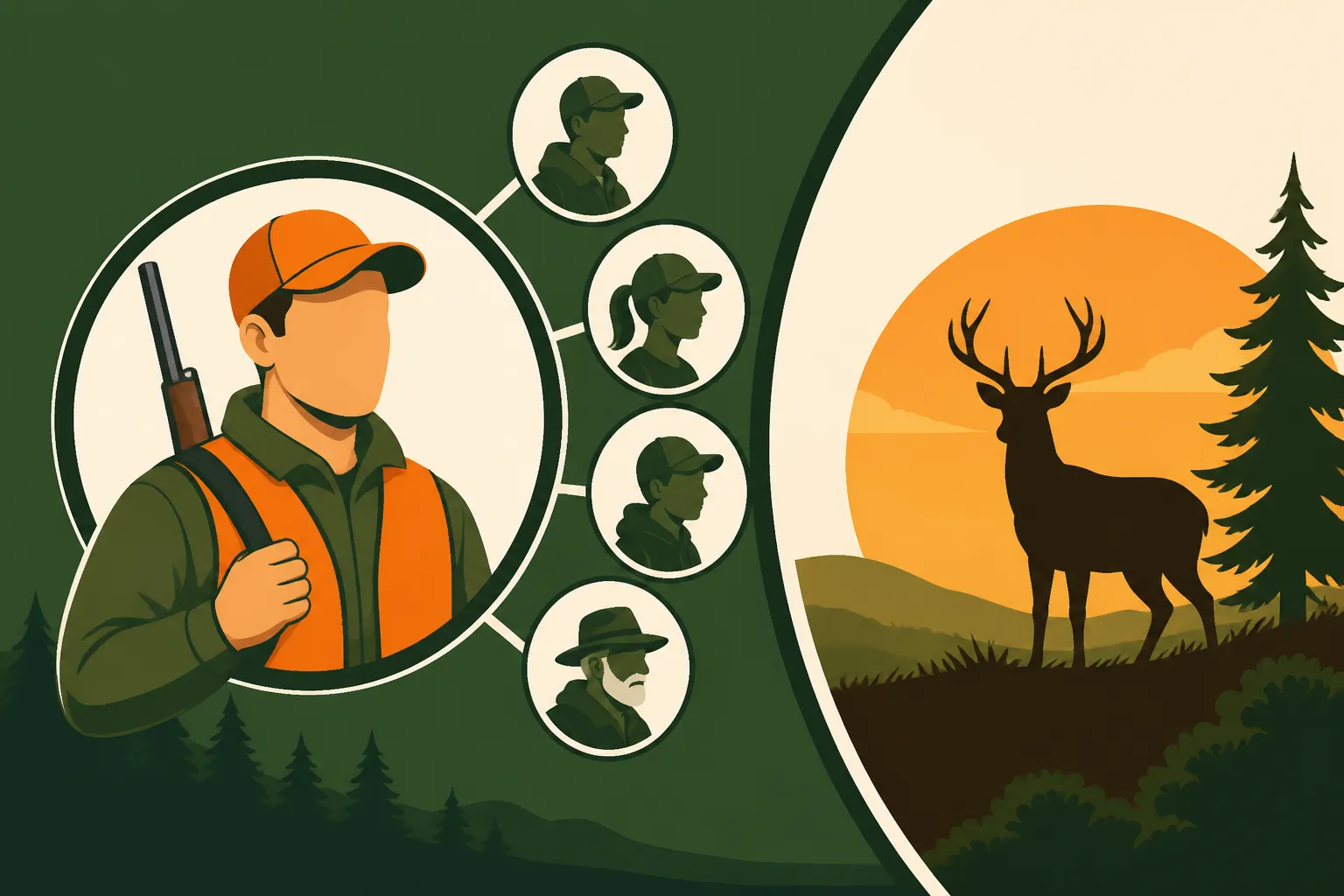
Guiding the Next Generation: Youth and Apprentice Hunters
Ontario encourages the next generation to get involved in hunting, but with proper supervision and education. For young people interested in hunting, the path generally involves the Hunter Education Course. While there are provisions for Ontario Apprentice and Youth Hunting programs that allow eligible youth to hunt under the direct and immediate supervision of a licensed mentor, the underlying requirement for a hunting licence still necessitates the hunter education component.
Typically, anyone wanting to obtain their first hunting licence, regardless of age (as long as they meet the Minimum Age to Hunt in Ontario requirements), will need to pass the OHSC. The apprentice program is a fantastic way to gain real-world experience, but it’s usually after the theoretical and practical knowledge from the course has been acquired. It's about building a solid foundation first, then layering on practical experience with a seasoned mentor. This ensures that even our youngest hunters are educated on the importance of safety and ethical conduct from day one.
Visitors from Afar: Non-Residents Navigating Ontario's Rules
Hunting in Ontario can be an incredible experience for those visiting from other parts of Canada or internationally. However, as a non-resident, you still need to prove your proficiency and understanding of hunting regulations. Generally, if you're coming from another Canadian province or territory, or certain approved states in the U.S., you might be able to present proof of an equivalent hunter education certification from your home jurisdiction. This can often negate the need to take the full Ontario course again.
However, the key here is "equivalent" and "approved." It's not a blanket acceptance. You'll need to provide verifiable documentation to the Ontario Ministry of Natural Resources and Forestry (MNRF) or a designated licence issuer. For those coming from jurisdictions without such an equivalency, or for international hunters, taking the Ontario Hunter Education Course is often a necessary step to obtain Rules for Non-Residents Hunting Ontario licences. It’s critical for non-residents to confirm their eligibility before planning their trip, as showing up without the proper certification could derail your entire hunting adventure. Always check the most current regulations, as these can change.
What You'll Learn: A Deep Dive into the Course Curriculum
The Ontario Hunter Education Course isn't just a hurdle; it's a comprehensive program designed to equip you with the knowledge and skills for a safe, ethical, and successful hunting career. It's truly an investment in your hunting future.
Beyond the Basics: Core Topics Covered in the OHSC
The curriculum is quite broad, covering everything from wildlife identification to ethical shot placement. You'll delve into the biology and habits of game species found in Ontario, which is crucial for understanding White-Tailed Deer Across Ontario or even Moose in Ontario's Boreal Forest. You'll learn about conservation principles, the role of hunters in wildlife management, and the importance of habitat preservation. A significant portion of the course focuses on hunting laws and regulations specific to Ontario, including season dates, bag limits, and legal hunting methods. This is where you really get into the nitty-gritty of what's allowed and what's not, helping you understand your Ontario Hunting Licences and What They Cost and what they permit.
Beyond the legalities, there's a strong emphasis on outdoor survival and first aid. You’ll cover navigation techniques, what to do in emergency situations in the bush, and how to minimize your impact on the environment. Understanding safe firearm handling, storage, and transportation is also a huge part, though the deep dive into firearms operation itself is more covered in the separate Canadian Firearms Safety Course (CFSC). The OHSC focuses on the hunting aspect of firearms safety: carrying them safely in the field, loading and unloading in various scenarios, and safe zones of fire. It's designed to make you a well-rounded and responsible outdoor person, not just a shooter.
From Classroom to Field: The Practical Component and Exam
The Ontario Hunter Education Course typically involves both a theoretical and a practical component. The theoretical part can often be completed through online modules these days, allowing you to learn at your own pace from the comfort of your home. This online portion will cover all the material mentioned above, usually broken down into digestible sections with quizzes to test your understanding as you go.
Once you've completed the online learning, you'll generally need to attend an in-person session. This session is crucial for the practical skills and the final exam. During the practical component, certified instructors will guide you through hands-on scenarios, such as safely handling different types of hunting firearms (though not live firing, typically), demonstrating safe carries, crossing obstacles, and field dressing basics. This is where you solidify your understanding of Ontario Hunter Safety and Firearms Courses. The exam itself will test your knowledge of hunting regulations, ethics, safety, and wildlife identification. It's not designed to trick you, but to ensure you've genuinely absorbed the critical information needed to be a safe and responsible hunter in Ontario. Passing both the theoretical and practical assessments is essential to receive your Hunter Education Certificate.
When You Can Skip It: Understanding Exemptions and Prior Qualifications
While the Ontario Hunter Education Course is a must for many, there are legitimate circumstances where you might be exempt. It’s really about proving that you already possess equivalent knowledge and experience.
Proof of Past Experience: Valid Hunting Licences from Other Jurisdictions
If you've hunted successfully in another Canadian province or territory, or in certain approved states within the United States, you might not need to retake the Ontario Hunter Education Course. The key is having a valid hunting licence or certification from that jurisdiction. This means you need documentation – an old hunting licence with an expiry date, a hunter education card from another province, or something similar that clearly shows you've met equivalent standards elsewhere.
This exemption is in place because many jurisdictions have similar hunter education requirements, and Ontario recognizes that competent, experienced hunters shouldn't have to jump through the same hoops twice. However, it's crucial to confirm that your specific out-of-province certification is recognized. The MNRF maintains a list of acceptable equivalencies. If you're coming from a jurisdiction that isn't on the recognized list, or if you can't provide proper documentation, you will likely need to complete the Ontario course. Always contact the MNRF or a licence issuer well in advance to clarify your specific situation.
The PAL vs. Hunter Ed: Clarifying the Canadian Firearms Safety Course
This is one of the biggest points of confusion for new hunters: "I have my PAL, so I can hunt, right?" Not quite! A Possession and Acquisition Licence (PAL) allows you to legally possess and acquire firearms in Canada. To get a PAL, you must pass the Canadian Firearms Safety Course (CFSC). This course is excellent for learning firearm mechanics, safe storage, and handling, but it is not the same as the Ontario Hunter Education Course.
The CFSC focuses on firearms themselves, while the OHSC focuses on the act of hunting – wildlife management, conservation, hunting ethics, and specific provincial hunting regulations. Think of it this way: your driver's licence allows you to drive a car, but it doesn't mean you automatically know the rules for driving on a specific racetrack. To legally hunt in Ontario, you need both a valid PAL (if using a firearm) and proof of hunter education (which then allows you to purchase a hunting licence). There is a specific nuance: if you held an Ontario hunting licence before January 1, 1968, or if you have a valid PAL and previously held an Ontario hunting licence, you might be exempt from the OHSC. But for the vast majority of new hunters, you need both the CFSC (for your PAL) and the OHSC (for your hunting licence). The two courses are distinct, though often taken in sequence.
Reinstating an Old Licence: What if You've Hunted Here Before?
Life happens. Maybe you hunted in Ontario years ago, then took a break for work, family, or just a change of pace. Now you're ready to get back into the field, but you're wondering if you need to retake the Hunter Education Course. Good news! If you can prove you previously held an Ontario hunting licence, you generally won't need to retake the OHSC. This proof could be an old Outdoors Card, a hunting licence from a past season, or even having your hunter education record on file with the MNRF.
This is why it's so important to hold onto your Ontario's Outdoors Card Explained and any hunter education certificates you receive. The province's licensing system, often managed through platforms like GoHunt, usually tracks your past certifications. If you're unsure if your records are still active, your best bet is to contact the Ontario Ministry of Natural Resources and Forestry (MNRF) or visit an authorized licence issuer. They can usually look up your historical data. As long as you were properly certified in the past, a simple renewal process for your Outdoors Card and hunting licence should be sufficient, without the need to repeat the course.
Your Path to Certification: How to Enroll and Get Your Outdoors Card
So, you've figured out you need the course. Now, how do you actually go about getting it done? The process is straightforward, but it requires a few steps to ensure you're fully compliant and ready to hit the bush.
Finding Your Fit: Online Learning vs. Traditional Classroom Settings
The landscape of hunter education has evolved, offering more flexibility than ever before. For many years, the only option was a multi-day, in-person classroom session. While these traditional courses are still available and offer a great opportunity for direct interaction with instructors and fellow students, Taking the Hunter Education Course Online has become a very popular alternative.
The online component allows you to learn at your own pace, fitting the modules around your work and family commitments. You'll typically work through a series of interactive lessons, videos, and quizzes. This self-paced learning is fantastic for absorbing complex information. However, remember that even with an online theory component, you will almost always need to complete an in-person practical session and final exam. This blend ensures you get the foundational knowledge digitally and then apply it hands-on under expert supervision. Choosing between online and in-person often comes down to your learning style and schedule.
Connecting with Providers: Navigating Course Registration
Finding an accredited provider for the Ontario Hunter Education Course is usually quite easy. The Ontario Federation of Anglers and Hunters (OFAH) is the primary organization that delivers these courses on behalf of the MNRF. Their website is typically the first place to check for schedules and registration information.
Many prospective hunters use resources like GoHunt or other official channels to locate accredited course providers in their area. You'll want to look for certified instructors and official course listings to ensure your certification will be recognized. Registration usually involves signing up for both the online theory (if applicable) and the in-person practical component and exam. Make sure you understand the course fees, what materials are included, and any prerequisites (like minimum age). Don't hesitate to contact the course provider directly if you have questions about what to expect or what to bring. Early registration is often a good idea, as courses, especially those held in convenient locations or during peak times, can fill up quickly.
The Golden Ticket: From Certification to Your Outdoors Card
Once you've successfully completed both the theoretical and practical components of the Ontario Hunter Education Course and passed the final exam, you'll receive a Hunter Education Certificate. This certificate is your official proof that you've met the educational requirements. But hold on, you're not quite ready to buy a hunting licence yet!
Your Hunter Education Certificate is a crucial step towards getting your Getting an Ontario Outdoors Card. The Outdoors Card is essentially your long-term identification as an eligible hunter and angler in Ontario. It's a physical card (though you can often carry Carrying Your Licence on Your Phone now) that has a validity period (you'll learn How Long an Outdoors Card Stays Valid during the course and when you renew). Once you have your Hunter Education Certificate, you can then apply for your Outdoors Card through the provincial licensing system. With a valid Outdoors Card and your hunter education record on file, you can then purchase your specific hunting licences and tags for the species and seasons you want to pursue. It's a two-step process, but the Hunter Education Certificate is the key that unlocks the door to legal hunting in Ontario.
Here's a quick summary of who needs the course versus who might be exempt:
| Requirement | Needs OHSC? | Explanation |
|---|---|---|
| First-time hunter in Ontario | Yes | Absolutely, this is the foundational requirement for anyone new to hunting in the province. |
| Youth/Apprentice Hunter | Yes | While supervised, youth typically need the course to eventually get their own hunting licence. |
| Non-resident without recognized certification | Yes | If your home jurisdiction's hunter education isn't recognized or you lack documentation, you'll need the Ontario course. |
| Non-resident with recognized certification | No | Provide verifiable proof of an equivalent course from an approved Canadian or U.S. jurisdiction. |
| Hunter with previous Ontario hunting licence | No | If you can prove you held an Ontario hunting licence in the past, you're generally exempt. |
| PAL holder only (no hunting history) | Yes | The Canadian Firearms Safety Course (CFSC) for your PAL is not a substitute for the Ontario Hunter Education Course, which covers hunting-specific regulations and ethics. |
| Hunter with valid pre-1968 Ontario licence | No | Historical exemption for those who held an Ontario hunting licence before January 1, 1968. |
Navigating the various rules and regulations around hunting can certainly feel overwhelming at first. The Ontario Hunter Education Course, however, is a vital component for ensuring the safety of hunters, the ethical treatment of game, and the long-term health of our wildlife populations. By understanding when and why you need it, and what it entails, you're well on your way to becoming a confident and responsible hunter in Ontario's incredible natural landscapes. It’s an investment that pays dividends in knowledge, safety, and countless memorable moments in the field.
Disclaimer
The information provided in this guide is for general informational purposes only and does not constitute legal advice. Hunting regulations in Ontario can change, and it is always the hunter's responsibility to consult the most current Ontario Hunting Regulations Summary available from the Ministry of Natural Resources and Forestry (MNRF) or official government websites before engaging in any hunting activities. Specific requirements for certifications and licences can vary, and direct confirmation with official sources is always recommended.