Why the Elk Draw Is Residents Only
It's incredibly frustrating when you set your sights on a specific hunting experience, like pursuing elk in Ontario, only to discover that the draw system has rules that seem to shut you out. Many hunters, especially those visiting from outside the province, find themselves asking why the Ontario elk draw is exclusively for residents. This guide is here to unravel the complex reasoning behind this policy, exploring the conservation efforts, management goals, and historical context that shape Ontario's approach to elk hunting.
Understanding Ontario's Elk Restoration Story
To truly grasp why the elk draw is resident-only, we need to go back in time and understand the remarkable journey of elk in Ontario. It's a tale of loss, dedicated conservation, and a slow, careful comeback that continues to this day.
The Near Extinction and Reintroduction Efforts
Believe it or not, elk were once native to Ontario, but by the late 1800s, unchecked hunting and habitat loss led to their complete extirpation from the province. For decades, these magnificent animals were just a memory. It wasn't until the early 20th century that the first attempts at reintroduction began, primarily in the northern parts of the province. These initial efforts faced significant challenges and, for the most part, didn't lead to self-sustaining populations.
However, the modern era saw a renewed and much more strategic approach. Starting in the late 1990s and continuing into the early 2000s, the Ontario government, alongside partners like the Rocky Mountain Elk Foundation and various conservation groups, embarked on an ambitious reintroduction program. Elk were sourced from provinces like Alberta and Saskatchewan, and carefully transported to specific release sites in Ontario, primarily focusing on areas like the Bancroft-Pembroke region and the Lake Huron North Shore. These sites were chosen for their suitable habitat, including a mix of forests, wetlands, and agricultural land, as well as their remoteness from major population centers to minimize human-wildlife conflict. This wasn't just about dropping animals off; it involved extensive habitat assessment, disease screening, and post-release monitoring to give these new herds the best possible chance to thrive. It’s a true testament to long-term conservation vision.
Current Population Status and Management Goals
Fast forward to today, and Ontario is home to several distinct elk herds, with the Bancroft-Pembroke herd being the most prominent and the focus of the current hunting opportunities. While numbers have grown considerably since reintroduction, they are still relatively modest compared to other provinces or states with established elk populations. The provincial government continuously monitors these herds through aerial surveys, collaring programs, and public reporting, gathering crucial data on population dynamics, health, and distribution.
The overarching management goal is to continue fostering healthy, self-sustaining elk populations that contribute to Ontario's biodiversity. This involves carefully balancing population growth with habitat capacity, minimizing disease risks, and managing human interactions. Hunting is introduced as a management tool only when populations reach certain thresholds, and even then, it's done on a highly controlled basis. The focus isn't on maximizing harvest, but rather on ensuring the long-term viability of the species. This cautious approach is precisely why every aspect of elk management, including hunting opportunities, is so tightly regulated, leading to policies like the resident-only draw. Hunters interested in the specific locations of these herds might find information in resources discussing the Elk Hunting Ontario's Bancroft Herd.
The Rationale Behind Resident-Only Draws
So, why residents only? It boils down to a blend of conservation philosophy, fair allocation of a limited resource, and acknowledging who bears the primary responsibility for the province's wildlife.
Prioritizing Conservation and Local Hunter Opportunity
Ontario residents, through their tax dollars and the purchase of licenses and permits (like the Ontario Hunting Licences and What They Cost or their mandatory Ontario's Outdoors Card Explained), are the primary funders of wildlife management and conservation programs in the province. They directly contribute to the ongoing monitoring, habitat restoration, and enforcement efforts that protect and grow species like elk. When a hunting opportunity arises for a species that has undergone significant restoration, it's often viewed as a privilege earned by those who have invested in its recovery.
The resident-only draw ensures that local hunters, who are deeply connected to the province's natural heritage and have supported its recovery, get the first and only chance at participating in this unique hunt. It's about maintaining a strong link between conservation funding, local engagement, and recreational opportunity. This approach helps to build a sense of stewardship among residents, encouraging them to continue supporting conservation efforts knowing that they will directly benefit from successful outcomes. This isn't unique to Ontario; many jurisdictions with sensitive or recovering populations follow similar principles.
Managing Herd Health and Sustainable Growth
Because Ontario's elk herds are still relatively young and actively growing, their long-term health and sustainable growth are paramount. Hunting, when introduced, is a precise management tool. It's not about recreational harvest first; it's about helping to balance the herd with its available habitat, controlling disease spread, and promoting healthy age structures. By restricting the draw to residents, the province maintains tighter control over who is hunting, where, and with what objectives.
This close control allows for specific tag allocations that can target certain age classes or sexes if needed for management purposes. For example, if a specific area sees a high bull-to-cow ratio, more bull tags might be issued to encourage breeding diversity. If populations in one zone are robust, tags might be slightly increased, while other zones might remain closed or have very few tags. This level of precise management is easier to implement and monitor when the pool of eligible hunters is geographically contained and already deeply integrated into the provincial hunting system, often having a better understanding of local conditions and regulations.
Limiting Pressure on a Recovering Species
Let’s be real, everyone wants to hunt elk. They are majestic animals and a true North American big game icon. If Ontario opened its elk draw to non-residents, the demand would skyrocket, potentially overwhelming the limited number of tags available. This influx of interest could place undue pressure on a recovering species that simply cannot sustain high harvest rates.
The resident-only draw acts as a gatekeeper, carefully controlling the number of hunters in the field and the total harvest. This minimizes disturbance to the herds, reduces the likelihood of overharvesting, and allows the populations to continue their steady expansion without unnecessary setbacks. It’s a cautious, long-term strategy that prioritizes the health of the elk over generating immediate revenue from non-resident hunters. This careful approach contrasts sharply with the situations in some other areas where, perhaps, different historical contexts and population densities have allowed for a more open hunting structure. For Ontario, with its unique elk story, slow and steady truly wins the race.
The Elk Draw Process for Ontario Residents
For Ontario residents, actually getting an elk tag is still a significant challenge, even with the resident-only draw. It requires patience, persistence, and a good understanding of the application process.
Eligibility and Application Requirements
First and foremost, to even think about applying for an Ontario elk tag, you must be an Ontario resident. This means you need a valid Ontario Outdoors Card, which identifies you as a licensed hunter in the province. Beyond that, you'll need to purchase the specific elk licence and tag application, which typically becomes available in the spring.
The application process is handled online through the Ministry of Natural Resources and Forestry (MNRF) Fish and Wildlife Licensing Service. It’s a fairly straightforward system, but you need to pay attention to deadlines. Miss a deadline, and you’re out of luck for the year. This ensures that everyone has a fair shot within the application window. Like many big game draws, you can usually apply individually or as part of a group, which can sometimes pool "points" or improve odds, depending on the specific rules of the year. Always consult the current Ontario Hunting Regulations Summary for the most up-to-date information.
How the Draw System Works
Ontario utilizes a points-based preference system for its limited big game draws, including elk. Every year you apply for an elk tag and are unsuccessful, you accrue a "preference point." These points increase your chances of being drawn in subsequent years. The more points you have, the better your odds. However, once you successfully draw an elk tag, your preference points reset to zero. This system is designed to give long-time applicants a better chance over time, while still ensuring that new applicants have a slim chance each year.
The draw assigns tags to specific Wildlife Management Units (WMUs) where elk hunting is permitted. These WMUs are carefully monitored, and the number of tags for each is determined annually based on population estimates and management objectives. Some WMUs might have only a handful of tags, making the draw incredibly competitive. For residents, understanding these Ontario's Wildlife Management Units and which ones have higher elk populations can be key to strategizing their applications.
The Reality of Drawing an Elk Tag
Let's be blunt: drawing an Ontario elk tag is tough. The demand from Ontario residents far outstrips the supply of available tags. While preference points definitely help, it's not uncommon for hunters to accumulate many years, even a decade or more, of points before finally drawing a tag. It's a game of patience and perseverance.
For many, applying for an elk tag becomes an annual ritual, a glimmer of hope that one day their number will come up. The feeling of finally drawing that coveted tag is often described as one of the most exciting moments in an Ontario hunter's life, knowing the years of waiting and the incredible opportunity that lies ahead. It's a testament to the dedication of Ontario's hunting community and their desire to participate in the careful management of this truly special species. Resources like GoHunt can be invaluable for residents looking to analyze draw odds for various species, helping them make informed decisions about their applications, even if elk tags are notoriously difficult to secure.
How Non-Residents Can Still Experience Ontario Elk
While the resident-only draw for hunting elk can be a disappointment for non-residents, it doesn't mean you can't experience these magnificent animals in Ontario. The province offers several ways to appreciate elk, even if pulling the trigger isn't one of them.
The Current Restrictions for Non-Resident Hunters
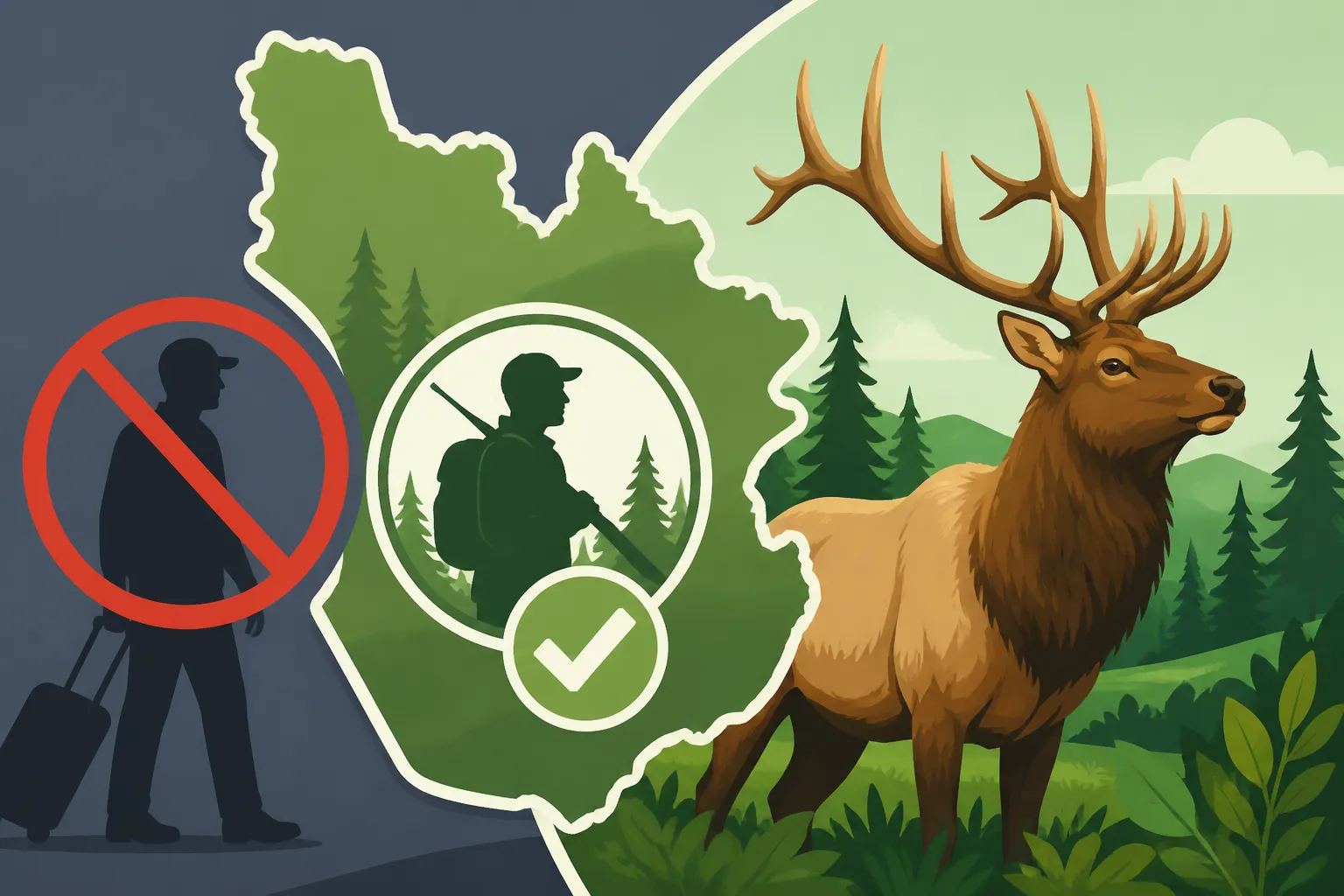
As it stands, Ontario's regulations explicitly prohibit non-residents from applying for or receiving an elk tag. This policy is firmly in place due to the ongoing conservation efforts and the delicate status of the elk herds. Unlike other big game species like moose or black bear, where non-residents can participate through outfitters, there are currently no avenues for non-resident elk hunting. This restriction is a direct reflection of the province's commitment to ensuring the long-term health and stability of its relatively new elk populations.
It’s important for non-residents to understand that these rules are not arbitrary. They are rooted in the conservation success story and the need for stringent management. While it might feel exclusive, the intent is purely protective and strategic. The province has put immense effort into bringing these animals back, and it's taking every precaution to ensure that success continues.
Opportunities for Viewing and Photography
Despite the hunting restrictions, Ontario offers incredible opportunities for non-residents to view and photograph elk in their natural habitat. The core elk range, particularly the Bancroft-Pembroke area, is home to a robust population that is often visible to the keen observer. Areas around Papineau-Cameron, north of Algonquin Park, and the Lake Huron North Shore also offer chances for sightings.
Many visitors make trips specifically for wildlife viewing, and with a bit of scouting and patience, encountering elk can be a truly unforgettable experience. Imagine spotting a bull elk with a massive rack bugling in the early morning mist – that's a memory that lasts a lifetime. Public roads that traverse elk habitat, especially during the rut in late September and early October, can be prime viewing locations. Remember to keep a safe distance, use binoculars or a spotting scope, and never disturb the animals. You can even find local tourism information and community pages that sometimes share tips on recent elk sightings. It’s a different kind of hunt, perhaps, but just as rewarding in its own way.
Future Possibilities and Policy Changes
The question often arises: will the elk draw ever open up to non-residents? While it's impossible to predict the future, any potential change would likely be a very slow and deliberate process. For non-resident hunters planning a trip, exploring options for Black Bear Hunting in Ontario or Moose Hunting Ontario's Northern Bush through registered outfitters would be more realistic.
For the elk draw to expand to non-residents, Ontario's elk populations would need to grow significantly, establish greater stability, and expand their range considerably. This would require many more years, potentially decades, of successful management and conservation efforts. Even then, any non-resident allocation would almost certainly be extremely limited and likely tied to specific outfitter packages to maintain control and ensure proper management. For now, the focus remains firmly on Ontario residents, a policy that underscores the province's deep commitment to its wildlife heritage and the hunters who help protect it. Using tools like GoHunt can help hunters keep an eye on policy changes, although it's crucial to always cross-reference with official MNRF publications.
Here’s a quick overview of the current elk draw eligibility:
| Feature | Ontario Residents | Non-Residents |
|---|---|---|
| Eligibility to Apply | Yes | No |
| Outdoors Card Required | Yes | Not applicable for elk |
| Preference Points | Yes, accrue annually | Not applicable for elk |
| Available Tags | Limited, highly competitive | None |
| Primary Rationale | Conservation & Resident Opportunity | Species Recovery & Management |
| Current Opportunity | Draw-based hunting | Wildlife viewing/photography only |
Disclaimer
Please remember that hunting regulations and policies, especially concerning species like elk, can change. It is always the hunter's responsibility to consult the most current official Ontario Hunting Regulations Summary, published by the Ministry of Natural Resources and Forestry (MNRF), before planning any hunting trip or applying for any tags. This article is intended for informational purposes only and does not supersede official government regulations.