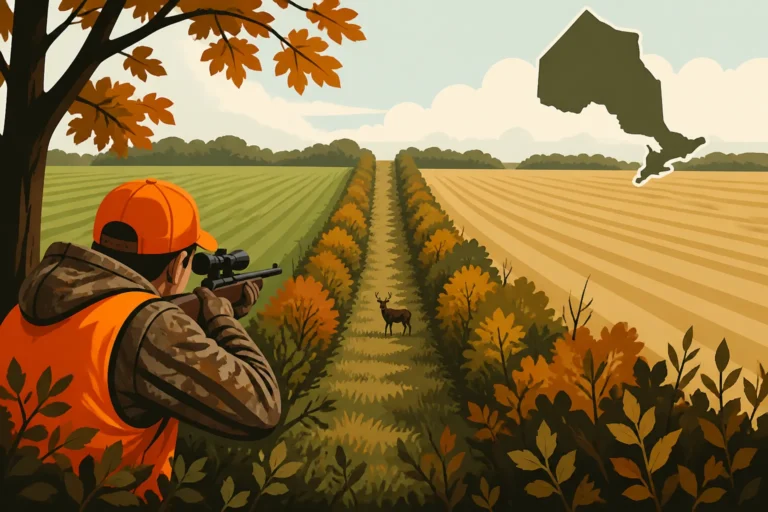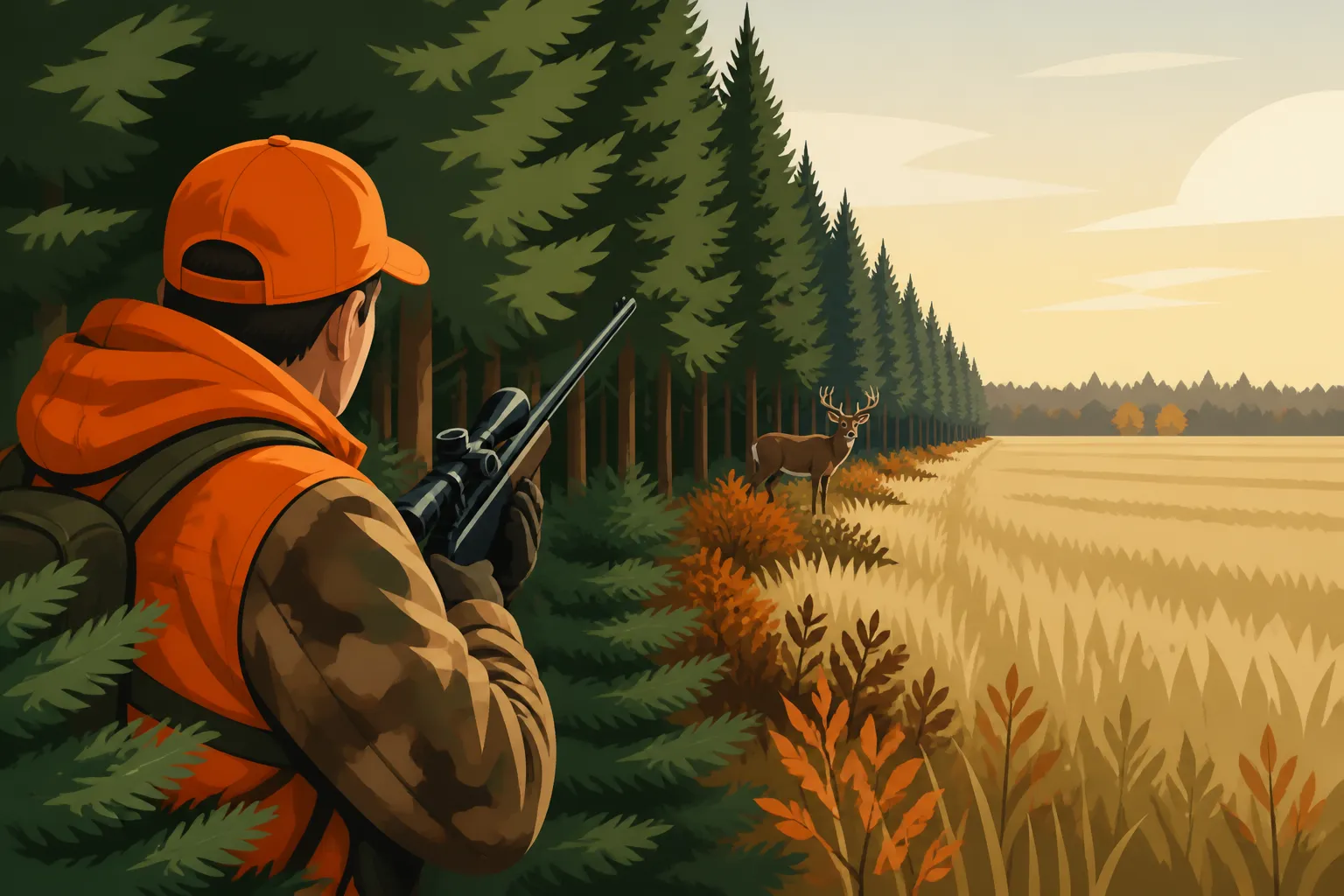
Hunting a Pine Plantation Edge
Oh, the pine plantation edge! If you've spent any time hunting whitetails in Ontario, you know these dark, dense blocks of evergreen can be both a deer magnet and a hunter's nightmare. Deer vanish into them like ghosts, and trying to follow a blood trail in that thick stuff? It's enough to make you pull your hair out. This guide is all about demystifying these enigmatic areas, teaching you how to read the subtle signs, set up strategically, and ultimately, find success when hunting a pine plantation edge.
Understanding Pine Plantations as Deer Habitat
Pine plantations, whether they're red pine, white pine, or even spruce, aren't just pretty rows of trees. For whitetail deer, they're a vital part of the landscape, offering something genuinely unique that other habitats often can't provide. Ignoring them, or worse, busting blindly through them, is a surefire way to send deer packing.
Why Deer Gravitate Towards Pine Edges
Deer, especially mature bucks, are masters of security and efficiency. A pine plantation's edge offers an incredible combination of both. Think about it: inside those dense rows, the canopy closes in, blocking out the sun and creating a darker, often cooler environment in summer and a warmer, more sheltered one in winter. This dense growth provides unparalleled bedding cover, where deer can feel safe from predators and hidden from human eyes. They can lie down, often just feet off the edge, and observe the more open areas without being seen. This makes the edge a natural transition zone – a perfect spot for deer to stage before moving out into fields or hardwood forests to feed, and a quick escape route when danger approaches. It’s their safe haven, their fortress of solitude.
The Seasonal Appeal of Pine Plantations
The allure of pine plantations isn't static; it changes with the seasons, making understanding deer behavior here even more crucial. In the early archery season, when temperatures can still be quite warm, those dense pines offer shade and a cooler retreat from the midday sun. Deer will often bed deep inside, only emerging at dusk. As fall progresses and the leaves drop from deciduous trees, the evergreen cover of a pine stand becomes even more valuable. It offers incredible visual concealment, making deer feel safe and tucked away. When winter truly bites and the snow piles up, these plantations provide critical thermal cover. The thick needles catch snow, keeping the ground underneath relatively clear, and the dense canopy breaks the wind, creating a microclimate that can be several degrees warmer than outside. This is especially important for Where Ontario Whitetails Yard in Deep Snow. They need that shelter to conserve energy.
Challenges of Hunting Within the Pines
While pine plantations are a whitetail haven, they present significant challenges for the hunter. The first and most obvious is visibility. Inside those dense rows, you might only have a shooting lane of 10 to 20 yards, if that. This drastically limits your effective range and forces extremely close encounters. Then there's the noise; walking through thick pine needles and snapping branches is notoriously loud, making it incredibly difficult to move stealthily. Scent control becomes paramount because deer are often so close, and the still air inside can trap your scent. And let's not forget the sheer difficulty of tracking. A deer that runs into a dense pine stand after the shot can be an absolute nightmare to find, even with a solid blood trail. It’s truly a test of your patience and tracking skills.
Scouting the Perfect Pine Plantation Edge
Effective scouting is always important, but when you're focusing on a pine plantation edge, it becomes absolutely non-negotiable. You can't just guess; you need to know exactly how deer are using that particular piece of cover. This often means putting in the boot leather, but modern tools can definitely give you a leg up.
Key Sign to Look For Along the Edge
When you're walking the perimeter of a pine plantation, don't just look for tracks in the mud. You need to become a detective, piecing together the story the deer are telling you. Look for well-worn trails leading directly into and out of the dense cover. These are highways for deer, indicating consistent travel patterns. Check for fresh droppings, which tell you deer are not just passing through, but spending time in the immediate vicinity. Pay close attention to rubs and scrapes along the edge. Bucks will often create rubs on the smaller trees or saplings that line the transition, marking their territory. Scrapes, particularly during the rut, are vital communication hubs, often found right where the pines meet a more open area. During Hunting the Rut in Early to Mid November, these scrapes become especially active. Remember, these are not just random acts; they're deliberate markers.
Identifying Entry and Exit Points
Deer are creatures of habit and efficiency, and they will almost always use the easiest, most secure routes. Your job is to find them. Look for natural funnels where the pine stand narrows, or where a point of pines juts out into a field or open woods. These create natural choke points that deer are compelled to use. Similarly, look for pinch points where the dense pines come close to other cover, like a swamp or a brushy fencerow. Deer will be squeezed through these areas, offering excellent ambush opportunities. Often, subtle dips in the terrain or breaks in the undergrowth will serve as preferred entry and exit routes, especially when deer are feeling pressure. These aren't always obvious, which is why a keen eye and patience are crucial during scouting.
Using Technology for Effective Scouting
In this day and age, not using technology to aid your scouting is like trying to chop down a tree with a butter knife. Start with satellite imagery. I often use apps like GoHunt to pore over aerial views of potential hunting areas. It allows me to identify pine plantations, locate potential funnels, and mark potential bedding and feeding areas long before I ever set foot on the ground. You can often see the distinct dark green blocks of pine plantations against the lighter green or brown of deciduous forests or fields. Look for edges where the pine gives way to agricultural fields or open hardwoods. Mapping software can help you pinpoint terrain features, identify property lines (especially crucial when Hunting Whitetails on Ontario Crown Land), and even track your own movement. Placing trail cameras along identified trails and scrape lines on the edge of the pines can confirm deer activity, tell you what time deer are moving, and even give you an idea of the caliber of bucks in the area. It's like having a silent, tireless scout working 24/7 for you.
Strategic Hunting Approaches for Pine Plantation Edges
Hunting a pine plantation edge requires a different mindset and approach than hunting open hardwoods or agricultural fields. It's about being patient, understanding wind, and being ready for a close-quarters encounter.
Stand Placement and Wind Considerations
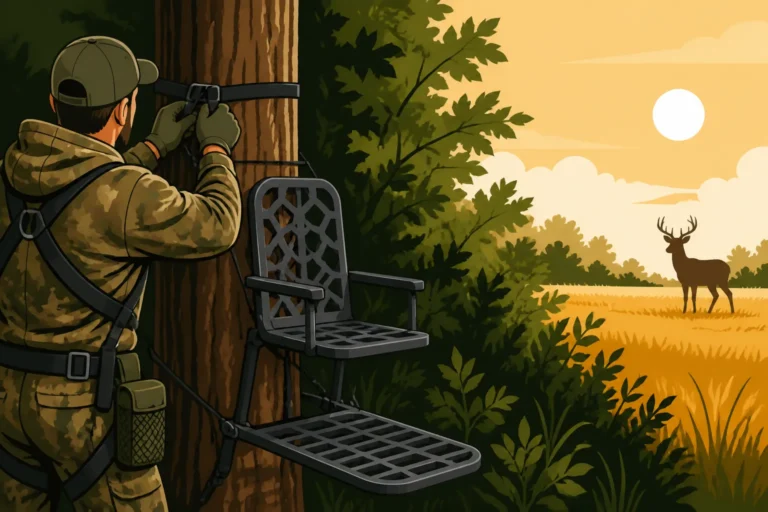
The cardinal rule of deer hunting—wind is king—is amplified when hunting a pine plantation edge. Deer will often bed with the wind at their back, watching their downwind side, or they'll circle to scent-check an area before entering. Therefore, your stand placement must account for the prevailing wind, ensuring your scent is carried away from where you expect deer to approach or bed. An elevated stand, whether it's a tree stand or a tower blind, is often the best choice, as it helps get your scent above the deer's nose. Consider hanging a stand on an Ontario bush edge, specifically where the pine meets other cover, giving you a wider view but still close enough to the pine for good shot opportunities. Ground blinds can also be effective, especially brush blinds built into natural cover, but they require even more meticulous attention to wind direction and scent control. Remember, the dense cover inside the pines can create its own unique thermal currents, especially in the mornings and evenings, so pay close attention to swirling winds.
Still-Hunting and Drives in Pine Country
Sometimes, sitting and waiting isn't the most effective strategy, especially if deer aren't moving predictably or if pressure is high. Still-hunting along the edge of a pine plantation can be incredibly effective. This means moving slowly, taking one or two steps, then pausing for several minutes to scan, listen, and glass. You're not just walking; you're hunting every step. This method allows you to cover ground and find deer that might be bedded just inside the thick cover, ready to slip away. Focus on moving into the wind or with a crosswind to minimize your scent profile.
For larger pine blocks, small, organized drives can also yield results, but they must be executed carefully. Unlike Deer Drives With Three or Four Hunters in more open country, driving pines needs fewer, quieter drivers who understand how to push deer out naturally, rather than spooking them. One or two quiet drivers slowly pushing through a section of pines, while one or two standers are positioned on key escape routes along the edge, can be incredibly productive. The key is to get deer to walk out, not to run out in a panic, offering cleaner, safer shots. This tactic is especially potent during Hunting Ontario's November Gun Season.
Calling and Decoying on the Edge
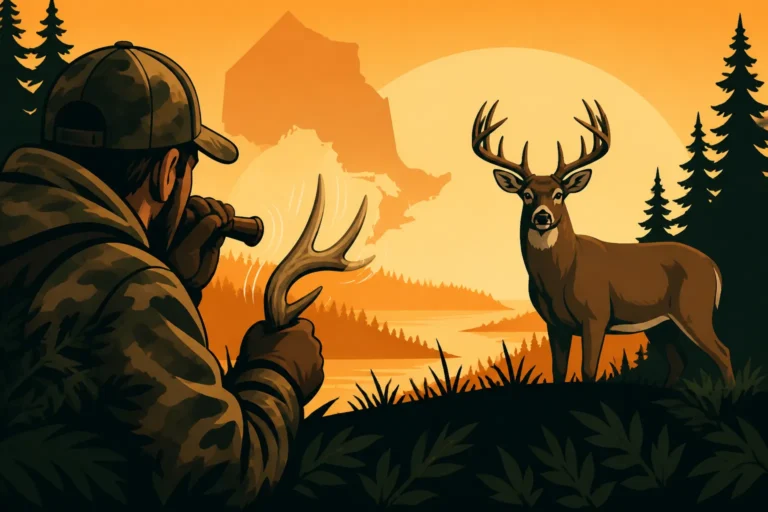
Pine plantation edges are fantastic places to employ calling and decoying tactics, particularly during the rut. The dense cover provides a perfect backdrop for a decoy and can make a buck feel more secure coming into your calls. A well-placed buck or doe decoy near a scrape line on the edge of the pines can draw a curious or territorial buck right out into your shooting lane.
As for calling, a mix of grunts and bleats can be highly effective. A simple doe bleat can pique a buck's interest, making him think there's a receptive female nearby. If you see a buck cruising the edge or suspect one is bedded inside, a series of tending grunts can often pull him out. Even rattling can work wonders here, especially if you position yourself just inside the pines, creating the illusion of a fight happening deeper in the cover. The dense pines muffle the sound, making it harder for the deer to pinpoint your exact location, which can sometimes work to your advantage, making them approach cautiously to investigate. This can bring deer to within bow range.
Gear and Tactics for Success in Pine Edges
Hunting pine plantations isn't just about strategy; it's also about having the right gear and knowing how to use it effectively. The unique environment calls for specific considerations to ensure both comfort and success.
Essential Gear for Dense Cover Hunting
Given the close-quarters nature of hunting pine plantation edges, your gear choices become even more critical. When it comes to clothing, focus on quiet fabrics that won't rustle or snag as you move through brush or sit in a stand. Layering is always smart for Ontario's unpredictable weather, but prioritize warmth and moisture-wicking properties, especially in colder seasons.
For optics, while powerful binoculars are great for open fields, a good quality pair of 8x or 10x binoculars with a wide field of view is ideal for the tighter confines of a pine edge. You'll be looking for subtle movements and details at shorter ranges. Weapon choice often leans towards something that handles well in close quarters. For gun hunters, a shotgun with slugs or a brush gun in a caliber like .30-30 or .45-70 is often preferred for its shorter range accuracy and brush-busting capabilities. Bowhunters will appreciate a compact bow that's easy to maneuver in a dense stand. Consider bringing a rangefinder, even for shorter distances, as judging distance in the pines can be tricky due to the lack of clear landmarks. A good, sharp knife is also non-negotiable for field dressing, especially if you're pulling a deer out of thick cover.
Managing Scent in a Coniferous Environment
Scent control is absolutely critical when hunting pine plantation edges. Deer often feel incredibly secure in these areas, meaning they're not as quick to bolt if they catch a whiff of something unusual, but they will investigate or simply move deeper into the cover. Your goal is to be as scent-free as possible. This starts long before you head to your stand. Wash your hunting clothes in scent-free detergent, shower with scent-free soap, and store your clothes in an airtight container or bag. Dress at your hunting location to minimize contamination.
Using a scent-eliminating spray on your clothing and boots is a good practice. While pines have their own strong scent, a deer's nose is designed to detect foreign odors. Consider using a subtle cover scent, like pine or cedar, if you feel it helps you mentally, but true scent elimination is far more effective. The key is to be fanatical about keeping your human scent out of the woods. This is where those still days or swirling winds become your worst enemy, so constantly be aware of wind direction and how it might carry your scent.
Post-Shot Tracking in Thick Pines
This is where the rubber meets the road, and honestly, it's often the most challenging part of hunting pine plantations. If you make a good shot and the deer runs into the dense pines, resist the urge to immediately jump down and pursue. Give the deer time, especially if you suspect a lung or liver hit. An hour or even more can make all the difference, allowing the deer to bed down and expire, rather than being bumped and running further.
When you do start tracking, mark the exact spot of impact and the last place you saw the deer. Look for blood, hair, bone, or gut contents at the impact site to assess the shot. Then, track slowly and deliberately. Look for blood on both sides of the trail, on leaves, pine needles, and even rubbed on the trunks of small trees. Small specks of blood can be easy to miss against dark pine needles. If you lose the trail, back out to the last confirmed blood and re-evaluate. Use flagging tape (remove it afterward!) to mark blood spots, creating a breadcrumb trail. If light is fading, consider returning in the morning with fresh eyes and perhaps a friend. A good tracking light can also make a huge difference after dark. Sometimes, you might need to coordinate a grid search with a few buddies, moving slowly and systematically through the thick stuff. It can be frustrating, but patience and methodical effort are your best allies here. This is why knowing Meat Care in Ontario's Warm Early Seasons is important, as you might need to leave a deer overnight.
Remember, the pine plantation edge isn't just a barrier; it's an opportunity. Understanding it, respecting it, and adapting your tactics to it will significantly improve your chances of filling your tag in Ontario's beautiful, rugged landscapes.
| Strategy | Best Season | Ideal Conditions | Tips for Success |
|---|---|---|---|
| Still-Hunting | Early to Late Season | Light wind, dry ground | Move extremely slow (10 steps per minute), scan constantly, utilize natural cover. |
| Stand Hunting | All Seasons | Consistent wind | Place stand on downwind side of known travel routes or funnels, consider elevated positions for scent control. |
| Small Drives | Late Season (Gun) | Group of 2-4 hunters | Quiet drivers, positioned standers, push deer slowly towards open edges. |
| Calling/Decoying | Rut (mid-October to mid-November) | Light wind, good visibility | Place decoy visible from pine edge, use grunts/bleats, rattle from just inside cover. |
| Scouting | Pre-Season & Post-Season | Any weather | Use satellite imagery (like GoHunt), look for rubs, scrapes, trails; employ trail cameras. |
Disclaimer
Please ensure you are familiar with and adhere to all current Ontario hunting regulations, seasons, and licensing requirements before heading out. Safety should always be your top priority. This guide offers general advice and should not replace official sources or responsible hunting practices.