Using a Flushing Dog in Thick Bush
Ontario's thick bush can be an absolute nightmare for upland bird hunters, especially if you’re trying to work a pointing dog in cover so dense you can barely see your own feet, let alone your dog on point. The frustration of birds flushing wild, running off, or just disappearing into the undergrowth before you can even get a shot can make you want to hang up your vest. But there's a fantastic solution for this challenging terrain: embracing the power and instincts of a flushing dog. This guide will walk you through exactly why and how a flushing dog can transform your hunts in the tangled woods and alder thickets that make up so much of Ontario's prime upland habitat.
Why a Flushing Dog Shines in Ontario's Thick Bush
Hunting upland birds like ruffed grouse, woodcock, and even pheasants in Ontario often means navigating dense, unforgiving cover. Whether you're slogging through regenerating clearcuts, alder swamps, or thick cedar stands, the environment presents unique challenges that a flushing dog is perfectly built to overcome.
Understanding the Challenge of Dense Cover
Imagine stepping into a young pine plantation, so thick you're pushing through branches every few feet, or an old beaver meadow choked with alders and willows. This isn't your classic open prairie or wide-spaced pine forest. In many parts of Ontario, especially where logging has created fantastic new growth for birds, the cover can be almost impenetrable. For hunters working traditional pointing breeds, this dense environment often leads to a few common frustrations.
First, your pointing dog might be on a rock-solid point, but the cover is so thick you can't see them. You're trying to locate them by bell or GPS, crashing through the brush, only for the bird to get nervous and flush wild, or worse, run out the back door while your dog is still locked up. Second, many of these birds, particularly ruffed grouse in heavy cover, are notorious for running. Instead of holding tight for a pointing dog, they'll often scoot along the ground, putting distance between themselves and the perceived threat, leaving your dog pointing scent where the bird was, not where it is. Finally, you can lose track of your dog entirely. Bells get muffled, and even GPS units struggle with deep ravines or heavy canopy, leaving you wondering if they're still on point or have broken and are now chasing a deer. It's a recipe for missed opportunities and sheer exhaustion.
The Instinctive Advantage of a Flusher
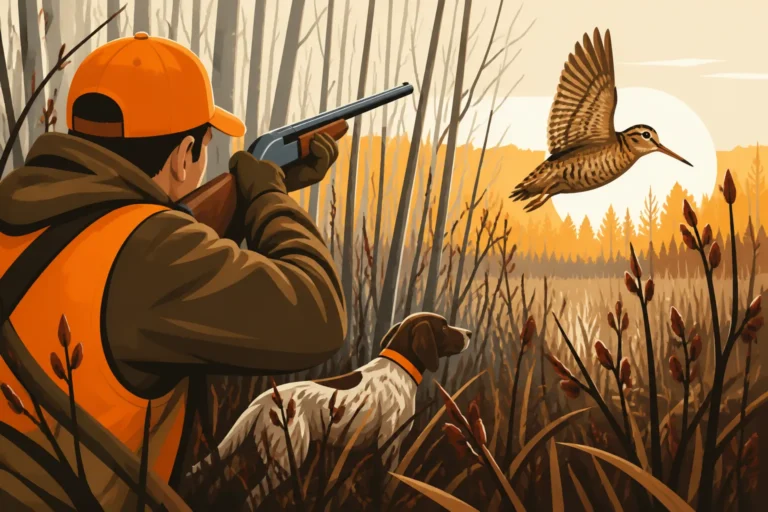
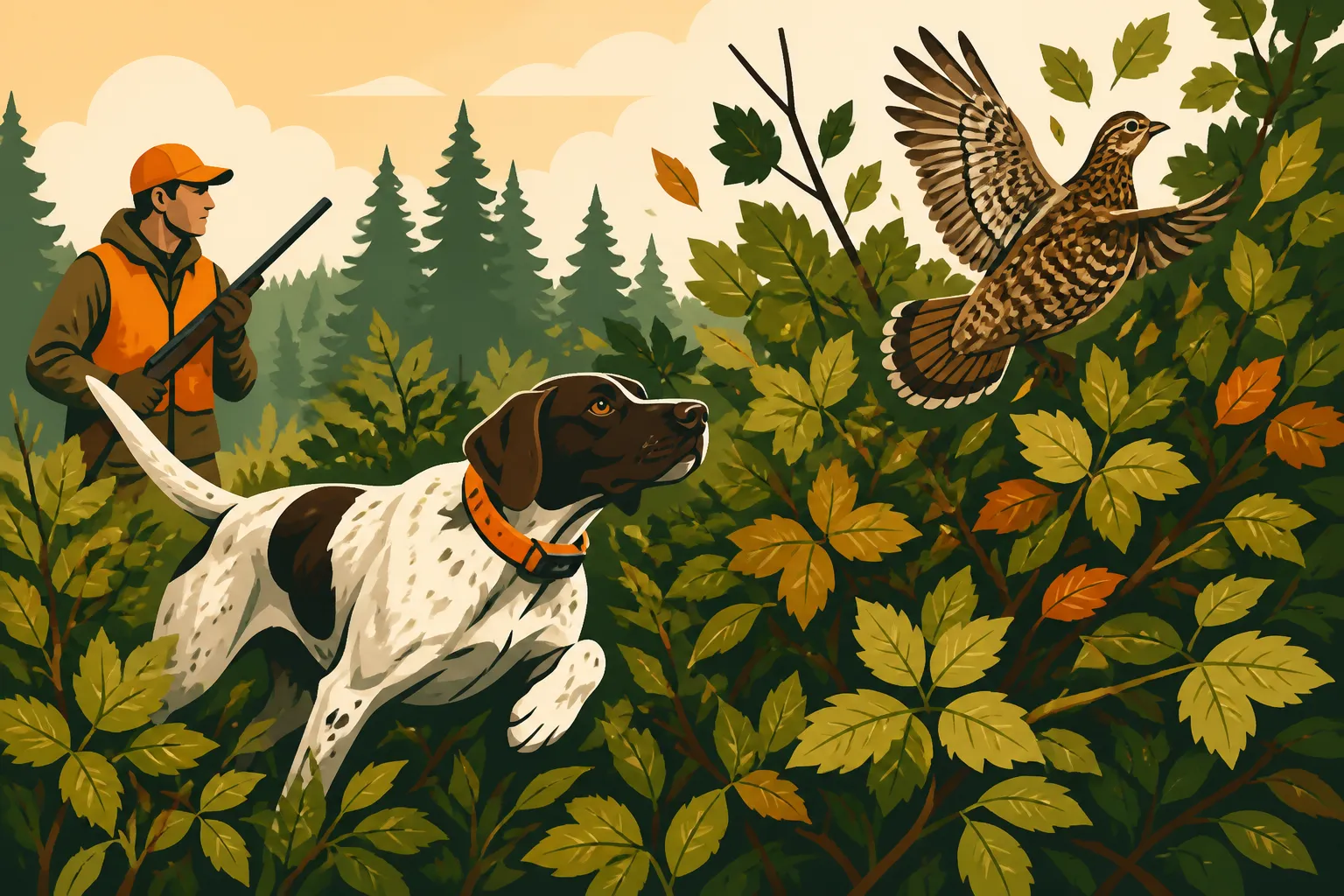
This is where the flushing dog comes into its own. Instead of freezing on point, a flushing dog's natural instinct is to push ahead, scenting out birds and, as the name suggests, flushing them into the air. This active, aggressive search pattern is incredibly effective in thick cover where birds are prone to running or holding tight in dense tangles.
Breeds like Springer Spaniels, Cocker Spaniels, and Boykin Spaniels are classic examples of flushing dogs. Their smaller stature, incredible drive, and often boundless energy allow them to weave through heavy brush that might slow down larger pointing breeds. Labrador Retrievers are also fantastic flushers, especially when trained for upland work, bringing their powerful retrieving drive to the mix. These dogs work within gun range, systematically quartering the cover in front of the hunter. When they hit scent, they don't point; they accelerate, diving into the cover to get that bird up. This forces the bird to take flight, often close enough for a shot.
The beauty of a flusher is that they keep the bird moving, denying it the chance to run unseen on the ground. When a grouse decides to duck and weave through a cedar swamp, a good flusher is right on its tail, forcing it airborne. This means the hunter always knows roughly where the dog is working and, more importantly, can anticipate where the flush will come from. It's a dynamic, exciting way to hunt, and it’s incredibly productive in the kinds of places where other methods often fall short.
Training Your Flushing Dog for Ontario's Conditions
Bringing a flushing dog into the dense Ontario bush requires more than just a dog with a good nose and a desire to hunt. Proper training is paramount, not only for success but for the safety of both you and your canine companion. It's a journey that builds on basic obedience and progresses to specialized field skills.
Foundation Training and Obedience
Before you even think about chasing grouse, your flushing dog needs a rock-solid foundation in obedience. Commands like "heel," "sit" (or "whoa" if you prefer a different command for holding position), and "come" are non-negotiable. "Heel" ensures your dog walks politely beside you, crucial when navigating tight trails or around other hunters. "Sit" on command is vital for steadiness before a retrieve or when you need them to stop immediately for safety. And "come" is perhaps the most important command, ensuring your dog returns to you promptly, no matter the distraction.
The "retrieve" command is also fundamental. Start with retrieving dummies in low-distraction environments and gradually increase the challenge. Make it fun, make it rewarding. These early lessons build confidence and reinforce the idea that bringing things back to you is a good thing.
A key aspect often overlooked is working through distractions. Ontario's bush is full of temptations: deer, squirrels, rabbits, porcupines, and even other domestic animals near settled areas. Your dog must learn to ignore these and focus on the task at hand. This means practicing obedience in increasingly stimulating environments. You can't expect a dog that breaks on a squirrel in the park to ignore a bolting whitetail in the woods. Early and consistent exposure, coupled with firm but fair correction and plenty of positive reinforcement, will build the reliable control you need.
Developing the Flush and Retrieve
Once the basics are solid, you can move to developing the specific skills needed for upland hunting. This involves teaching your dog to quarter within gun range, to flush birds, and to retrieve efficiently.
Start with quartering drills in an open field, using hand signals to guide your dog left and right. The goal is to have them work in a systematic pattern, covering the ground ahead of you, rather than just running wild. You want them to work close enough that when a bird flushes, it’s within your effective shooting range. This is often where tools like a good GPS collar come in handy, allowing you to monitor their range and correct if they get too far out. Using an app like GoHunt can help you map out potential training areas and understand the terrain even before you step foot in it.
Introduce training dummies or dead birds in progressively thicker cover. Hide them and send your dog to find and retrieve them. This builds their nose work and confidence in heavy brush. Once they're proficient, you can move to live birds like pigeons or pen-raised quail. Release a bird, let your dog find it, and encourage the flush. The goal isn't to point, but to get the bird flying. Steadiness to wing and shot is critical here – the dog should sit or "hup" when the bird flushes, allowing you to shoot safely, and then retrieve only on command. This takes immense self-control for a high-drive flusher and requires repetition and patience.
Introducing to Gunfire and Real Birds
The sound of gunfire can be startling, so introduction must be gradual and positive. Start with a .22 blank pistol fired at a distance while your dog is engaged in a positive activity, like eating or playing. Gradually reduce the distance and increase the caliber, always associating the sound with something good. Never force a dog into a situation where they become gun-shy.
When it's time for their first real bird encounters in the field, choose a day with good conditions and accessible cover. Manage your expectations. The first few flushes might be chaotic. Your dog will be excited, possibly forgetting some commands. This is normal. Your job is to reinforce the training you’ve already instilled. When a bird flushes, call out "hup" or "sit," and praise them heavily if they comply, even if it's just for a second. If you get a shot and drop a bird, make the retrieve a triumph. This positive association between flushing, gunfire, and a successful retrieve is what builds a reliable hunting partner. Remember, consistency is key; every trip to the field is a training opportunity.
Strategies for Hunting with a Flushing Dog in Ontario's Cover
Hunting with a flushing dog is a dynamic, active experience. It's a partnership where both dog and hunter need to be in tune with each other and the environment. Success often comes down to understanding the cover, anticipating the flush, and maintaining safety.
Reading the Cover and Working as a Team
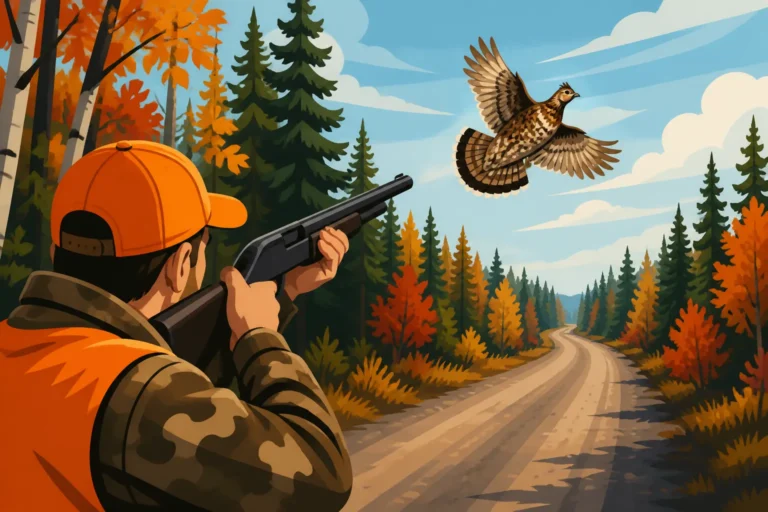
Ontario's varied landscape offers incredible upland hunting, but it's not all uniform. Prime habitat for ruffed grouse might be found in young aspen stands or along old logging roads, while woodcock often prefer the damp, dense growth of alder bottoms. Knowing where to focus your efforts is half the battle. Using mapping tools, like those available through GoHunt, can help you identify these specific habitat types before you even lace up your boots. For example, knowing how to approach Hunting Ruffed Grouse on an Ontario Bush Road is different than navigating a thick, wet area perfect for woodcock, such as when Hunting Woodcock in Ontario Alder Bottoms.
Once you're in suitable cover, the key is to work systematically. Think of it like mowing a lawn; you want to cover every potential hiding spot. This often means "gridding" an area, walking in a pattern that allows your dog to sweep back and forth in front of you. Maintain communication with your dog using verbal cues and hand signals. A good flusher should check in with you regularly, perhaps looking back for direction, or instinctively working in a pattern that keeps them within gun range. Pay attention to the wind, too. While pointing dogs benefit from working into the wind to scent, flushers can be worked in various directions depending on the cover and how birds are holding. Often, working crosswind can be very effective as it disperses scent across a wider area, helping your dog pick up on birds.
The Dynamics of the Flush and Shot Opportunity
The moment of the flush is exhilarating and demands quick reactions. Unlike a pointing dog, where you walk in on a static point, with a flusher, the bird could go up at any moment. You need to be ready. This means carrying your shotgun safely but at the ready, eyes scanning the cover ahead, anticipating where a bird might burst out.
When your dog hits scent and intensifies its search, get prepared. The dog will likely dive into the thickest part of the cover, pushing the bird out. As the bird flushes, quickly mount your gun, assess the safe shooting lane, and take your shot. Remember your training: your dog should be steady to the shot, allowing you to focus entirely on the bird. After the shot, if the bird is down, command your dog to retrieve. A good flusher will have marked the fall and will go directly to the bird, retrieving it gently to hand. Dealing with cripples requires a calm approach. If a bird is wounded and running, your flusher's drive to find and retrieve becomes invaluable, ensuring no game is wasted.
Safety Considerations in Thick Ontario Bush
Safety is paramount, especially when hunting with a dog in dense cover. The first and most critical rule is visibility. Both you and your dog should wear blaze orange. A bright orange vest or bandana for your dog makes them incredibly visible, preventing accidental shootings and making it easier to track them in the dense foliage. Ontario has specific Ontario Blaze Orange Requirements for hunters, and extending that to your dog is just good sense.
Using dog bells can help you keep track of your flusher's movements even when you can't see them. The change in the bell's rhythm often indicates they're on scent or have stopped. GPS collars, like the Garmin Alpha series, are an absolute game-changer for flushers. They not only show your dog's location on a mapping device but can also alert you when they go on point (though less common for a flusher, it does happen) or if they stop moving, which might indicate they're on a retrieve or have encountered an issue. GoHunt's mobile app also offers robust mapping features that can integrate with GPS units, helping you navigate and track your dog's progress.
Beyond visibility, consider your dog's physical well-being. Ontario's bush can be tough on paws, with sharp sticks, rocks, and icy patches in late fall. Consider paw protection like dog boots if the terrain is particularly harsh. Carry a small dog first-aid kit with essentials for cuts, scrapes, and quills. Porcupines are common in Ontario, and a dog full of quills can quickly end a hunt. Ensure your dog stays hydrated, especially on warmer early season days. Even in cooler weather, active dogs can overheat, so provide plenty of water and rest breaks. Always scan your dog for ticks after a hunt, particularly in regions where Lyme disease is a concern.
| Breed | Average Weight (lbs) | Key Traits for Flushing | Ideal Ontario Game | Notes |
|---|---|---|---|---|
| English Springer Spaniel | 40-50 | High drive, excellent nose, compact, systematic quartering | Grouse, Woodcock, Pheasant | Very popular, biddable, good retrieve. |
| Cocker Spaniel | 20-30 | Small, agile, relentless in thickets, strong retrieve | Woodcock, Grouse | Great for extremely dense cover, smaller birds. |
| Labrador Retriever | 55-80 | Powerful, strong nose, versatile, excellent retriever | All upland birds, waterfowl | Can be trained to flush close, great for cripples. |
| Boykin Spaniel | 25-40 | Medium-sized, good stamina, eager to please, strong retriever | Grouse, Woodcock | Less common in Ontario, but excellent flushers. |
Common Challenges and Solutions When Hunting with a Flusher
Even with the best training, hunting with a flushing dog presents its own set of challenges. Understanding these and having strategies in place can make your hunts more productive and enjoyable.
Dealing with Running Birds
One of the most persistent frustrations, especially with ruffed grouse, is their tendency to run on the ground rather than flush, particularly in thick cover or when pressured. You might hear your dog's bell intensify, indicating scent, only for the bird to disappear silently. While flushers are designed to prevent this, a particularly crafty bird or an overzealous dog can still lead to a "runner."
The solution lies in maintaining range control and learning to read your dog. A good flusher will work within 15-25 yards of you. If a bird runs, the dog should be close enough to stay on its scent trail, pushing it until it either flushes or gets pinned in an impenetrable tangle. When you notice your dog's pattern change, or their speed increase, be ready. Adjust your pace to match your dog's. Sometimes, a quick burst of speed from you can close the gap, or even coming to a sudden stop can make a bird that's running feel like it's been outmaneuvered and force a flush. It’s a constant game of cat and mouse, but with a good flusher, you have a much better chance of getting that bird airborne.
Controlling Range and Steadiness
The boundless energy and prey drive that make flushers so effective can also be their biggest challenge: keeping them within gun range and steady to wing and shot. An over-eager flusher can quickly get out of range, flushing birds too far for a clean shot, or breaking on the flush, chasing the bird and creating unsafe shooting conditions.
Consistent reinforcement is the answer here. During training, and every time you're in the field, diligently reinforce "whoa" (or "hup") and "heel." If your dog starts to get too far out, call them back to heel and then send them out again, perhaps with a smaller quartering pattern. E-collars, when used correctly and humanely, can be an invaluable tool for reinforcing these commands at a distance. They are not for punishment, but for subtle communication and reinforcement of commands your dog already knows. A quick, low-level stimulation can remind an excited dog to check back in or to "hup" on the flush. Practicing this in a controlled environment, moving from less to more cover, will build a reliable hunting partner. Remember, the goal is to make the dog want to stay close, understanding that good things (like retrieves) happen when they work with you.
Navigating Difficult Terrain and Water
Ontario's hunting grounds are often not flat, manicured fields. You’ll encounter everything from dense cedar swamps and rocky outcrops to downed timber and beaver ponds. These present physical challenges for both you and your dog.
Train your dog to navigate varied terrain. Walk through different types of cover during training sessions. Introduce them to water retrieves in controlled environments so they are confident and capable of retrieving a downed bird from a beaver pond or a marshy edge. Dogs with webbed feet, like most spaniels and Labs, are naturally suited for water work, but confidence needs to be built. For areas with heavy downed timber or rough ground, be mindful of your dog's paws. Cuts and abrasions can be common. Some hunters opt for protective dog boots in these situations. Always be aware of your surroundings; a dog focused on scent might not see a dangerous drop-off or a thin patch of ice. Your job as the handler is to guide them safely through these hazards. A tool like GoHunt's mapping features can show you contour lines, water bodies, and rough terrain, helping you plan your route to avoid the worst obstacles and ensure your dog is not put in unnecessary danger.
Ultimately, hunting with a flushing dog in Ontario's thick bush is a rewarding experience. It's a testament to teamwork, instinct, and a deep appreciation for the thrill of the hunt in challenging environments.
Disclaimer
Hunting is an activity that carries inherent risks. Always prioritize safety, adhere to all local, provincial, and federal hunting regulations, and ensure you have the necessary licenses and permits. The information provided here is for educational purposes and should not replace professional training or expert advice. Always verify current regulations and conditions with the Ontario Ministry of Natural Resources and Forestry.