Hunting Coyotes on Ontario Farm Ground
Hunting coyotes on Ontario farm ground can feel like a game of cat and mouse, especially when you're dealing with wily predators that have learned to navigate human activity and vast, open fields. Many hunters get frustrated trying to coax these intelligent canids into range, often spooking them before they even know what happened. This guide will walk you through the nuances of targeting coyotes in Ontario's agricultural landscapes, from understanding their habits to mastering the tactics and gear needed for a successful hunt, ensuring you're well-equipped to face these cunning animals.
Understanding Ontario Farm Coyotes
Coyotes are incredibly adaptable animals, and nowhere is this more evident than in Ontario's vast agricultural regions. Unlike their bush country cousins, farm coyotes live a life dictated by crop cycles, livestock, and the constant presence of human activity. They're often bolder, yet simultaneously more cautious, having learned to exploit resources while avoiding detection.
Why Coyotes Thrive in Agricultural Areas
Farm country offers a buffet for coyotes, which is precisely why they thrive there. Think about it: fields of corn, soybeans, and other crops provide excellent cover, not just for the coyotes themselves, but for their primary food sources like mice, voles, rabbits, and even young deer. Farmers' fields also often border woodlots, fencerows, or swamps, creating perfect transition zones where coyotes can hunt, hide, and travel unseen. These areas are rich with food, whether it's rodents attracted to spilled grain, the occasional lost chicken, or even deer fawns in the spring. This constant food supply, combined with ample cover and often less predatory pressure than deep wilderness, makes agricultural land prime coyote habitat. They become masters of using the subtle contours of the land, the shadows of the bush edge, and even the noise of farm machinery to their advantage.
Reading the Landscape: Key Farm Features
Successfully hunting coyotes in farm country starts with truly understanding the landscape. It’s not just open fields; it’s a mosaic of different habitats. Look for those critical intersections: where a dense cedar swamp meets a sprawling cornfield, or where a gnarly fencerow provides a travel corridor between two large open spaces. River bottoms and creek beds are natural highways for coyotes, offering cover and a direct route through open country. Old, abandoned farmsteads, even just a crumbling foundation or an overgrown apple orchard, can be magnets for small game, and thus, for coyotes. When scouting, pay close attention to pinch points – narrow strips of cover that coyotes must use to travel between feeding and bedding areas. These could be small woodlots, thick brush lines along a ditch, or even a deep gully running through a field. Identifying these key features will allow you to predict their movements and set up an ambush.
Seasonal Movements and Behavior
Coyote behavior shifts dramatically with the seasons in agricultural settings. In the late summer and fall, after the pups are old enough to travel, family groups might be seen more often, often moving along the edges of standing corn or soybean fields. As crops come off in the fall, coyotes become more exposed and may shift their daytime bedding to thicker woodlots, reverting to night hunting in the now-open fields. During the breeding season in late winter (January-March), male coyotes become much more vocal and territorial, responding aggressively to challenge howls and distress calls. This is a fantastic time to use specific calling sequences to draw them in. In spring, when fawns are being dropped, coyotes will be actively hunting the thickets and edges of fields where deer seek cover. Understanding these seasonal patterns, and how they relate to the local agricultural cycle, is crucial for timing your hunts and choosing the right tactics.
Essential Gear and Setup for Farm Country Coyote Hunting
Hunting coyotes in Ontario's agricultural land demands a specific approach to gear. You're often dealing with animals that have seen it all, are incredibly wary, and operate in environments that offer long sightlines and minimal cover. Your equipment needs to match the challenge.
Calling Systems: Electronic vs. Hand Calls
Choosing your calling system is paramount for farm country coyotes. Both electronic calls and hand calls have their place, and often, the most successful hunters use a combination.
- Electronic Calls: These are incredibly versatile. They offer a vast library of sounds, from rabbit distress to fawn bleats, pup yips, and even various coyote vocalizations. The ability to place the caller away from your position (upwind, ideally) means the coyote's focus is drawn away from you. This can be a huge advantage in open fields where concealment is limited. Brands like Foxpro or Icotec offer excellent units that can be controlled remotely, allowing you to change sounds and volume without moving a muscle. The sheer realism and volume capabilities of electronic calls make them a top choice for reaching out across large fields and drawing in distant coyotes. They also help immensely when you are trying to perfect your calling, as you can focus more on the hunt and less on your technique.
- Hand Calls: While more challenging to master, hand calls offer unparalleled realism and the ability to instantly adapt the tone, volume, and cadence of your call. A skilled caller can inject emotion and desperation into a distress call that an electronic call might miss. They are also silent to set up and carry, require no batteries, and are far more affordable. Having a few different hand calls – a good rabbit distress, a fawn bleat, and perhaps a howler – can be an excellent backup or a primary tool for subtle calling when a coyote is already close. Many experienced hunters will use an e-caller for the initial setup and long-range calling, then switch to a hand call for the final few moments to really seal the deal as a coyote gets closer and begins to scrutinize the sound source.
| Calling System | Pros | Cons | Best Use Case |
|---|---|---|---|
| Electronic Calls | Wide variety of realistic sounds, remote operation, high volume, less user skill required. | Requires batteries, more expensive, can be bulky, less adaptable to subtle changes. | Long-range calling, open country, beginners, varied sound libraries. |
| Hand Calls | Highly realistic with practice, lightweight, no batteries, affordable, extremely adaptable. | Requires significant practice and skill, limited sound variety (per call), lower volume. | Close-range finishing, subtle calling, backup, experienced callers. |
Camouflage and Concealment
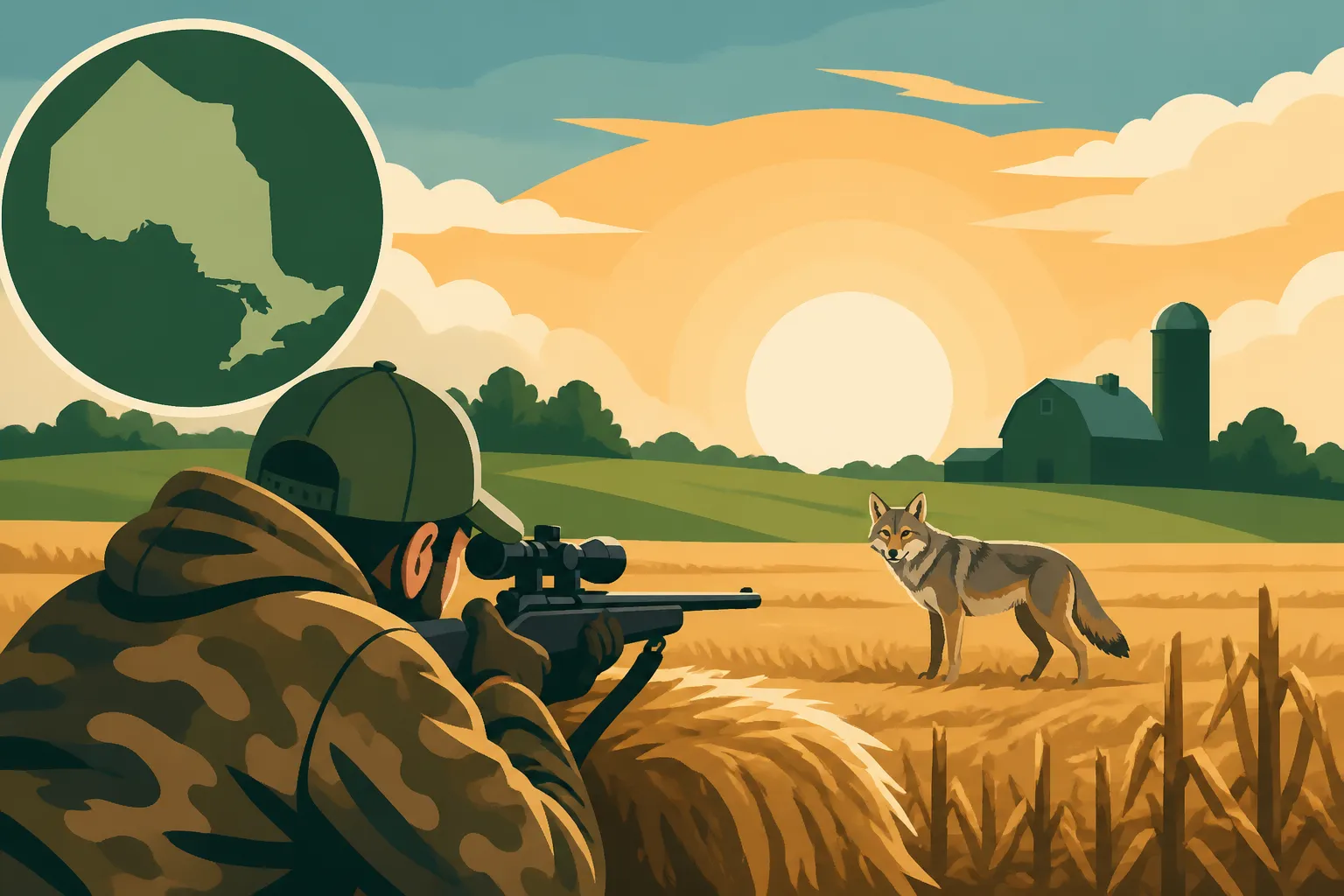
When hunting coyotes in farm country, blending in is non-negotiable. These animals have incredibly keen eyesight and can pick out unusual shapes and movements from hundreds of yards away. Forget your bright blaze orange for this; it's about complete concealment. A good complete camouflage pattern, often one with natural greens, browns, and grays that mimic the local vegetation, is essential. For fall and winter hunting, patterns with snow or muted tones are ideal. More importantly than the pattern, however, is how you use it. Ground blinds, whether pop-up or improvised, are highly effective. A ghillie suit can turn you into a lump of brush, breaking up your human outline entirely. Always hunt with the wind in your face or crosswind, as a coyote's nose is its primary defense. Position yourself against a natural backdrop that breaks up your outline – a dark bush edge, a shadow line, or even a large hay bale. Staying motionless is often more crucial than the most expensive camo pattern. Think like a predator, and use any available cover to disappear into the landscape.
Firearms, Ammunition, and Optics
Your choice of firearm, ammunition, and optics needs to be precise for farm country coyotes, where shots can often be long, and quick follow-ups are sometimes necessary.
- Firearms: For rimfire, the .22 WMR is a decent choice for close-range work, but often not quite enough punch for larger, tougher coyotes or longer shots. Centerfire rifles are the go-to. The .223 Remington is arguably the most popular, offering a flat trajectory, minimal recoil, and affordable ammunition. Other excellent options include the .22-250 Remington, .204 Ruger, and the new 6mm ARC, all known for their high velocity and accuracy. If you're dealing with thick bush edges or need to handle potential deer crossings, a 12-gauge shotgun loaded with buckshot can be surprisingly effective for close-range ambush setups.
- Ammunition: Choose dedicated coyote rounds. These typically feature lighter, frangible bullets designed to expand rapidly upon impact, delivering maximum energy to the target while minimizing the risk of over-penetration, which is a major concern in farm country where you might be shooting towards distant buildings or roads. Hornady V-Max, Nosler Varmageddon, and Winchester Varmint X are all popular choices. Always confirm your rifle's accuracy with your chosen ammunition before heading afield.
- Optics: A high-quality scope with variable magnification (e.g., 3-9x or 4-12x) is ideal. You want enough magnification for precise long shots but the ability to dial down for quick target acquisition if a coyote pops up closer than expected. A clear, bright reticle is crucial, especially for hunting coyotes at first light or last light. Consider a scope with a ballistic reticle or turrets that allow for quick adjustments for varying distances. Finally, don't overlook a good set of binoculars (10×42 are excellent) for scanning those vast fields and picking out the subtle movement of an approaching coyote. Remember, a tool like GoHunt can help you scout and locate potential stand locations before you even step foot in the field, helping you determine optimal distances and lines of sight for your optics.
Tactics for Hunting Coyotes on Farmland
Hunting coyotes on Ontario farmland requires a blend of calculated strategy, patience, and the ability to read the subtle cues of the environment. Unlike dense bush, the open nature of farm fields demands meticulous planning for every aspect of the hunt.
Strategic Stand Placement
Your stand placement is perhaps the most critical factor for success in farm country. You need to maximize your visibility while minimizing your own exposure. A common mistake is setting up in the middle of an open field, thinking you can see everything. Instead, focus on the edges and transition zones. A well-chosen spot might be along a bush edge overlooking a large field, providing a dark backdrop and broken silhouette. Consider Hunting a Fencerow Between Two Fields as coyotes often use these linear features for travel. An elevated position, like a hay bale (with permission, of course) or a slight rise, can give you a better view. Always position yourself with the wind in your face or a consistent crosswind to prevent your scent from carrying towards approaching coyotes.
When setting up, think about escape routes for the coyote. If you block all obvious paths, they might get suspicious. Leave a perceived "safe" route for them to approach, guiding them into your shooting lane. Have a clear field of fire that allows for a long shot if necessary, but also has closer areas where you can expect them to appear. Using a mapping tool, perhaps even something like GoHunt, to scout potential locations remotely, marking wind directions and possible approach vectors, can save you a lot of time and effort in the field. Remember to have secondary positions in mind if the wind shifts or if your primary spot doesn't yield results.
Effective Calling Sequences
Calling coyotes is an art, and in farm country, it’s about both volume and subtlety. You want to be loud enough to reach distant animals across expansive fields, but ready to soften your calls as they get closer.
Start with a loud, attention-grabbing distress sound, like a jackrabbit or cottontail in distress, especially if you're trying to cover a large area. Play it for 30-60 seconds, then go silent for 2-3 minutes. This waiting period is crucial; often, a coyote will be on its way silently. Watch the downwind side especially, as they frequently circle to get a whiff of the "prey."
If nothing responds after a few sequences, you might try a different distress sound or switch to pup distress calls, which can appeal to a wider range of coyotes, especially curious juveniles or adults protective of their territory. During the breeding season, challenge howls or female invitation howls can be incredibly effective at drawing in dominant males. For farm coyotes, sometimes less is more. If you know they are in a specific woodlot or along a particular treeline, a soft, intermittent whimper or mouse squeak can draw them out without over-alarming them. This is where a good hand call comes into its own, allowing for that realistic, nuanced sound. Always be prepared for a coyote to appear quickly and silently, often from a direction you least expect.
The Art of the Approach and Retreat
Getting to and from your stand without spooking every coyote in the county is often half the battle. This is particularly true in open farm country where sound travels far and cover is limited. Always approach your chosen setup location stealthily, ideally during low light conditions like pre-dawn or late afternoon. Use existing cover – fencerows, ditches, the edges of woodlots, or standing crops (if permissible) – to shield your movements. Walk slowly, pause frequently to listen and scan, and avoid making unnecessary noise. If you're using a vehicle, park it well out of sight and as far away as practical from your hunting area.
Once you’ve completed your calling sequence or if no coyotes have appeared, the retreat is just as important. Don't just stand up and walk away. Scan the area one last time. Coyotes are notorious for watching from a distance, and they may have been observing your setup without ever showing themselves. If you bolt out of there, you've confirmed their suspicions. Instead, retreat slowly and cautiously, again using available cover. This practice not only keeps you from educating the coyotes you didn't see, but it also allows you to observe any animals that might still be moving towards your setup. Always plan your approach and retreat routes meticulously before you even leave your vehicle.
Key Considerations for Success
Hunting coyotes on Ontario farm ground isn't just about calling and shooting; it involves a deeper understanding of responsible hunting practices, especially when operating in areas close to human habitation. Ignoring these considerations can lead to frustration, conflict, or even legal trouble.
Securing Landowner Permission
This is, without a doubt, the most crucial step when Hunting Coyotes on Ontario Farm Ground. Unlike vast tracts of Crown Land further north, most agricultural areas in Southern Ontario are privately owned. Without explicit permission from the landowner, you are trespassing, which can carry significant penalties and damages the reputation of all hunters. Never assume implied permission; always ask directly and respectfully. When approaching a landowner, be polite, well-groomed, and clearly state your intentions. Offer to share any harvest and explain the benefits of coyote control for their livestock or deer population.
Some farmers are eager to have coyotes removed, while others are hesitant. Be prepared for a "no." If they say yes, ask about specific boundaries, any areas that are off-limits (like around buildings or livestock), and their preferred method of contact. Respect their property as if it were your own. Close gates, don't litter, and drive only on designated access points. Building a good relationship with a landowner can open doors for future hunting opportunities, perhaps even for Hunting Deer in Southern Ontario Farmland or Getting Permission for a Goose Field. Remember, one bad experience can ruin access for many hunters, so always be a responsible ambassador for the sport.
Safety Protocols in Populated Areas
Hunting in agricultural settings often means you're in closer proximity to homes, roads, and other people than if you were deep in the wilderness. This demands an even higher degree of vigilance regarding safety. Always be aware of your surroundings and your backstop. Know exactly what lies beyond your target. Never take a shot if there's any doubt about where the bullet will end up. Use proper shooting angles that direct your shot into the ground or a natural berm.
Communicating with the landowner about your presence is key; let them know when and where you'll be hunting. It’s also wise to check local bylaws and regulations concerning firearms discharge in specific townships or municipalities, as these can vary. While Night Hunting Rules for Ontario Predators might allow for hunting after dark in some areas, the heightened risks in populated areas should make you extremely cautious. Consider using non-toxic ammunition if required or preferred by the landowner. Always follow all general hunting safety rules, including knowing your target and what's beyond it, keeping your muzzle in a safe direction, and treating every firearm as if it's loaded.
Understanding Regulations and Reporting
Ontario has specific regulations that govern coyote hunting, and these can differ based on the Wildlife Management Unit (WMU) you are in. Before heading out, consult the current Ontario Hunting Regulations Summary, easily found online through the Ministry of Natural Resources and Forestry (MNRF). Pay close attention to season dates, bag limits (if any), and legal methods of take for your specific WMU. While coyotes are often classified as furbearers with open seasons or no closed season, it's crucial to confirm.
Also, be aware of specific rules regarding baiting (generally allowed for coyotes but with restrictions), calling devices, and firearm types. Some WMUs may have restrictions on rifle calibers or require shotgun-only hunting in certain zones. If you're a non-resident, ensure you understand Rules for Non-Residents Hunting Ontario and how they apply to coyote hunting. Remember to keep abreast of any changes, as regulations can be updated annually. While reporting a coyote harvest isn't always mandatory in the same way it is for big game, understanding how Ontario's Wildlife Management Units operate and any specific local rules will help ensure you're hunting legally and ethically. Tools like GoHunt can provide overlays for WMU boundaries, helping you stay compliant.
Disclaimer
Please be aware that hunting regulations, seasons, and licensing requirements in Ontario can change. Always consult the most current Ontario Hunting Regulations Summary published by the Ministry of Natural Resources and Forestry (MNRF) or call your local MNRF office before planning any hunt. This article is for informational purposes only and does not supersede official government regulations. Always prioritize safety and ethical hunting practices.