Flying to Ontario With a Rifle
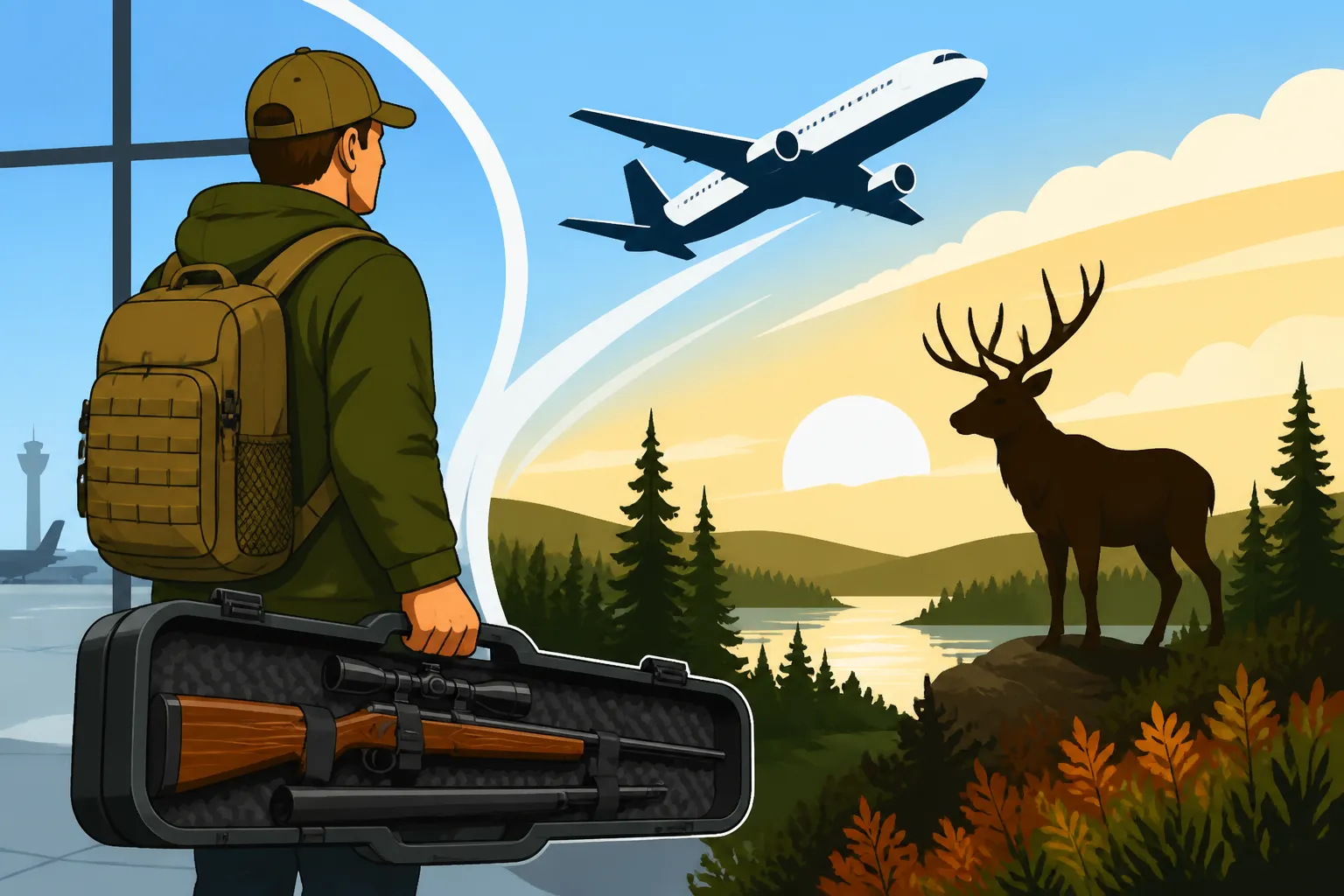
The thought of flying with a rifle can stir up a lot of anxiety, especially when you're crossing an international border into a place like Ontario for a hunting trip. It feels like a minefield of regulations, paperwork, and potential hiccups. This guide is here to untangle that knot, walking you through the ins and outs of bringing your firearm safely and legally into Ontario, ensuring your focus remains on the hunt, not the hassles.
Understanding Canadian Firearm Regulations for Non-Residents
Before you even think about packing your bags, let alone your rifle, it's absolutely crucial to understand Canada's firearm regulations. Canada has a reputation for being strict, and for good reason. Trying to enter the country without the proper documentation and understanding can lead to significant delays, confiscation of your firearm, and even charges. It's not a place where you want to "wing it." You need to be fully prepared and knowledgeable about what's expected of you as a non-resident hunter.
Non-Restricted vs. Restricted Firearms
In Canada, firearms are categorized, and for hunting purposes, you'll almost exclusively be dealing with what's called a "non-restricted" firearm. These are typically your standard hunting rifles and shotguns. They're the workhorses of the bush and the fields, designed for sport and sustenance. Think of your bolt-action .30-06, your trusty 12-gauge pump, or your lever-action .30-30. These are generally permitted for hunting if declared correctly.
However, Canada also has "restricted" and "prohibited" categories, and this is where many non-residents can run into trouble. Restricted firearms include most handguns and certain semi-automatic rifles, while prohibited firearms include fully automatic weapons, converted automatics, and certain short-barreled firearms. As a general rule of thumb, leave your handguns and "tactical" style semi-automatic rifles at home. Even if they're legal for hunting in your home country, they are very likely to be considered restricted or prohibited here, and getting permission to bring them in is exceptionally difficult, if not impossible, for non-residents. Stick to conventional hunting rifles and shotguns, and you'll simplify your life immensely. It's always best to err on the side of caution and ensure your firearm falls squarely into the non-restricted category before you start planning your trip. For more details, you can look into Legal Firearms and Bows for Big Game.
The Non-Resident Firearm Declaration Form (CAFC 909)
This form is your golden ticket, the absolute cornerstone of bringing your rifle into Canada. The Non-Resident Firearm Declaration Form, officially known as CAFC 909, is essentially a temporary firearm license that you obtain at the border. It's a mandatory document, and attempting to enter without it completed (or knowing how to complete it) will halt your journey right there. The key is to fill it out in advance of your arrival, but do NOT sign it. You must sign it in front of a Canada Border Services Agency (CBSA) officer when you enter the country.
This declaration serves as proof that you're authorized to possess your specific hunting firearm(s) for a set period. There's a fee associated with processing this declaration, which generally covers a period of up to 60 days. You'll need to list all firearms you intend to bring, including their make, model, serial number, and caliber or gauge. Accuracy is paramount here; any discrepancies could cause significant delays or issues. Having multiple copies of the form, both blank and filled out, can be a lifesaver in case of a mistake. Think of it as your passport for your gun; without it, neither of you are going anywhere. You can find more comprehensive information about this process in The Non-Resident Firearm Declaration.
Ammunition Rules and Limits
It's not just the rifle you need to worry about; ammunition has its own set of rules too. Generally, you're allowed to bring reasonable quantities of ammunition for hunting purposes. However, there are specific types of ammunition that are strictly prohibited, such as incendiary, tracer, or exploding rounds. These are a definite no-go and will cause immediate problems if discovered. Stick to standard hunting ammunition – soft point, ballistic tip, or similar projectile types suitable for game.
The typical limit for personal use by a non-resident is up to 200 rounds of ammunition, though it's always wise to double-check with your specific airline, as they may have stricter limits than Canadian law. Your ammunition must be stored separately from your firearm, typically in a securely locked, hard-sided container (which can be inside your checked luggage, or a separate case), and cannot be in your carry-on baggage. It must also be in its original factory packaging or a similar sturdy container to prevent loose rounds. For safety reasons, never pack loaded magazines or loose ammunition directly into your firearm case. Following these rules meticulously will ensure a smooth process through both airport security and the border.
Airline Requirements and Procedures for Transporting Rifles
Navigating airline policies for firearms is almost as complex as understanding international border laws. Each airline can have slightly different rules, and it's your responsibility to know and adhere to them. Don't assume that because one airline allowed something, another one will. A little homework here can save you a world of grief at the airport check-in counter.
Choosing a Firearm-Friendly Airline
Not all airlines are created equal when it comes to transporting firearms. Some have clearer, more hunter-friendly policies, while others might be more ambiguous or restrictive. Before you book your flight, take the time to visit the "Special Baggage" or "Firearms" section of your prospective airline's website. Look for specific instructions regarding declaration, packaging, and any limitations on ammunition. It's often a good idea to call their customer service line directly to confirm their current policies, especially if you have any unique situations or firearms. Even within a single airline, policies can sometimes vary by origin and destination country, so be specific about your travel plans to Ontario.
Think about it: you're already investing in tags, licenses, and potentially an outfitter (perhaps found through resources like BookYourHunt). The last thing you want is a travel snag because of an airline technicality. A good airline will have clearly defined rules that are easy for staff to follow, which leads to a smoother experience for you. You might even find that some airlines are simply more accustomed to dealing with hunters, particularly those flying into regions known for their outdoor pursuits.
Secure Hard Cases and Locking Requirements
This is where your investment in quality gear pays off. Your rifle must be transported in a sturdy, non-transparent, lockable hard-sided case. Soft-sided cases, even if they have zippers for padlocks, are generally not acceptable for checked firearms. The case needs to be robust enough to withstand the rigours of baggage handling and prevent unauthorized access or accidental discharge. This isn't just a recommendation; it's a non-negotiable requirement.
When it comes to locks, the general rule for international travel, especially flying into Canada, is to use non-TSA accessible locks. While TSA-approved locks are convenient for domestic travel within the U.S. (allowing TSA to open them without you present), they are often not sufficient for international flights where only you should have access to the contents. Use strong, secure padlocks that completely prevent the case from being opened without the key or combination. Some hunters even double-lock their cases for extra security. The firearm itself should be unloaded, and typically, it's recommended to either remove the bolt or use a trigger lock inside the case for an extra layer of safety and compliance. Remember, the goal is to make it impossible for anyone to access or discharge the firearm until you retrieve it.
Declaration at Check-In and Airport Procedures
Arriving at the airport for your flight to Ontario with a firearm requires a bit more planning and time than a typical trip. You need to arrive significantly earlier than usual – at least two to three hours before a domestic flight, and even more for international. Your first stop is the check-in counter for your airline, not a self-service kiosk. This is where you will declare your firearm. Do not try to be discreet or hide the fact that you're traveling with a firearm; transparency is key.
When you declare your firearm, the airline agent will typically provide you with a declaration tag or sticker that you'll attach to your hard case. They will also likely ask to inspect the firearm to ensure it is unloaded. Be prepared to open your case for this inspection. Remember, your CAFC 909 form should be filled out but unsigned at this point. Once the airline confirms everything is in order, your case will proceed through special baggage handling. Sometimes this involves a separate screening area, or you might have to take it to an oversized baggage drop-off. Always follow the airline staff's instructions carefully. This part of the process can feel a little nerve-wracking, but staying calm, polite, and prepared makes a huge difference. Think of it as a small hurdle to clear before your big adventure.
Arrival in Ontario and Border Crossing Tips
You've made it to Canada! Now comes the final, crucial step: clearing Canadian customs and officially importing your rifle. This is where all your careful preparation comes into play. A smooth border crossing sets the tone for your entire hunting trip, whether you're heading to Hunting the Rainy River Country or Hunting the Haliburton Highlands.
Customs Declaration and Verification
Upon arrival at your Canadian port of entry (typically Toronto Pearson International Airport if flying commercially, or a smaller regional airport for general aviation), you will proceed to Canada Border Services Agency (CBSA) customs. When asked, you must declare your firearm. This is not the time to be shy or hope they don't ask. Be upfront and state clearly, "I am declaring a firearm for hunting purposes." You will then present your completed (and now ready to be signed) Non-Resident Firearm Declaration Form (CAFC 909) to the CBSA officer.
The officer will review your form, ask you questions about your trip, the type of firearm, and possibly your hunting license information. They will verify that your firearm is non-restricted and that you meet all other entry requirements. Once satisfied, you will sign the form in their presence, and they will validate it by stamping and dating it. This validated form is your official authorization to possess that specific firearm in Canada, and you must carry it with you at all times when your firearm is not securely stored. Keep it with your passport and other critical documents. This process, while thorough, is designed to ensure safety and compliance, so cooperation and honesty are paramount.
Common Mistakes to Avoid
The easiest way to turn a dream hunt into a nightmare is by making preventable mistakes at the border. Here are some of the most common pitfalls to avoid:
- Not declaring your firearm: This is the biggest and most serious mistake. Failure to declare a firearm is a serious offense and can lead to immediate seizure, significant fines, and potential arrest or being turned away from Canada permanently.
- Incorrectly filling out the CAFC 909: Any errors or omissions on the form can cause delays. Double-check serial numbers, makes, and models. Remember to leave the signature line blank until you're in front of a CBSA officer.
- Bringing prohibited firearms or accessories: As discussed, certain firearms (like most handguns or specific semi-automatics) and accessories (like high-capacity magazines beyond Canadian limits) are not permitted. Do your research diligently beforehand. Even an innocent oversight can have severe consequences.
- Improper storage or packaging: Ensure your firearm is unloaded, in a hard-sided, locked case, and that ammunition is stored separately as per regulations. If your case doesn't meet the standards, it will be an issue.
- Being dishonest or evasive: CBSA officers are trained to detect deception. Be polite, direct, and truthful in all your responses. Any attempt to conceal information will raise red flags.
By being meticulous and honest, you greatly increase your chances of a smooth and uneventful entry. Many hunters use resources like GoHunt to research specific regulations or find discussions from other hunters who have successfully navigated these waters.
What to Do If You Encounter Issues
Despite all your preparation, sometimes unexpected issues can arise. Perhaps a form gets misplaced, an officer has a question you weren't expecting, or there's a misunderstanding. The most important thing is to remain calm, respectful, and cooperative. Arguing with a border agent is a surefire way to escalate a minor issue into a major problem.
Politely ask for clarification if you don't understand a question or requirement. If you've been working with an outfitter, ensure you have their contact information readily available, as they may be able to provide context or assistance if needed. You can also ask to speak with a supervisor if you feel there's a genuine misunderstanding, but always do so respectfully. If the issue is with your firearm's classification, and you genuinely believed it was non-restricted, humbly explain your understanding and ask for guidance. In the rare event of a seizure, understand your rights, but don't resist. Document everything, and seek legal advice once outside the immediate border environment. Most issues can be resolved with patience and clear communication, as long as you've genuinely made an effort to comply with Canadian law.
Here's a quick summary of the key steps for flying to Ontario with your rifle:
| Step | Action | Key Point |
|---|---|---|
| 1. Research Firearm Type | Confirm your rifle is "non-restricted" under Canadian law. | Leave restricted/prohibited firearms (most handguns, certain semi-autos) at home. |
| 2. Complete CAFC 909 | Fill out the Non-Resident Firearm Declaration Form in advance. | Do NOT sign the form until you are in front of a CBSA officer at the border. Bring multiple copies. |
| 3. Check Airline Policy | Research your specific airline's rules for firearms and ammunition. | Policies vary; call to confirm. Arrive extra early for check-in. |
| 4. Secure Your Firearm | Place unloaded rifle in a sturdy, non-transparent, lockable hard case. | Use non-TSA locks. Consider removing bolt or using a trigger lock. |
| 5. Pack Ammunition Separately | Store up to 200 rounds in original packaging, securely in checked luggage, separate from the firearm. | No incendiary/tracer rounds. Ammunition must be in a secure container. |
| 6. Declare at Check-In | Verbally declare your firearm to the airline agent at the counter. | Be honest and cooperative. Be prepared for inspection. |
| 7. Declare at Canadian Customs | Verbally declare your firearm to the CBSA officer upon arrival in Ontario. | Present your CAFC 909. Sign it in the officer's presence. Keep the validated form with you. |
| 8. Carry Documentation | Keep your validated CAFC 909 with you at all times when the firearm is not securely stored. | This is your temporary license. |
The exhilaration of hunting in Ontario, whether it's for whitetails, moose, or bear, is an experience truly worth the preparation. From understanding the Ontario Hunting Licences and What They Cost to knowing your firearm laws, every step you take to prepare makes your trip smoother. When you fly to Ontario with a rifle, remember that diligence and respect for the regulations are your best allies. By following these guidelines, you'll not only ensure a compliant entry but also a more relaxed and enjoyable hunting adventure in Canada's vast and beautiful wilderness.
Disclaimer
This article is for general informational purposes only and does not constitute professional advice. Laws, prices and regulations vary by location and change over time. Consult a qualified professional for guidance on your specific situation.