Hunting a Burned Block Three Years On
Hunting a vast, sprawling landscape that was once ravaged by fire can feel like stepping into an alien world. The initial devastation is a stark reminder of nature's power, but fast forward three years, and you're no longer looking at ash and char; you're observing a vibrant, regenerating ecosystem. This guide is here to walk you through how to understand, scout, and effectively hunt these unique, recovering burned blocks in Ontario, offering strategies to make the most of what can be incredibly productive hunting ground.
The Dynamic Landscape of a Three-Year-Old Burn
A forest fire, while destructive in the short term, is a natural process that profoundly reshapes the landscape, often creating a bounty of new life and forage that attracts game animals. Three years on from a significant burn, you're looking at a fascinating stage of ecological succession that offers distinct advantages and challenges for hunters.
What Happens Ecologically Three Years Post-Burn
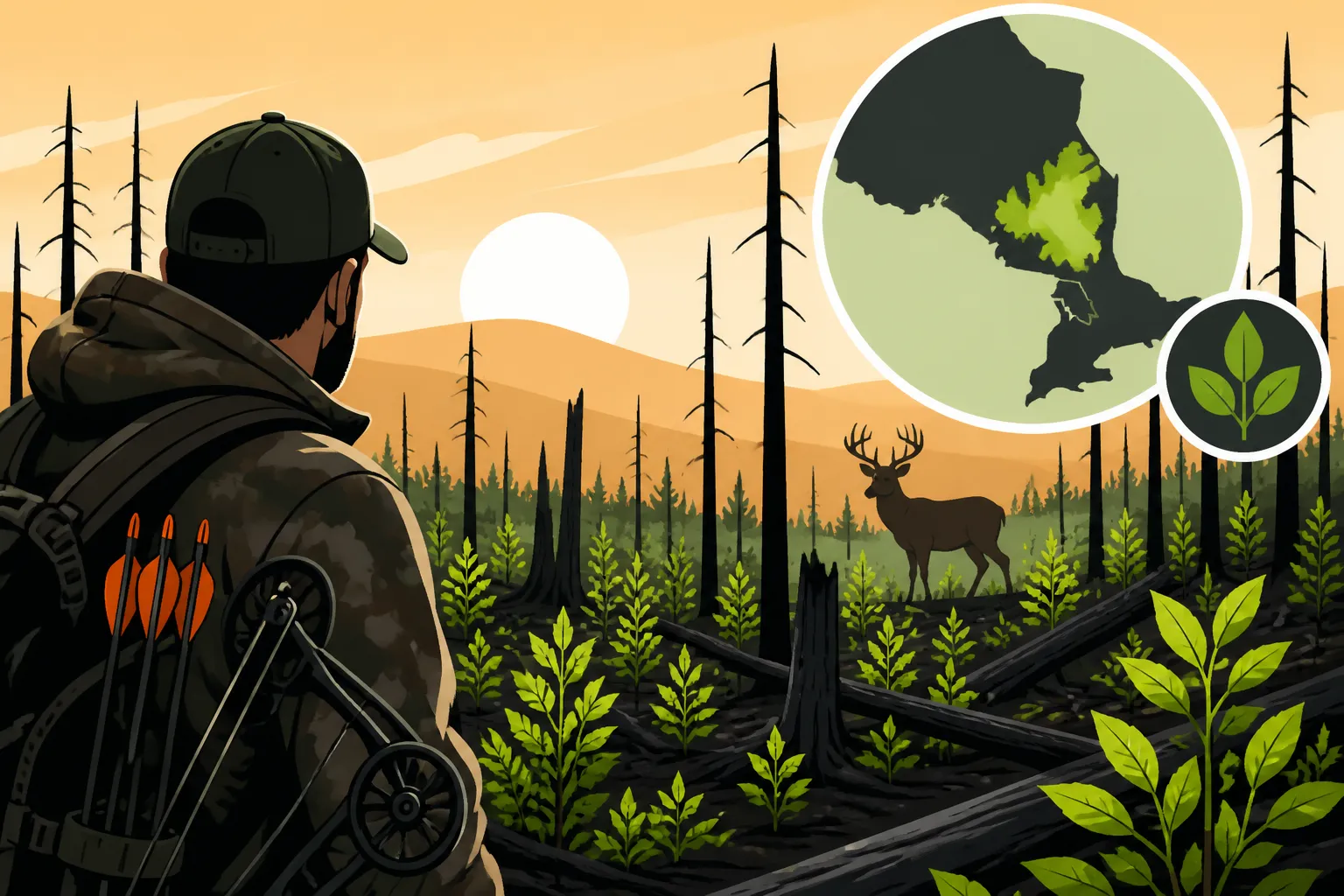
In the immediate aftermath of a fire, the ground is often bare and nutrient-rich from the ash. Within the first year, pioneering plants, grasses, and fast-growing forbs burst forth. By year three, this landscape has transformed dramatically. You're typically going to see dense growth of young saplings, particularly fire-adapted species like trembling aspen, birch, and willow. These species not only regenerate quickly but also sprout vigorously from their root systems, creating a thick, bushy understory. Think of it as a natural clear-cut, but with an organic boost. This dense, young growth provides incredible browse for herbivores and excellent cover from predators and the elements. The soil might still show signs of charring in places, but the dominant feature will be the explosion of green.
Furthermore, the fire often exposes mineral soil, which can be beneficial for certain plant species and for creating new travel corridors. Water flow might also be altered, creating new low spots or pooling areas that become vital watering holes. The overall effect is a highly productive, albeit often dense and challenging, habitat. What Wildfire Does to Ontario Game Range is a great resource to understand these changes more broadly.
How Different Game Species Utilize These Areas
Different game animals respond to these regenerating burns in their own ways, but many find them highly attractive.
- Moose: A three-year-old burn is often prime moose habitat. They are voracious browsers, and the explosion of young aspen, birch, and willow saplings provides an unparalleled food source. Moose will often feed heavily in these areas, seeking out the tender shoots and leaves. The dense cover also gives them security.
- White-tailed Deer: While moose are the kings of the browse, whitetails also benefit, especially from the dense cover. The regenerating shrubs and forbs offer good forage, though deer might also be drawn to edges where the burn meets mature timber, offering both food and escape routes.
- Black Bears: Bears are opportunists. In a three-year-old burn, they might be drawn to any early-fruiting berry bushes that have begun to recover, or they might simply use the dense cover for bedding and travel. They're also keen on any exposed ant hills or grubs that might have been revealed. Black Bear Hunting in Ontario covers more about their habits.
- Ruffed Grouse and Snowshoe Hare: These small game species absolutely thrive in young, regenerating forests. The thick cover provides protection from aerial predators, and the new growth offers food. You'll often find ruffed grouse feeding on buds and catkins, while snowshoe hare will be munching on young shoots. The density of cover can make hunting them challenging, but they'll be there.
Reading the Sign and Scouting Burned Blocks
Successfully hunting a three-year-old burned block requires keen observation and a solid scouting strategy. The landscape is unique, and traditional scouting methods might need a slight adjustment.
Interpreting Game Sign in Regenerated Terrain
The sign you find in a burned block can tell a powerful story, but you need to know what to look for. Because the vegetation is often dense and uniform, well-worn game trails can be less obvious than in mature timber. Instead, look for:
- Browsing Pressure: Pay close attention to the tips of young saplings and shrubs. Moose will leave distinct, ragged tears on twigs, while deer will make cleaner cuts. Heavy browsing indicates a regular feeding area. Look for moose droppings (large, pellet-like) and deer droppings (smaller, ovular pellets) in these areas.
- Beds and Rubs: Look for flattened areas in the dense undergrowth, especially on slight rises or sheltered spots, which indicate bedding areas. Moose will create very large beds. You might also find rubs on younger trees, where bulls or bucks have scraped their antlers. These will often be on smaller-diameter trees compared to those in older forests.
- Tracks and Wallows: The ground, especially if it's been exposed, can be great for showing tracks. Follow fresh tracks to understand travel patterns. Moose, in particular, might create wallows in wet, muddy depressions.
- Edges: The transition zones where the burned block meets unburned forest, swamps, or water bodies are often high-traffic areas. Animals will use these edges for security, travel, and access to different food sources.
Using satellite imagery, such as that provided by onX Hunt or GoHunt, is absolutely invaluable here. You can often see the distinct outline of the burn and identify areas of dense regeneration versus unburned pockets. This allows you to plan your approach and identify potential travel corridors even before you set foot on the ground. Scouting With Satellite Imagery in Ontario can help you get started.
Utilizing Mapping Technology to Your Advantage
Modern mapping tools are your best friend when navigating and understanding a burned landscape. These areas can be disorienting, with familiar landmarks gone and new growth obscuring visibility.
- Boundary Identification: First and foremost, use your app to precisely identify the boundaries of the burn. This helps you understand the extent of the regenerated area and how it interfaces with surrounding habitats. You can often see the fire's edge clearly on aerial photos from a few years prior, and then visualize how that area has grown in.
- Waypoint Dropping: As you scout, drop waypoints on any fresh sign: heavy browse, tracks, beds, or transition zones. This builds a picture of animal movement and helps you identify key areas for hunting.
- Topography and Water Features: The fire may have exposed new topographical features or altered drainages. Use your mapping app to identify ridges, low spots, and water sources that animals will naturally gravitate towards. A small pond or stream within a burned area can be a magnet for game, especially if other water sources are scarce.
- Layering and Markings: Many apps allow you to create custom layers or highlight specific areas. Mark areas of dense cover, openings, and potential ambush points. This visual representation will be critical for planning your hunt. Reading Ontario Crown Land Layers on onX is a great skill to develop for this.
Effective Hunting Strategies for Post-Fire Terrain
Hunting in a three-year-old burn requires patience, adaptability, and a willingness to get into thick cover. The strategies you employ will differ significantly from hunting mature, open timber.
Still-Hunting and Stalking in Dense Cover
Still-hunting is often incredibly effective in these dense, regenerating areas. The cover is thick, meaning animals will be close, and visibility will be limited.
- Slow and Deliberate: Move at a snail's pace, taking only a few steps, then stopping to scan and listen for several minutes. Use your binoculars constantly to pick apart the dense foliage. Animals will rely on their ears and nose in these conditions, and your silent movement can give you an edge.
- Wind is Your Ally (or Enemy): The wind is paramount. Always hunt into the wind or with a crosswind to keep your scent from reaching the animals. The thick cover can sometimes create tricky wind currents, so pay close attention to swirling leaves or using a wind checker.
- Listen for Sounds: The rustle of leaves, a twig snapping, or the subtle swish of an animal moving through dense brush can be your first indication of game. In very thick cover, hearing a moose break branches or a deer walking can be your only clue.
- Identify Natural Lanes: Look for natural openings, old skidder trails (if it was logged before the fire), or subtle game trails that create shooting lanes. These will be few and far between, but they are crucial for getting a shot off.
Stand Placement and Ambush Points
While still-hunting is often productive, strategically placed stands or ground blinds can also work wonders, especially near pinch points or food sources.
- Edge Hunting: Placing a stand along the edge of the burned block, where it meets unburned timber or a swamp, can be highly effective. Animals often feel safer venturing into the burn from the security of the older forest. Look for tracks leading in and out. Hunting an Ontario Bush Edge details this strategy.
- Water Sources: If there's a reliable water source within or adjacent to the burn, setting up near it can be a great tactic, especially during warmer weather.
- Funnel Points: Look for natural funnels created by topography, dense stands of unburned timber, or swampy areas that force animals to move through a specific corridor. A narrow neck of regenerating bush between two larger, open areas can be an excellent ambush point.
- Elevated Stands: In areas where the new growth isn't too tall, an elevated stand can give you a better vantage point over the dense vegetation, helping you spot animals before they spot you. However, access to suitable trees can be limited in a younger burn. Make sure any stand you use is securely placed and legal for Hunting Ontario's Crown Land.
Calling Strategies in Burned Areas
Calling can be very effective in these environments, especially for moose and bear. The dense cover often means animals are close but out of sight, and a call can draw them in.
- Moose Calling: During the rut, cow calls and bull grunts can be incredibly potent in a burn. The thick cover can hold sounds well, and moose might be more inclined to respond from within the dense growth, feeling secure. A bull might come in silently, so be ready. Consider rattling or thrashing small trees to mimic a bull in a thicket. Calling a Bull Moose in the Rut is key reading here.
- Bear Calling: While less common than baiting, calling can sometimes draw in curious bears, especially during the spring or early fall when they are actively foraging. Fawns-in-distress or rabbit calls can sometimes bring them in, but always be aware of your surroundings and have a safe shooting lane. Spring Bear Hunting in Ontario may use different methods but the principle of calling can apply in some situations.
- Deer Calling: Grunts and snort-wheezes can work for deer, particularly during the rut, to draw a buck into shooting range from the thickets. The key is to be subtle and patient.
Safety and Practical Considerations in Burned Areas
Hunting a burned block presents its own unique set of safety concerns and practical challenges that you need to be prepared for. These aren't your typical bush walks, and a little extra planning goes a long way.
Unique Hazards and How to Mitigate Them
While the fire is long out, its effects on the terrain linger, creating new hazards.
- Standing Dead Trees (Snags): Even three years later, many trees will be dead, weakened, and prone to falling, especially in windy conditions. Be constantly aware of your surroundings, and avoid setting up under or near large snags. They can fall without warning.
- Uneven Ground: The forest floor might be highly irregular, with burned-out stumps, hidden holes from roots burning away, and uneven ash pockets. Wear sturdy boots with good ankle support to prevent twists and falls.
- Dense Undergrowth: While great for game, the thick regenerating bush can make travel difficult and disorienting. It's easy to get turned around, even with a GPS. Always carry a compass and know how to use it, and consider using flagging tape (and removing it as you leave) if navigating particularly dense sections.
- Limited Visibility: The dense cover means you often won't see an animal until it's very close. This requires heightened awareness, slower movement, and always being ready for a quick shot. It also means you need to be absolutely sure of your target and what lies beyond it. How Much Blaze Orange Ontario Requires is critical in these conditions.
Essential Gear for Hunting Burned Terrain
Your gear choices can significantly impact your comfort and safety.
- Robust Clothing: Expect to push through thick brush. Durable pants and jackets that can withstand thorns and snags are a must. Layers are always important for Ontario's unpredictable weather, but especially when you're exerting yourself in dense cover.
- Sturdy Footwear: Waterproof boots with excellent ankle support are non-negotiable. You'll be walking over uneven ground, possibly through muddy patches, and potentially wet regrowth.
- Navigation Tools: A reliable GPS or a phone with a hunting app like onX Hunt, loaded with offline maps, is essential. Carry a portable power bank. A traditional compass and map as a backup are also highly recommended.
- First-Aid Kit: A comprehensive first-aid kit, including blister treatment, bandages for cuts and scrapes, and pain relievers, is crucial. You're more likely to get minor injuries in this challenging terrain.
- Signaling Devices: A whistle, satellite communication device (like a Garmin inReach or Zoleo), or even just a fully charged phone with a hunting app can be a lifesaver if you get lost or injured. Cell service can be spotty in remote areas, so don't rely solely on your phone.
- Blaze Orange: In a three-year-old burn, visibility is already limited. Wearing maximum legal blaze orange is not just a regulation; it's a critical safety measure to ensure you're visible to other hunters.
Recovering Game in Thick Bush
Once you've made a successful shot, the challenge shifts to game recovery. The dense nature of a three-year-old burn means this can be particularly difficult.
- Mark the Spot: Immediately after the shot, mark your exact shooting location with flagging tape, a prominent natural landmark, or a GPS waypoint. Then, mark the last spot you saw the animal.
- Follow the Trail Diligently: Blood trails can be difficult to follow in thick vegetation. Go slowly, marking each drop of blood. If you lose the trail, grid search the area systematically.
- Bring Help: If possible, hunt with a partner or have someone on standby who can assist with tracking and hauling out game. An extra set of eyes can make all the difference. Dragging a Deer Out of a Swamp shares some insights into tough recovery situations that can apply here.
- Respect the Animal: If you believe the animal is fatally hit but the trail is difficult, back out and give it time, especially in warmer weather. Return after a few hours or the next morning (if temperatures are cool enough) with fresh eyes and a plan.
Hunting a three-year-old burned block in Ontario is an adventure, offering the chance to explore a truly unique habitat. With the right preparation, scouting, and hunting strategies, you can turn a challenging landscape into a rewarding hunting experience.
Disclaimer
This article is for general informational purposes only and does not constitute professional advice. Laws, prices and regulations vary by location and change over time. Consult a qualified professional for guidance on your specific situation.