Bobcats in Southern Ontario
It's quite common for folks venturing into Southern Ontario's more wild corners to wonder about the creatures sharing those spaces, especially the more elusive ones. You might hear whispers or even spot a track that leaves you scratching your head, trying to figure out if it was just a big housecat, a fox, or something wilder altogether. The truth about bobcats in Southern Ontario can feel a bit shrouded in mystery, leading to a lot of speculation and sometimes even a little frustration when you're trying to identify what you're seeing. This guide is here to help clear up that confusion, diving deep into where bobcats might genuinely be found in Southern Ontario, how to recognize their signs, and what you need to understand about these fascinating felines.
Where Bobcats Roam in Southern Ontario
Many hunters and outdoor enthusiasts are surprised to learn that bobcats do indeed have a presence in Southern Ontario, though it's certainly not as widespread or dense as their populations further north. Unlike their larger cousin, the lynx, bobcats tend to prefer a more mixed habitat, often thriving in areas that offer a mosaic of woodlands, agricultural fields, and brushy edges. This preference for varied terrain makes certain parts of Southern Ontario surprisingly suitable for them, even if their numbers remain relatively low compared to other wildlife.
Preferred Habitats and Range Extent
Bobcats in Southern Ontario aren't found just anywhere; they have specific habitat preferences that dictate their presence. You're most likely to encounter them in areas with rugged, broken terrain that provides ample cover for hunting and denning. Think of places where thick cedar swamps meet hardwood ridges, or where old fields are slowly reverting to forest, creating dense thickets of young trees and shrubs. These environments offer a rich smorgasbord of small prey animals like rabbits, hares, and rodents, which form the bulk of a bobcat's diet. While their range is limited, the regions with higher bobcat activity tend to be those less developed and more interconnected with larger tracts of natural cover.
Their distribution in Southern Ontario isn't continuous. Instead, it’s more like a patchwork, with certain "hotspots" where conditions are just right. These areas often correspond with the Canadian Shield country that dips into parts of Central and Eastern Ontario, providing that rugged, rocky, and heavily forested landscape they prefer. However, don't rule out the possibility of them venturing into the more agricultural zones if there's enough contiguous cover, like large woodlots or riparian corridors, that can serve as travel routes and hunting grounds. It's all about the balance of food, cover, and minimal disturbance.
The Influence of Prey and Landscape Features
The presence of a healthy prey base is absolutely critical for bobcats to establish and maintain a population. If you're in an area with a good number of cottontails, snowshoe hares, and various rodents, you're in a prime zone for potential bobcat sightings. These smaller mammals are their primary food source, though they are opportunistic hunters and will take larger prey like turkeys or young deer if the opportunity arises. This is why areas offering both dense cover for ambush hunting and open edges for patrolling are so attractive to them. Rabbit and Hare Hunting in Ontario can often put you in the same general habitat where bobcats might also be active.
Beyond prey, specific landscape features play a huge role. Look for areas with rock outcrops, fallen logs, and dense brush piles, which bobcats use for den sites, resting spots, and observation points. Rivers and creeks with dense bank vegetation also act as natural highways for these felines, allowing them to move unseen through the landscape. When you're scouting with mapping tools like GoHunt, pay close attention to the transitions between different habitat types – the edges of swamps, the borders of clearcuts, or the fringes of dense conifer stands. These are often the places where bobcats will concentrate their activity.
How to Identify Bobcat Sign and Activity
Spotting a bobcat in the wild is a rare treat, even for seasoned outdoorspeople, simply because they are incredibly secretive and mostly nocturnal or crepuscular (active at dawn and dusk). More often than not, your first clue to their presence will be their sign. Learning to distinguish bobcat tracks, scat, and other indicators from those of other wildlife is key to confirming their residence in an area and understanding their movements. It adds another layer of intrigue to your time in the bush, knowing you might be sharing the woods with these stealthy predators.
Tracks and Scat: Reading the Ground
Bobcat tracks are distinctive once you know what to look for, but they can be confused with domestic cat tracks if you're not careful. A bobcat track will typically show four toes with no claw marks, as their claws are retractable. The heel pad will have a characteristic three lobes at the rear, a feature often used to differentiate it from a canine's two-lobed heel pad. The overall shape is rounder and more compact than a coyote's, and larger than a typical house cat's, usually falling in the 1.5 to 2.5-inch range for a front paw. In soft mud or fresh snow, you might see the occasional dewclaw mark, but generally, the absence of claws is a giveaway. Reading Sign After a Fresh Snow can be particularly helpful for this kind of identification.
Scat can also provide valuable information. Bobcat scat is usually segmented, often containing hair, bone fragments, and sometimes even feathers from their prey. It tends to be cylindrical and often deposited in a prominent location, like on a log or rock, which is a common behaviour among felines marking their territory. The size can vary depending on the animal's diet and size, but it will generally be thicker than a domestic cat's and usually around 0.5 to 1 inch in diameter. Look for these signs along game trails, near dense cover, or along creek beds where they might travel regularly.
Other Indicators: Rubs, Dens, and Vocalizations
While less common, other signs can point to bobcat activity. Occasionally, bobcats will mark trees with claw marks, similar to domestic cats, but these will be higher up and on larger trunks, often where they've stretched or sharpened their claws. These 'rubs' are typically found in areas of heavy use. Finding a den site is even rarer, as they are well-hidden, usually in rock crevices, hollow logs, or dense thickets. If you stumble upon one, it might contain the remains of prey, but it's best to observe from a distance and leave it undisturbed.
Vocalizations are perhaps the hardest sign to confirm, as bobcats are not particularly vocal. They can growl, hiss, and purr like domestic cats, but they also have a distinct "screaming" cry, especially during the breeding season. This sound can be unsettling if you don't know what it is and is often confused with other nocturnal animals. Hearing such a call, especially during late winter or early spring in a suitable habitat, could be a strong indicator of bobcat presence.
Distinguishing Bobcats from Similar-Looking Animals
One of the biggest challenges for anyone trying to confirm a bobcat sighting in Southern Ontario is the potential for misidentification. There are a few other animals in the region that, at a quick glance or by their tracks, can be mistaken for a bobcat. Knowing the key differences is essential for accurate identification and understanding the wildlife around you. It’s not just about curiosity; it’s about having a clearer picture of the ecosystem you’re exploring.
Bobcats vs. Lynx: The Key Differences
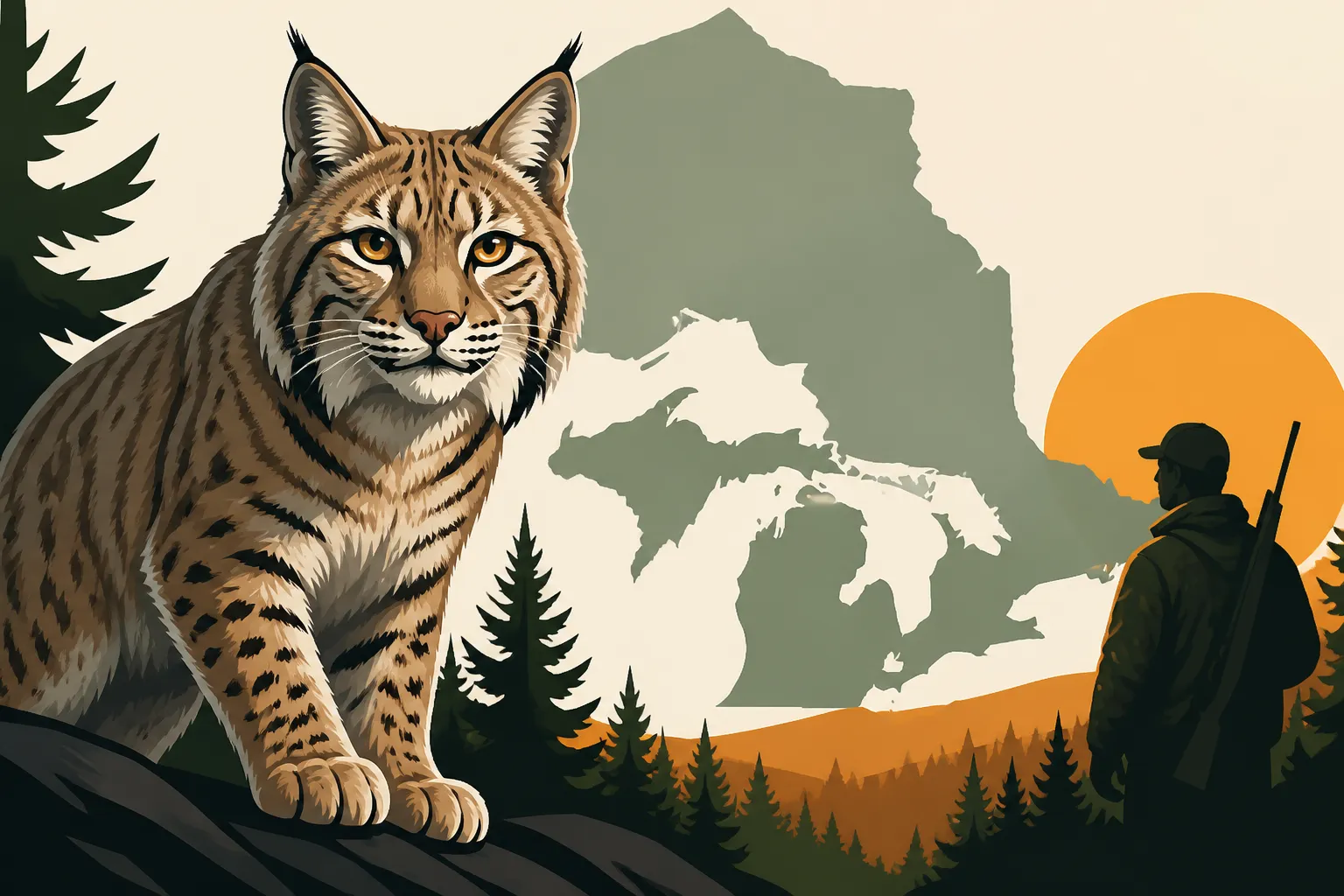
The most common confusion, though perhaps less so in Southern Ontario where lynx are exceedingly rare, is between a bobcat and its northern cousin, the Canada lynx. While both are wild felines, they have distinct features. Bobcats are generally smaller, weighing anywhere from 15 to 30 pounds, though some larger males can exceed this. Their most distinguishing feature is their tail, which is "bobbed" (short) and has a black tip on top only. Their ears have short tufts, if any, and their paws are smaller and less furred than a lynx's. Their fur is often spotted or striped, providing excellent camouflage in mixed forest environments.
In contrast, the Canada lynx is larger, typically 20-45 pounds, with famously huge, heavily furred paws that act like snowshoes, helping them traverse deep snow. Their tail is also "bobbed" but has a distinct, full black tip all the way around. Lynx have prominent, long ear tufts and a distinctive ruff of fur around their face. Their coat is generally a more uniform grey, with less prominent spotting or stripping. Given their specialization for deep snow and reliance on Lynx and the Snowshoe Hare Cycle, you're highly unlikely to encounter a lynx in Southern Ontario's more southerly regions.
Bobcats vs. Coyotes and Large Domestic Cats
Another common mix-up, especially with tracks or distant sightings, is between a bobcat and a coyote. While coyotes are canids and bobcats are felines, their size can sometimes overlap, and their elusive nature can lead to confusion. As mentioned earlier, bobcat tracks lack claw marks and have a three-lobed heel pad, while coyote tracks will almost always show claw marks and have a two-lobed heel pad. Coyote tracks are also typically more oval and elongated. When seen, coyotes have a dog-like appearance with a long, bushy tail, sharp snout, and erect ears, a stark contrast to the bobcat's compact body, short tail, and rounded head. For more on distinguishing these two, check out Telling a Coyote From a Wolf, which also covers coyote characteristics.
Large domestic cats can also cause confusion, particularly if they are feral or free-ranging. However, even the largest domestic cat will have smaller tracks than a bobcat, and their body size will be noticeably smaller. Bobcats have a more robust, muscular build, and their movements are distinctly wild and powerful. If you're ever uncertain, size is often the easiest differentiator. A bobcat is significantly larger and heavier than any domestic cat you're likely to encounter.
Here's a quick comparison table to help:
| Feature | Bobcat | Canada Lynx | Coyote |
|---|---|---|---|
| Size (Weight) | 15-30 lbs (avg.) | 20-45 lbs (avg.) | 20-50 lbs (avg.) |
| Tail | Short, "bobbed"; black tip on top | Short, "bobbed"; full black tip | Long, bushy, often tipped with black |
| Ear Tufts | Short, if any | Prominent, long tufts | Absent (dog-like ears) |
| Paws | Moderate size, less furred | Very large, heavily furred ("snowshoes") | Dog-like, oval shape |
| Claws | Retractable (usually not visible) | Retractable (usually not visible) | Non-retractable (usually visible) |
| Coat Pattern | Spotted/striped | Uniform grey, less distinct spotting | Grey/tan, often brindled |
| Head Shape | Rounder, less prominent facial ruff | Distinct facial ruff | Elongated snout, pointed |
Understanding Hunting Regulations for Bobcats in Southern Ontario
While the primary focus here is on identifying and understanding bobcats, it's essential for anyone involved in Ontario hunting to be aware of the regulations surrounding them. The rules for hunting furbearers, which include bobcats, are specific and vary by Wildlife Management Unit (WMU). It's never safe to assume, and understanding the legal framework ensures you're always acting responsibly and within the law, whether you're actively hunting them or simply observing.
Season Dates and Licensing Requirements
Bobcats are classified as a furbearer species in Ontario. In many parts of Southern Ontario, there may not be an open season for hunting bobcats, or if there is, it's typically very restricted and often tied to trapping seasons rather than general hunting. This is due to their lower population numbers and the importance of managing furbearer populations responsibly. Hunters interested in pursuing bobcats would need a valid Ontario Small Game Licence Rules and any specific tags or validation certificates that might be required. Crucially, the season dates for furbearers are highly localized, so you cannot apply province-wide rules.
It is absolutely paramount to consult the official Ontario hunting regulations summary for the specific Wildlife Management Unit (WMU) you intend to be in. WMUs in Southern Ontario often have different regulations than those further north. This document will detail if there is an open season for bobcats, the specific dates, and any bag limits or harvest reporting requirements. A platform like GoHunt can be invaluable here, often having up-to-date summaries and WMU boundary maps to cross-reference your location with the relevant regulations. Never rely on hearsay or outdated information; always check the current summary. Reading an Ontario WMU Map Before You Go is a critical step.
Methods and Ethical Considerations
If a bobcat hunting season does exist in a particular Southern Ontario WMU, the methods permitted will also be strictly regulated. Typically, furbearer hunting often involves calling, and in some cases, specific trapping methods by licensed trappers. The use of certain firearms or archery equipment would need to align with the regulations for small game and furbearers. Given their elusive nature, successful bobcat hunting often requires extensive knowledge of their habits and territory, and a significant amount of patience.
Beyond the regulations, ethical considerations are always important. Responsible hunting emphasizes fair chase, minimizing suffering, and respecting the animal. For an animal as solitary and generally uncommon as the bobcat in Southern Ontario, this means being absolutely certain of your target and understanding the local population dynamics. If you're not planning to hunt but simply want to learn more about them, observing from a distance and recording your findings (like tracks on a trail camera) can contribute to a greater understanding of their presence in the region. Always ensure you are on land where hunting is permitted and that you have permission if it's private land, adhering strictly to Ontario Trespass Law for Hunters. Understanding these animals, whether you choose to pursue them or simply appreciate their wild presence, adds immensely to the rich tapestry of Ontario's natural heritage.
Disclaimer
This article is for general informational purposes only and does not constitute professional advice. Laws, prices and regulations vary by location and change over time. Consult a qualified professional for guidance on your specific situation.