How Deer Use a Cedar Swamp in Winter
When winter really digs in across Ontario, finding deer can feel like a fool's errand. Those big hardwood ridges that produced in October are barren, and the deer seem to have vanished into thin air. But for savvy hunters who understand their patterns, deer aren't gone; they've simply shifted their entire lives to the sanctuaries of cedar swamps. This guide will walk you through precisely how whitetails utilize these vital winter havens, offering insights into their survival strategies and how you can apply this knowledge to your late-season hunts.
The Indispensable Role of Cedar Swamps in Ontario Winters
For deer in Ontario, especially once the snow starts piling up and the mercury really drops, a cedar swamp isn't just another patch of woods—it's a veritable lifeline. These dense, evergreen thickets provide a suite of survival benefits that are simply unmatched by other habitat types when the going gets tough. If you've ever shivered in a wide-open hardwood bush on a frigid January day, you'll instantly appreciate why deer flock to these shelters.
Why Cedar is King for Wintering Deer
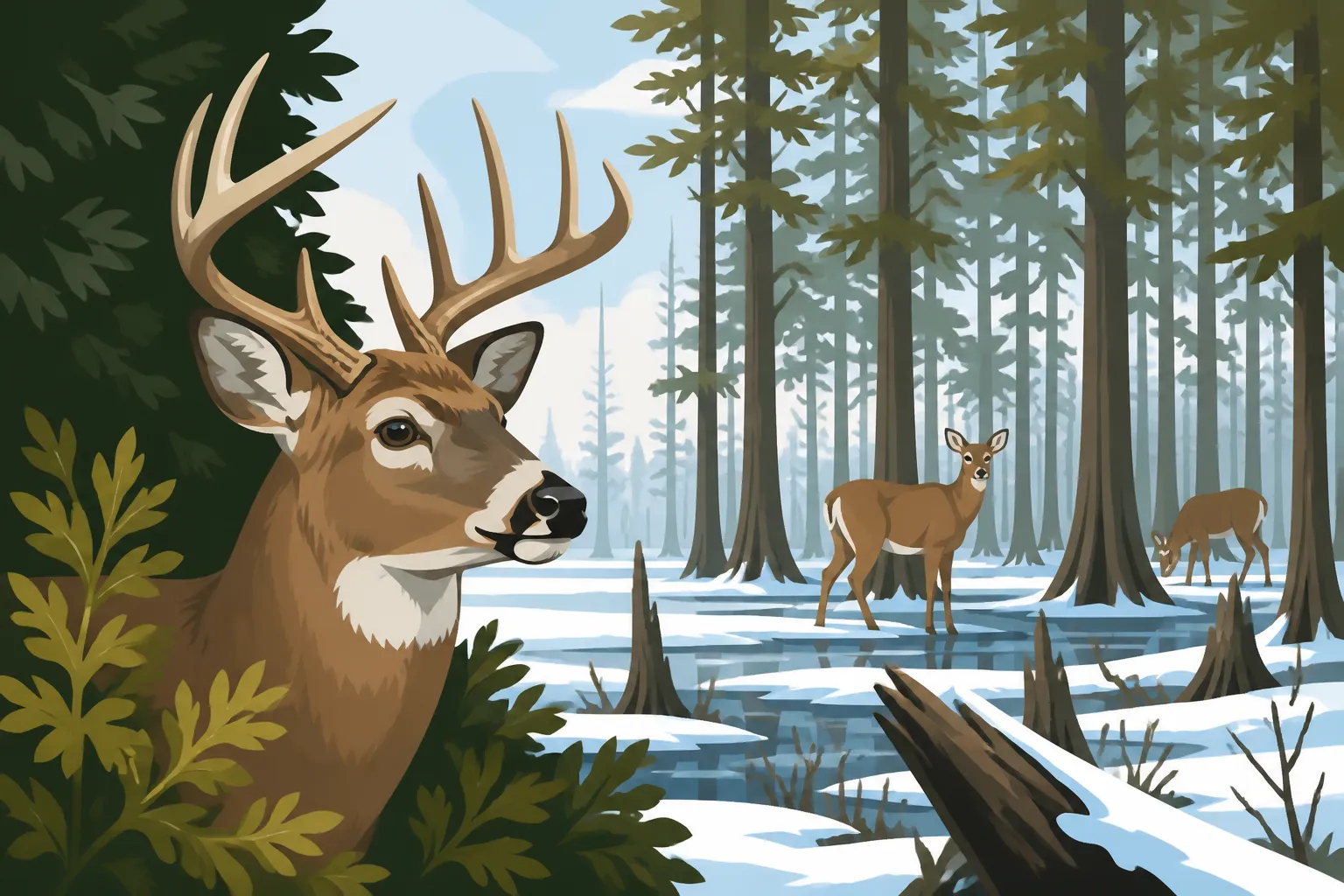
The primary appeal of cedar swamps for whitetails is the incredible thermal cover they offer. Think about it: a thick stand of mature cedars creates a natural blanket. The interlocking branches, dense needles, and compact growth form a canopy that acts like a gigantic umbrella, intercepting falling snow and blocking biting winds. This dramatically reduces the energy a deer has to expend just to stay warm. A deer standing out in a sparse deciduous forest during a blizzard is losing body heat at an alarming rate, but nestled deep within a cedar swamp, it can conserve precious calories.
Beyond just warmth, cedar swamps are a crucial food source, particularly when other forage is buried under a deep blanket of snow. White cedar, often referred to as "arborvitae" or "tree of life," is highly palatable to deer. They'll browse on the twigs, needles, and bark, gaining essential nutrients and roughage when options are scarce. While not a complete diet, it's a critical component that allows them to endure the leanest months. Without this dual benefit of shelter and food, many deer simply wouldn't make it through a harsh Ontario winter, which is why understanding What Whitetails Eat Through a Hard Winter is so important.
The Microclimate Advantage
It's not just the visible protection that cedar swamps provide; it's the subtle but significant creation of a microclimate that makes all the difference. Step from a wind-swept field into a dense cedar swamp, and you'll immediately notice the change. The air inside is often several degrees warmer, especially on sunny days, and the wind practically vanishes. This is due to the dense canopy trapping warmer air and acting as a formidable windbreak.
Furthermore, the dense evergreen cover significantly reduces the amount of snow that actually reaches the forest floor. While surrounding areas might have feet of powder, the snow depth within a thick cedar swamp can be considerably less. This makes it far easier for deer to move around, expend less energy trudging through drifts, and access whatever limited browse is available on the ground. This difference in snow depth also makes it easier for them to escape predators, as their movement isn't as hampered. This localized climate control is a massive boon for deer trying to survive the prolonged cold snaps we experience in Ontario, highlighting How Deep Snow Shapes Ontario Game.
How Deer Utilize Cedar Swamps for Survival
Deer don't just wander into a cedar swamp haphazardly; their use of these areas during winter is highly strategic and essential for their survival. They adopt specific behaviours and movement patterns that allow them to make the most of this critical habitat. Understanding these ingrained habits can provide invaluable clues for hunters.
Movement Patterns and Yard Behavior
When the snow gets deep and stays deep, deer consolidate their numbers, often "yarding up" in these cedar swamps. This isn't just random gathering; it's a deliberate concentration of deer in the most favourable cover. Within these yards, deer will establish a complex network of trails, often packed down hard by repeated use. These trails become their highways, allowing them to travel between bedding areas and feeding spots with minimal energy expenditure. You'll often see these trails connect various pockets of dense cover to areas where browse might be a bit more abundant, like the edges of the swamp or nearby hardwood inclusions.
These yarding areas can be surprisingly small for the number of deer they hold, but they are absolutely vital. Hunting late in the season, particularly when Hunting Ontario Late When Snow Piles Up, means looking for these compacted networks. Learning Where Ontario Whitetails Yard in Deep Snow is a skill developed over seasons of observation and can make all the difference to success. They often enter and exit these areas using specific funnels, such as narrow sections of bush or ridges leading into the swamp, creating predictable travel routes that can be highly productive for a patient hunter.
Foraging and Nutritional Needs
While thermal cover is a primary driver for deer entering cedar swamps, the available forage is equally critical. As mentioned, white cedar itself is a major food source. Deer will spend hours browsing on the lower branches, especially if the snow isn't too deep to reach them. The needles and twigs provide some sustenance, helping them maintain their body condition, albeit at a reduced level compared to summer.
Beyond cedar, these swamps often contain other preferred browse species like red-osier dogwood, maple saplings, and various shrubs that manage to poke above the snow line. Deer will methodically work these areas, seeking out every available morsel. They instinctively know that every calorie counts during the harsh winter months. The dense cover also protects these browse plants from the full force of winter, allowing them to retain more nutritional value than exposed plants. By limiting their movement and focusing their feeding efforts within the protective confines of the swamp, deer maximize their chances of making it to spring.
Practical Hunting Strategies in and Around Cedar Swamps
Knowing why deer use cedar swamps in winter is one thing; knowing how to use that knowledge to your advantage as a hunter is another. Late-season hunting requires a different approach, one that respects the deer's critical need for survival but also leverages their predictable movements.
Scouting for Winter Concentration Areas
Successful late-season hunting in cedar swamps starts long before you ever step foot in the woods with your weapon. Scouting is paramount. You need to identify where deer are concentrating their efforts. Look for fresh tracks in and out of potential swamp edges, especially after a fresh snowfall. The sheer volume of tracks will tell a story. Are they single tracks, or does it look like a deer highway? Look for rubs and scrapes, even if they're older, as these indicate areas of historic deer activity. Pay close attention to browsed vegetation, particularly cedar tips, dogwood, and young maples. Heavy browsing indicates a current food source.
Modern tools, like the mapping features found in a platform such as GoHunt, can be incredibly useful here. You can identify large cedar swamp complexes and map out potential entry and exit funnels from the comfort of your home. Then, on a scouting trip, you can verify these areas on the ground. Understanding Reading Sign After a Fresh Snow becomes an even more critical skill in these conditions, as the fresh snow highlights trails and feeding activity. Focus on the edges of the swamp first, as deer often bed deep within but feed closer to the perimeter or in transition zones.
Approach and Stand Placement
Once you've identified an active cedar swamp and potential travel corridors, your approach and stand placement are crucial. Deer in winter are already under stress and are highly sensitive to disturbance. A quiet, subtle approach is key. Always hunt with the wind in your favour. The dense cover of a cedar swamp can sometimes play tricks with swirling winds, so be extra vigilant. Approaching from downwind ensures your scent is carried away from the deer's primary areas of activity.
Ideal stand locations are often on the edges of the swamp, overlooking trails that lead in and out. Look for bottlenecks where multiple trails converge, or where deer might cross a small opening within the swamp. A high-quality stand, placed carefully, can be left in place for repeat hunts. Consider where you'd be Hanging a Stand on an Ontario Bush Edge and apply similar principles here, focusing on the interface between the dense cedar and slightly more open cover. You might even find success on a rock ridge that borders a large cedar swamp.
Inside the swamp, if you choose to venture in, movement must be painstakingly slow and quiet. Deer might be bedded anywhere within the dense cover. Look for small pockets of slightly higher ground, or dense clusters of cedars that offer extra thermal protection. Often, hunters will find success by still-hunting very slowly through the outer edges of a cedar swamp, peeking ahead for any movement. Remember that Hunting a Cedar Swamp Edge offers a great compromise between cover and visibility.
Ethical Considerations and Conservation
Hunting deer in their winter habitat requires a heightened sense of responsibility. These animals are in survival mode, and minimizing undue stress is not just good ethics; it's vital for healthy deer populations.
Minimizing Disturbance in Critical Habitat
It's tempting to want to push deep into a winter deer yard, especially if you see a lot of activity. However, frequently disturbing deer in their wintering areas can have detrimental effects. Every time a deer is spooked and forced to run, it expends precious calories and energy that it cannot easily replace in the depths of winter. Repeated disturbances can lead to increased stress, weight loss, and potentially even mortality, especially for fawns or weaker individuals.
As a responsible hunter, consider limiting your pressure on these critical areas. If you hunt a cedar swamp and notice the deer are frequently being pushed out or seem overly agitated, it might be time to back off and let them rest. Choose your hunting days wisely, perhaps targeting periods of calm weather when deer might be more inclined to move and feed. Understanding the delicate balance of deer survival and the impact of human presence is part of the conservation ethos.
The Broader Ecosystem and Conservation Efforts
Cedar swamps are more than just deer habitat; they are complex ecosystems that support a wide array of wildlife, from snowshoe hares and ruffed grouse to various bird species. Their hydrological role in filtering water and preventing erosion is also incredibly important. Protecting and conserving these unique wetlands is essential for the overall health of Ontario's natural landscapes.
Conservation efforts often focus on maintaining the integrity of these areas, protecting them from development, and ensuring sustainable forestry practices. As hunters, our license fees contribute to these broader conservation goals. By understanding the importance of these habitats, we become better stewards of the land and advocates for their protection. Tools like GoHunt can provide satellite imagery and topographic maps that help identify these sensitive areas, allowing hunters to plan their activities responsibly and appreciate the ecological significance of the places they hunt. For information on specific hunting seasons and regulations that apply to these critical habitats, hunters should always consult Ontario Deer Season Dates by WMU to ensure compliance and responsible hunting. Many of these cedar swamps are found on Hunting Whitetails on Ontario Crown Land, making responsible access and minimal impact even more important.
Ontario Winter Deer Habitat Comparison
| Habitat Type | Key Advantages | Key Disadvantages | Deer Usage |
|---|---|---|---|
| Cedar Swamp | Excellent thermal cover, reduced snow depth, critical browse source (cedar) | Dense cover limits visibility, can be difficult to navigate, scent swirls | Primary wintering areas, yarding, concentrated feeding and bedding |
| Hardwood Ridge | Good visibility, some mast crops (acorns, if available), open for movement | Poor thermal cover, deep snow accumulation, limited winter browse, high wind | Temporary travel routes, brief feeding during mild spells, poor winter refuge |
| Conifer Plantation | Good thermal cover, blocks wind, can reduce snow depth in younger stands | Limited browse diversity, may offer less horizontal cover than cedar, less open | Secondary wintering areas, bedding cover, travel corridors |
| Open Field Edge | Access to agricultural crops (if available), good visibility, some sun exposure | No thermal cover, exposed to wind and deep snow, high energy expenditure to cross | Brief feeding at dusk/dawn, quick crossings, very limited winter value |
By truly appreciating how deer use a cedar swamp in winter, you gain a deeper understanding of their survival challenges and become a more effective and ethical hunter. These vital ecosystems are truly the heart of winter for Ontario's whitetails.
Disclaimer
This article is for general informational purposes only and does not constitute professional advice. Laws, prices and regulations vary by location and change over time. Consult a qualified professional for guidance on your specific situation.