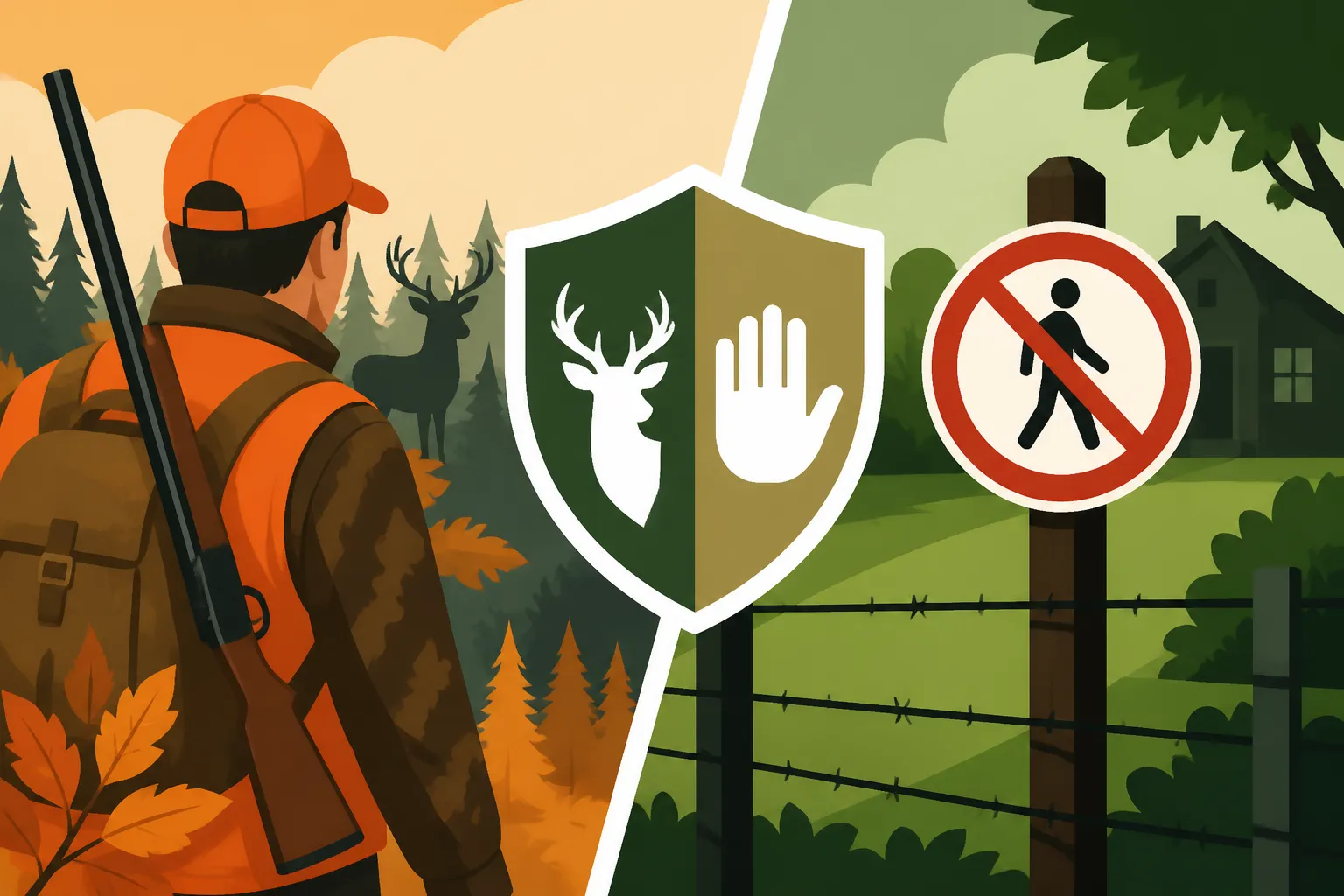
What Ontario Trespass Law Requires
One of the biggest anxieties any hunter faces, especially when exploring new ground or trying to secure a spot for the season, is unknowingly stepping onto private property. The fear of confrontation, legal trouble, or simply disrespecting a landowner can really hang over your head. This guide is here to untangle the complexities of Ontario's trespass laws, specifically the Trespass to Property Act, to help you hunt confidently and responsibly, always staying on the right side of the law.
Understanding Ontario's Trespass to Property Act
Navigating the landscape of private and public land in Ontario can feel like a maze, especially with the patchwork of ownership that exists in many desirable hunting areas. The Trespass to Property Act (TPA) is the primary piece of legislation that defines what constitutes trespassing and outlines the powers of enforcement. It’s not just about a fence; it's about clear communication, signage, and understanding your responsibilities as someone entering land, whether for hunting or any other purpose.
What Constitutes Trespassing in Ontario?
At its heart, trespassing under the TPA occurs when someone enters or remains on premises without the express permission of the occupier. An "occupier" isn't necessarily the owner; it could be a tenant, a land manager, or anyone with legal control over the property. For us hunters, this is paramount: it means we need explicit permission to hunt on private land. This isn't a "no trespassing sign means no, otherwise yes" kind of deal. In Ontario, all private land is considered off-limits for activities like hunting unless you have been granted permission.
The Act specifies that a person is trespassing if they are on land when entry is prohibited by notice, or if they have been asked to leave by the occupier or a police officer and fail to do so. This "notice" can take various forms, which is where things can sometimes get confusing. It might be a physical sign, a verbal warning, or even implied by the nature of the property (like a fenced yard around a residence). For hunting purposes, it's always safer to assume land is private and requires permission unless explicitly identified as public and open to hunting.
Who Can Enforce the Trespass to Property Act?
It's not just the property owner or occupier who can enforce the TPA. While they have the power to ask you to leave, and can even use reasonable force to remove you if necessary (though this is rare and best avoided), other authorities also have a role. Police officers are empowered to arrest individuals for trespassing if they have reasonable grounds to believe an offence has occurred. This isn't just a slap on the wrist; an arrest means potential charges, fines, and a court appearance.
In addition, conservation officers with the Ministry of Natural Resources and Forestry (MNRF) also have powers under the TPA, especially when hunting is involved. If you're hunting without permission on private land, you could face not only a TPA charge but also charges under the Fish and Wildlife Conservation Act (FWCA) for hunting without permission, which can carry much stiffer penalties, including loss of hunting privileges, significant fines, and even potential forfeiture of equipment. This dual threat underscores the importance of securing permission. You can find more details on how hunting rules are set by checking out the guide on Ontario's Wildlife Management Unit System.
Identifying Land Boundaries and Securing Permission
One of the biggest challenges for hunters is figuring out exactly where property lines lie, especially in vast bush country or areas with mixed ownership. Many times, what looks like endless wilderness might actually be privately owned, or a woodlot might be divided among several different landowners. Taking the time to properly identify land boundaries and get explicit permission is not just good practice, it's a legal necessity.
Resources for Identifying Property Lines
Gone are the days when a dusty paper map was your only guide. Today, technology offers fantastic tools to help hunters pinpoint property boundaries with incredible accuracy. Satellite imagery and digital mapping apps have become indispensable for scouting and ensuring you're on legal ground.
Many hunters swear by advanced mapping platforms that overlay property ownership information directly onto satellite images. Services like GoHunt, for example, provide detailed property lines and even landowner contact information in some areas, making it much easier to identify who owns what and who to contact for permission. Tools like GoHunt can be invaluable for Scouting With Satellite Imagery in Ontario before you even set foot in the woods. You can also consult municipal property assessment maps or land registry offices, though these often require a bit more legwork and may not be as immediately accessible in the field. Understanding Reading Ontario Crown Land Layers on onX can also help differentiate public land from private.
The Importance of Explicit Permission
Simply put, if you don't have explicit permission, you don't hunt there. "Explicit permission" means the landowner or occupier has clearly stated, either verbally or in writing, that you are allowed to be on their property for hunting purposes. This isn't just a friendly wave from the porch; it's a clear understanding.
Verbal permission is legally valid, but it's always a good idea to get it in writing if possible. A simple text message or email confirming the dates and scope of your permission can save a lot of headaches later. This written record can protect you if there's any misunderstanding or if someone else, like a neighbour or another family member, challenges your presence. When trying to gain access to prime hunting spots, a polite approach and clear communication are key. For tips on Knocking on Doors in Southern Ontario, remember to always present yourself well and be respectful of their property and time.
Navigating "No Trespassing" Signs and Posted Land
Ontario's Trespass to Property Act specifies that "notice" that entry is prohibited can be given in several ways. The most common is through signs. A "No Trespassing" sign, or other similar warnings like "Private Property" or "No Hunting," clearly indicate that permission is required. These signs don't need to be on every tree; if they are placed in a way that is reasonably visible at the ordinary points of access to the property, that's generally considered sufficient notice.
However, even if there are no signs, the land is still considered private and requires permission. This is a crucial distinction that often trips up new hunters or those from jurisdictions with different laws. Don't assume that unposted land is free for the taking. The absence of a sign does not grant you implied permission. You're always better off assuming you need permission and seeking it out. This also applies to situations where you might be Hunting a Bush Lot You Just Got – always confirm the boundaries, even on your own property, to avoid accidental incursions onto a neighbour's land.
Table: Hunter Responsibilities for Private Land Access
| Aspect | Hunter's Responsibility |
|---|---|
| Permission | Always obtain explicit permission from the landowner/occupier before entering private land for hunting. |
| Verification | Confirm the exact boundaries of the permitted area. Use maps (e.g., GoHunt) and physical landmarks. |
| Communication | Clearly communicate your intentions (hunting species, dates, specific areas) to the landowner. |
| Written Record | Whenever possible, get permission in writing (email, text, signed agreement) to avoid future disputes. |
| Respect | Treat the property with the utmost respect. Leave no trace, close gates, avoid damaging crops or structures. |
| Adherence | Abide by any conditions set by the landowner (e.g., no vehicles, specific entry points, no hunting near residences). |
| Post-Hunt | Thank the landowner. Offer a share of the harvest or help with tasks if appropriate and desired by them. |
| Game Retrieval | If wounded game goes onto adjacent private land, you still need permission to retrieve it. |
Consequences and Best Practices for Hunters
The consequences of violating Ontario's trespass laws can range from an uncomfortable conversation with a landowner to significant legal penalties. It's not just about the immediate repercussions; a trespass conviction can tarnish your reputation, affect future hunting opportunities, and even impact your eligibility for certain licenses. Being proactive and always adhering to best practices is the smartest way to ensure a smooth and enjoyable hunting season.
Penalties for Trespassing While Hunting
Under the Trespass to Property Act, individuals found guilty of trespassing can face fines. For a first offense, you might be looking at a fine in the range of a few hundred dollars. However, the penalties can increase significantly for repeat offenders or in cases where there are aggravating factors, such as property damage, or if the trespass occurs with malicious intent.
More critically for hunters, trespassing can also lead to charges under the Fish and Wildlife Conservation Act (FWCA). Section 9(1) of the FWCA states that no person shall hunt or trap on private land without the permission of the owner or occupier. A conviction under the FWCA for hunting without permission can result in substantial fines, which can be thousands of dollars, and potentially a hunting license suspension for a period of up to three years. In some cases, the court may even order the forfeiture of any firearms, bows, or other hunting equipment used in the commission of the offence. Such penalties are a stark reminder of the importance of respecting private property and the rules of the hunt. Understanding Ontario Landowner Hunting Privileges can help you appreciate the importance of their role and cooperation.
What to Do If Wounded Game Crosses a Property Line
This is one of those agonizing scenarios no hunter ever wants to face: you make a good shot, but the animal runs, and you watch it disappear onto what you suspect is private land where you don't have permission. Your immediate instinct might be to follow, but stopping yourself in that moment is critical. You cannot simply cross a property line, even if you're tracking wounded game, without permission.
The Trespass to Property Act still applies. The ethical and legal path forward is to immediately try to contact the landowner for permission to track and retrieve your animal. If you can't reach them, or they deny permission, you are legally stuck. This is a tough pill to swallow, but violating trespass law to retrieve an animal could put you in a far worse legal predicament. It's a prime example of why knowing your hunting area's boundaries and, ideally, securing permission from all adjacent landowners, even if you don't plan to hunt their land, is a smart move. For more on this, look up Retrieving Game From Private Land in Ontario.
Building Positive Landowner Relationships
The vast majority of hunters are respectful and responsible, but a few bad apples can sour relationships for everyone. Building and maintaining positive relationships with landowners is crucial for the future of hunting in Ontario, especially in more populated areas where private land dominates. When you secure permission, you're not just getting access to land; you're often entering into a relationship.
Always be polite, punctual, and true to your word. Leave no garbage behind, respect crops, fences, and livestock, and report any suspicious activity you might see on their land. Consider offering a small token of appreciation, like a share of the harvest, or helping with a chore on the farm. Even if you don't get permission initially, a respectful interaction can leave a positive impression that might open doors in future seasons. A guide like Getting Private Land Permission in Ontario offers more detailed advice on this important topic. By being a good ambassador for hunting, you help secure access for yourself and future generations.
Navigating Public Lands and Crown Land Rules
While private land requires explicit permission, Ontario also boasts vast tracts of public land, including Crown land, which is generally open for hunting. However, even on public land, there are rules and regulations that hunters must adhere to. Understanding these is just as important as knowing private property boundaries to avoid unintended trespass or violations.
Hunting on Ontario Crown Land
Ontario's Crown land offers incredible opportunities for hunters, especially in the northern and central parts of the province. Generally, if land is designated as Crown land, it's open for public use, including hunting, subject to specific regulations and restrictions. However, "Crown land" isn't a blanket term; there are various designations. Some Crown land might be subject to seasonal closures, specific restrictions, or be part of a Conservation Reserve where hunting rules differ.
It's absolutely essential to consult current Crown land use atlases and regulations for the specific area you plan to hunt. Online mapping tools, like those offered by the provincial government or third-party apps such as GoHunt, can clearly show Crown land boundaries and often indicate any special designations or restrictions. Never assume all Crown land is fair game without checking the specifics for your Wildlife Management Unit (WMU). Different WMUs might have different regulations, so be sure to double-check. For a more detailed look, refer to the guide on Hunting Ontario's Crown Land.
Protected Areas and Specific Restrictions
Beyond private land and general Crown land, Ontario has a network of protected areas, including provincial parks, national parks, and various conservation areas, where hunting may be prohibited or heavily restricted. For instance, hunting is generally not permitted in provincial parks, though there are some exceptions for specific seasons or areas within certain parks. National parks, managed by Parks Canada, have very strict rules, and hunting is typically not allowed.
Conservation Authority lands, managed by local Conservation Authorities, also have varying rules. Some may allow hunting in designated areas, while others prohibit it entirely. Always check with the specific Conservation Authority or park management before planning a hunt. Ignorance of these rules is no excuse, and hunting in a prohibited area can lead to severe fines and loss of privileges. Make sure you're clear on Ontario's Provincial Parks and Hunting to avoid any issues. The onus is always on the hunter to know the rules of the land they intend to use.
Disclaimer
This guide is intended for informational purposes only and does not constitute legal advice. Hunting regulations and trespass laws can change, and interpretations may vary. It is the responsibility of every hunter to consult the most current version of Ontario's hunting regulations and relevant legislation, such as the Trespass to Property Act and the Fish and Wildlife Conservation Act, and to understand how they apply to their specific hunting situation. Always verify property boundaries and obtain explicit permission before hunting on private land.