Hunting a Railway Right-of-Way
It’s a scenario many of us have encountered while scouting or driving through the bush: you see an old railway line, or perhaps even an active one, carving a path through dense cover. Immediately, your hunter’s mind starts whirring, envisioning deer, moose, or bears using this cleared corridor as a superhighway. While the thought of hunting such a natural travel route is incredibly tempting, the reality is that railway rights-of-way come with a host of specific regulations, safety concerns, and legal complexities that you absolutely need to understand. This guide is here to untangle those nuances for you, ensuring you know how to safely and legally approach hunting near these unique features in Ontario.
Understanding Railway Right-of-Way Regulations in Ontario
When you look at a railway line in Ontario, it's easy to just see the tracks. But from a legal and safety perspective, a railway right-of-way is far more extensive than just the steel rails and gravel bed. Getting a handle on what this truly encompasses is the first, crucial step before you even think about setting foot anywhere near one with a firearm or bow.
What Constitutes a Railway Right-of-Way
A railway right-of-way isn't merely the tracks themselves; it’s a strip of land that can extend for a considerable distance on either side, often 100 feet or more from the centerline of the track, sometimes even wider in certain areas or around structures. This land is typically owned by the railway company, such as Canadian National (CN) or Canadian Pacific Kansas City (CPKC), and is under federal jurisdiction. This means that even if a provincial hunting regulation seems to allow something, federal railway laws generally take precedence on the right-of-way itself. You might see old utility poles, culverts, or even small buildings within this corridor, all falling under the railway's control. Understanding these boundaries, which aren't always clearly marked, is absolutely critical to avoid unintentional trespass and potentially dangerous situations.
The Law on Hunting and Trespass
Let’s be crystal clear right from the outset: hunting on an active railway right-of-way is generally illegal and profoundly dangerous in Ontario, as it is across Canada. This isn't just a matter of provincial hunting regulations; it falls under federal railway safety acts and trespass laws. Trains are massive, fast, and cannot deviate from their path or stop quickly, even if an obstruction is spotted from a distance. The thought of an animal on the tracks might make you want to act, but engaging in any hunting activity, including discharging a firearm or arrow, on the actual railway right-of-way is strictly prohibited. It’s considered trespassing, and it carries significant penalties, including hefty fines, potential loss of your hunting license, and even criminal charges, not to mention the immense personal safety risk. The consequences are far too severe to ever risk it.
Permissible Hunting Adjacent to Rights-of-Way
Now, here's where the nuance comes in. While you cannot hunt on the railway right-of-way, you absolutely can hunt on adjacent lands, provided you have the legal right to be there. This means if the railway corridor runs alongside Crown land where hunting is permitted, or if you have explicit permission from a private landowner whose property borders the right-of-way, you can certainly hunt that adjacent property. The key is to maintain a safe and legal distance from the railway property itself. You are still responsible for ensuring that any shot taken is in a safe direction, with an adequate backstop, and that no projectile crosses onto railway property or creates any hazard. Always consult a detailed map, perhaps using a mapping tool like GoHunt, to verify land ownership and ensure you are strictly operating within your legal hunting area. Remember, even if you’re on legal ground, exercising extreme caution near railway lines is non-negotiable.
Safety Considerations When Hunting Near Railway Lines
Hunting anywhere requires an unwavering commitment to safety, but when you introduce the element of active railway lines, that commitment needs to escalate dramatically. The unique environment around a railway corridor presents specific hazards that, if not fully respected and understood, can lead to devastating consequences for hunters, the public, and railway operations.
Active Train Traffic and Noise
The most obvious, yet often underestimated, danger near a railway right-of-way is the train itself. Modern trains, especially freight trains, can be incredibly deceptive. They move much faster than you might perceive, and often, you won't hear them approaching until they are quite close. The sheer momentum means they cannot stop or swerve, making any human or animal on the tracks utterly vulnerable. The noise they generate, when close, is deafening and can easily mask other critical sounds you rely on while hunting – the rustle of leaves, the snap of a twig, or even another hunter's voice. This auditory interference can be a significant hazard, potentially leading to a lack of awareness of your surroundings. Always assume a train could be coming and remain vigilant, listening for any tell-tale rumblings or distant horn blasts.
Line of Sight and Ballistic Safety
Railway corridors are often cleared, presenting long, relatively flat lines of sight. While this might seem advantageous for spotting game, it also means that a bullet or arrow, if discharged carelessly, can travel an extremely long distance with very little to stop it. This raises serious ballistic safety concerns. Ricochets are another major worry; the steel rails, gravel ballast, and other railway infrastructure can cause projectiles to deflect in unpredictable and dangerous directions. You might think you have a clear shot at a deer next to the tracks, but if your shot is low or misses, that bullet could easily strike a rail and send a fragment flying, or continue unimpeded for miles. Always ensure you have a safe and substantial backstop beyond your target, and never, under any circumstances, aim in a direction that could send a projectile towards the tracks, trains, or any railway property. Remember your basic firearms safety rule: be sure of your target and what is beyond it. This is paramount when hunting near railway lines.
Avoiding Interference with Railway Operations
Beyond the immediate dangers to life and limb, hunters must be acutely aware of their responsibility to not interfere with railway operations. This includes, but is not limited to, never shooting at anything on railway property – that means no shooting at wildlife that may stray onto the tracks, no targeting railway signs, signals, or any other infrastructure. Even a seemingly innocent action could be perceived as a threat or cause damage, leading to investigations, delays, and severe legal repercussions. Railway companies have their own police forces (like CN Police and CPKC Police) who actively patrol and monitor their properties, and they take any perceived threat to their operations or infrastructure very seriously. If you ever witness unsafe behaviour or see something concerning on a railway line while hunting nearby, you should immediately contact the railway police or the Ontario Provincial Police (OPP) non-emergency line. Your general awareness and respectful conduct are key to maintaining a safe environment for everyone.
Strategic Approaches for Hunting Near Railway Corridors
While the direct right-of-way is off-limits for hunting, the areas immediately adjacent to railway corridors can offer fantastic hunting opportunities. The unique characteristics of these linear clearings often create prime habitat and travel routes for various game species in Ontario. Understanding why game uses these areas and how to ethically and safely hunt them is crucial.
Why Railway Corridors Attract Game
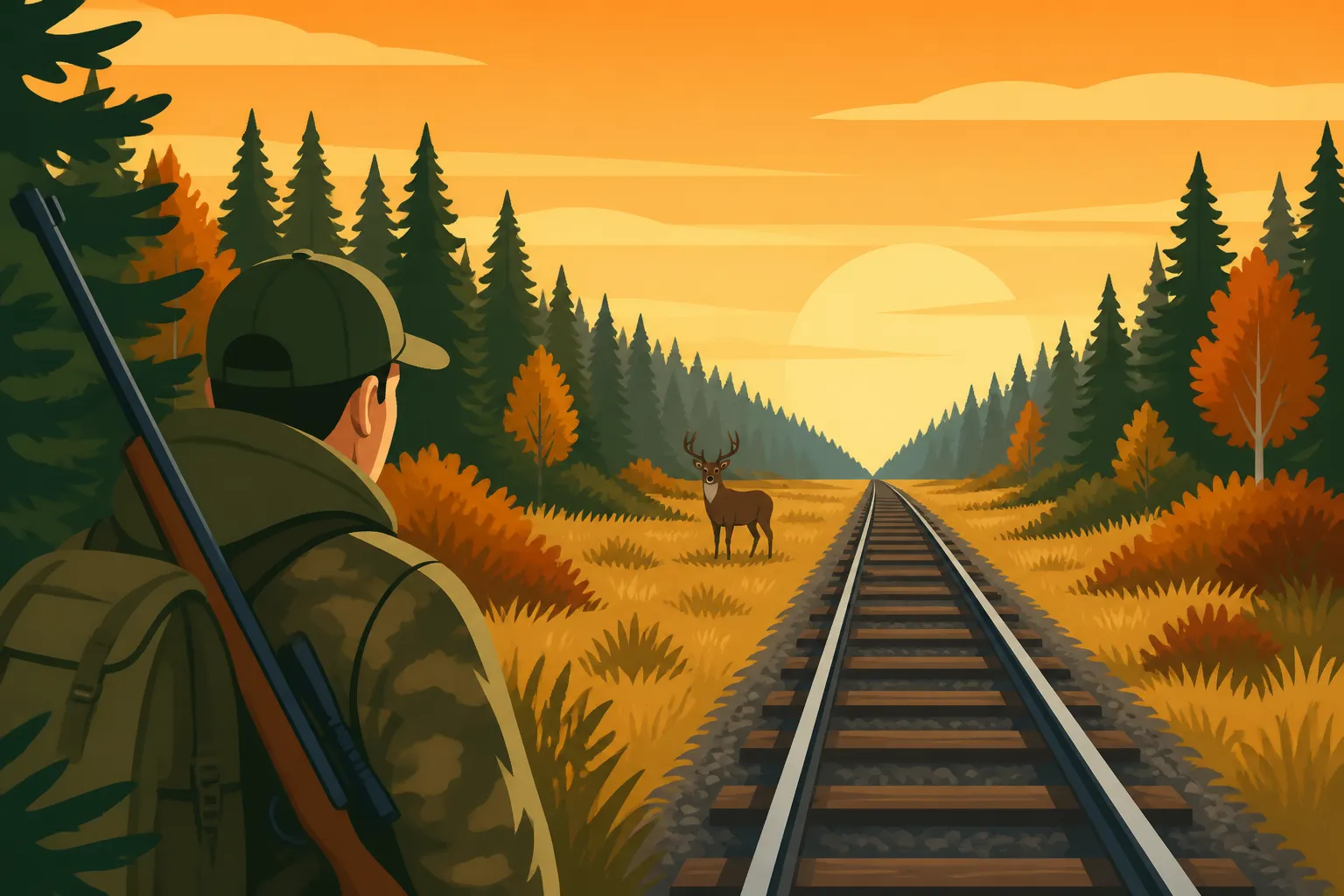
Railway corridors, especially those cutting through otherwise dense forest or agricultural landscapes, create what's known as an "edge habitat." This edge is a biological hotspot, where two distinct habitat types meet, providing a richer diversity of food and cover than either habitat alone. Deer, moose, and black bears frequently use these cleared strips as travel corridors because they offer easier movement through challenging terrain, especially during snowy conditions.
For whitetail deer, these edges are like highways, connecting feeding areas in adjacent fields or regenerating clearcuts to bedding areas in thicker bush. The sun-drenched edges often promote early successional growth like brambles, young saplings, and weeds, providing valuable browse. Moose might be drawn to wet areas in ditches or culverts for aquatic vegetation, while bears can find berry bushes and other forage along these fringes. These corridors can also act as natural funnels, concentrating game movement into predictable patterns, especially when they cross streams, small swamps, or connect larger blocks of cover. This makes them highly attractive to animals seeking easy passage and diverse food sources.
Scouting and Locating Key Areas
Successful hunting near a railway corridor starts with meticulous scouting, both from afar and on the ground. Modern mapping tools are your best friend here. Services like GoHunt provide incredibly detailed satellite imagery that can help you identify railway lines, assess the surrounding habitat (dense bush, farmland, swamps), and pinpoint potential access points to adjacent private or Crown land. Look for areas where the railway crosses a natural bottleneck, like a narrow strip of bush between two fields, or where it runs alongside a river or a beaver meadow.
Once you’ve identified promising spots on your map, it's time for boots on the ground. Spend time walking the adjacent property (with permission, of course) looking for fresh sign. Look for tracks entering and exiting the right-of-way, distinct game trails running parallel to the tracks but within the adjacent cover, rub lines, scrapes, and scat. Pay close attention to culverts under the tracks, as these can often serve as significant crossing points for game moving from one side to the other. Mark these observations on your GoHunt map to build a comprehensive picture of game movement. Remember, the goal is to identify patterns of movement near the right-of-way, not on it.
Hunting Tactics and Stand Placement
When it comes to actual hunting, the tactics employed near a railway corridor are all about observation and ambush from a safe, legal distance. Sitting in a blind or tree stand overlooking an area where game consistently enters or exits the right-of-way can be highly effective. Key ambush points might include funnels created by dense cover that force animals to walk a specific path before crossing the open edge, or areas where game trails converge before skirting the railway line.
Your stand placement is critical. Consider the prevailing wind direction, as your scent will carry easily across the open right-of-way. You'll want to position yourself so your scent blows away from where you expect game to appear. Also, factor in the potential for train noise; it can make hearing subtle game sounds difficult, so visual vigilance is paramount. While calling or rattling for deer can be effective, be mindful that sound travels differently in open areas versus dense bush. A good practice, especially during the rut, could be to use moderate rattling volume in thick bush and then listen for a response, as outlined in a guide on Rattling Volume in Thick Bush. For whitetails, understanding Hunting the Rut in Early to Mid November will be invaluable, as deer are often on the move during this period and more likely to use clear travel corridors. Always use your GoHunt app to mark your stand locations and exit routes, ensuring you always know where you are in relation to the railway property and your legal hunting boundaries.
Legal Access and Landowner Relations
Navigating the complexities of land ownership and access is paramount when considering hunting near railway rights-of-way in Ontario. Without clear, legal access to the adjacent property, all your scouting and strategic planning are moot. It's not enough to simply avoid the railway property itself; you must have the legal right to be wherever you are hunting.
Distinguishing Crown Land from Private Land Edges
One of the most common mistakes hunters make is assuming that land adjacent to a railway is public or accessible. In Ontario, land can be either Crown land (public) or privately owned, and the distinction is critical. Railway rights-of-way frequently cut through both. If the railway borders Crown land, you generally have a legal right to hunt there, subject to all provincial hunting regulations and seasons. However, you must confirm that it is indeed Crown land and not a private parcel or a conservation reserve where hunting might be restricted. This is where advanced mapping applications, such as those offered by GoHunt, become indispensable. These tools often have land ownership layers that clearly differentiate between Crown and private land, allowing you to visually confirm your location relative to the railway and property lines. Always make sure to double-check these maps and carry them with you, perhaps on your phone, so you can confirm your position in the field. A detailed guide like Reading an Ontario WMU Map Before You Go can help you get started with map interpretation.
Getting Permission for Adjoining Private Properties
If the railway corridor runs alongside privately owned land, getting explicit permission from the landowner is not just a courtesy; it's a legal requirement. Getting Private Land Permission in Ontario is a skill every hunter should cultivate. This often involves knocking on doors, introducing yourself respectfully, and clearly explaining your intentions. Many landowners are receptive to hunters who are courteous, responsible, and offer to help keep an eye on their property. Building a strong, trusting relationship with landowners can open up incredible hunting opportunities for years to come. Always offer to provide your name, contact information, and hunting license number. If granted permission, it's always a good idea to get it in writing, outlining the specific areas you can hunt and any conditions they might have. This protects both you and the landowner. Without this permission, you are trespassing, which carries serious penalties under Ontario Trespass Law for Hunters and can permanently damage the reputation of hunters in the community.
Dealing with Railway Company Property
It cannot be overstated: hunting on railway company property (the right-of-way itself) is not permitted, and you should not expect to gain permission to do so. Railway companies prioritize safety and operational continuity above all else. Their land is for railway operations, not for recreational hunting. Attempting to contact CN or CPKC to request hunting access on their rights-of-way is generally futile and can even raise red flags. Your focus should always be on securing legal access to the adjacent private or Crown lands and then employing safe hunting practices that keep you entirely off the railway's federally regulated property. This means no shooting over the tracks, no walking on the tracks, and no attempting to retrieve game that falls onto the right-of-way without first contacting the railway police and getting explicit instruction. Safety and legality are paramount when dealing with any railway property.
| Aspect | Pros of Hunting Near a Railway Right-of-Way | Cons/Risks of Hunting Near a Railway Right-of-Way |
|---|---|---|
| Game Attraction | Creates edge habitat, acting as a travel corridor and food source. | Can attract game onto the right-of-way, making them unreachable. |
| Visibility/Access | Often provides clear sightlines into adjacent cover. | Clear sightlines mean bullets travel far; potential for ricochets. |
| Terrain | Can offer easier walking paths along the edges of adjacent property. | Proximity to dangerous, active rail lines. |
| Scouting | Distinct linear feature makes identifying game movement patterns easier. | Requires extra diligence in confirming legal boundaries. |
| Safety | Potential for excellent hunting opportunities if done safely. | High risk of serious injury or death from trains. Legal penalties for trespass. |
| Legal Issues | Legal to hunt on adjacent, permitted land. | Illegal to hunt on the right-of-way itself. Federal jurisdiction. |
| Disturbance | Game accustomed to train noise may move through regularly. | Train noise can mask sounds of approaching game or other hunters. |
Disclaimer
The information provided in this guide is for general informational purposes only and does not constitute legal advice. Hunting regulations, land access laws, and railway safety rules are complex and subject to change. It is the individual hunter's responsibility to review and comply with all applicable federal, provincial, and local laws and regulations before hunting. Always consult the most current Ontario Hunting Regulations Summary, contact the Ministry of Natural Resources and Forestry (MNRF), and directly verify land ownership and access permissions before venturing afield. Safety must always be your top priority.