Setting Up Against a Big Maple
You’ve spotted it: that towering, old-growth maple, its branches reaching wide, offering unparalleled cover. It looks like the perfect place to set up for whitetail, whether you're planning for the early archery season or the peak of the rut. But simply leaning a ladder stand against it isn't enough; maximizing a big maple's potential means understanding its unique advantages and how to leverage them for a successful hunt. This guide will help you transform that imposing tree into your ultimate hunting hideaway, ensuring safety, concealment, and a prime vantage point in Ontario's diverse forests.
The Unmatched Advantages of a Grand Maple for Deer Hunters
There’s a reason why so many experienced Ontario hunters gravitate towards big maples. These aren't just any trees; they offer a combination of attributes that smaller, younger trees simply can't match. From a hunter's perspective, they're often the unsung heroes of a successful deer season, particularly in areas like those you might find when hunting a Hardwood Ridge for Whitetails.
Natural Concealment and Robust Structure
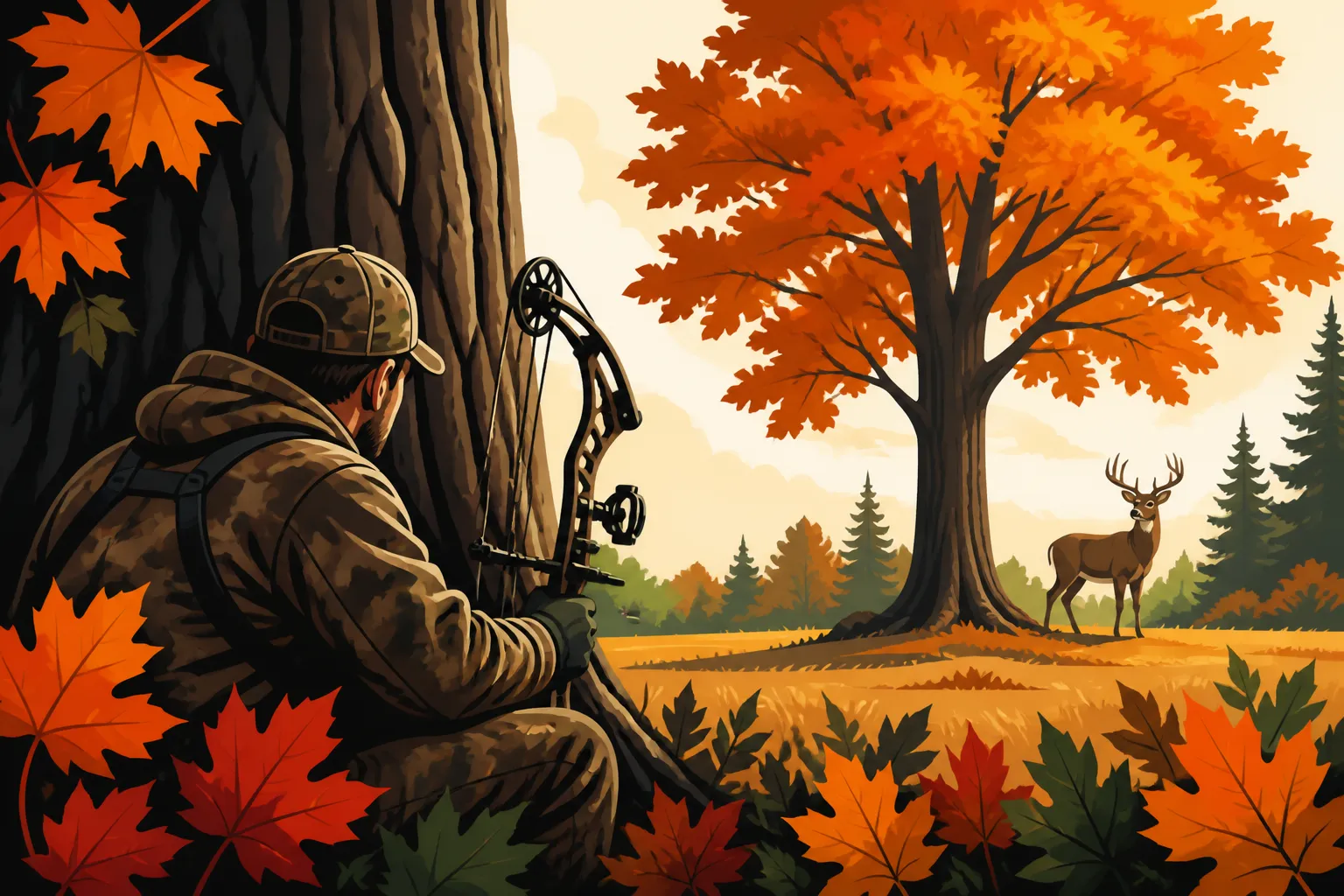
One of the most immediate benefits of a large maple is its sheer size and complex branching structure. Unlike smaller trees that might leave you silhouetted against the sky, a mature maple provides a massive, multi-layered backdrop that helps break up your outline. Its thick bark and often gnarled limbs offer excellent visual camouflage, making it incredibly difficult for deer to pick you out, even if they're looking in your direction. This natural concealment is especially crucial in heavily hunted areas where deer are constantly on alert. You can nestle right into the crotch of a major limb or use the trunk itself to block your profile, effectively disappearing into the canopy. The robust structure also means it can safely support a variety of stands, from ladder stands to hang-ons, without concern for stability, a critical factor when you consider the potential for long hours spent sitting All Day in an Ontario Blind.
Proximity to Key Deer Resources
Maples, especially sugar maples, are more than just a place to hide; they're often a hub of deer activity. In the spring and summer, their leaves provide browse. Come autumn, their falling leaves create natural bedding areas, and if you’re lucky enough to be near a stand of mast-producing oaks or beeches, maples provide an ideal vantage point overlooking those feeding zones. Furthermore, maples are often found in mixed hardwood forests, which means they are usually situated near other food sources and travel corridors. This strategic location makes them perfect for intercepting deer moving between bedding and feeding areas, or those simply travelling along game trails. When you're actively Reading Whitetail Sign in Ontario Hardwoods, pay close attention to maples; you'll often find rubs and scrapes nearby, indicating regular deer traffic.
Thermal Regulation and Wind Break
A big maple also offers practical comfort advantages that can make a long sit much more tolerable. Its large canopy and thick trunk provide a surprising amount of thermal regulation. On a crisp autumn morning, the dense foliage can offer a slight buffer against the biting wind, making you feel a degree or two warmer. Conversely, on a sunny, milder day, the shade cast by its expansive crown can keep you cooler and prevent direct sun glare from impacting your vision or heating up your equipment. The sheer mass of the tree can also act as a windbreak, which is invaluable when you're trying to remain scent-free. Positioning yourself on the downwind side of the trunk can help funnel your scent away from approaching deer, a crucial element in any successful hunt.
Choosing the Ideal Maple for Your Stand Setup
Not all big maples are created equal when it comes to stand placement. Selecting the right tree is a critical decision that can directly impact your hunting success. It’s a process that combines careful scouting with a good understanding of deer behaviour and your personal hunting style. This isn't just about finding the biggest tree; it's about finding the one that offers the most strategic advantage.
Assessing Tree Health and Structural Integrity
Safety is paramount when hanging a stand. Before you even think about climbing, thoroughly inspect any potential maple for signs of decay, rot, or weakness. Look for large dead branches that could fall, inspect the trunk for hollow spots, fungal growth, or insect infestations that might compromise its strength. Pay particular attention to the area where you intend to place your stand, ensuring the trunk is solid and free of any major splits or cracks. A quick tap with your hand can often reveal a hollow section, and a visual scan for obvious hazards like wasp nests or thorny vines will save you a nasty surprise later. Remember, a stand is only as safe as the tree it's attached to. When you are looking to hang a stand, ensure that the tree itself is healthy enough to support your weight and gear, especially if you're planning to stay out for long periods, which is often the case during key periods like the rut in Early to Mid November.
Optimal Height and Branching for Concealment and Shooting Lanes
The height at which you position your stand in a maple is a delicate balance. Too low, and you risk being spotted; too high, and shooting angles become steep, and you lose critical concealment. Generally, 15 to 25 feet off the ground is a good starting point for most whitetail hunting. However, the unique branching pattern of a big maple should dictate your final placement. Look for a location where you can use a major limb or a fork in the trunk to your advantage, either to break up your silhouette or to provide a rest for your bow or rifle.
Crucially, visualize your shooting lanes from that height. Are there clear lines of sight to established game trails, food plots, or rub lines? Can you comfortably draw your bow or shoulder your rifle without interference from branches? Remember, you can trim small branches, but you can't move major limbs. Use tools like GoHunt to scout the area from above using satellite imagery, identifying potential shooting lanes and mapping deer movement before you ever step foot in the bush with your stand. This pre-scouting is invaluable for eliminating blind spots and maximizing your field of view.
Wind Direction and Sun Exposure Considerations
Understanding prevailing wind patterns and sun exposure is absolutely vital. You want to set up your stand so that the prevailing wind carries your scent away from where you expect deer to approach. This often means facing into the prevailing wind or setting up on the downwind side of a known travel corridor. A big maple's dense canopy can offer some windbreak, but it won't magically eliminate your scent trail. Using a compass and a reliable weather app during scouting trips can help you map typical wind directions for the area.
Additionally, consider sun exposure. Nobody wants to be staring directly into a rising or setting sun for hours. Position your stand so that the sun is at your back or to your side during peak deer movement times (dawn and dusk). This not only improves your visibility but also makes you less visible to deer, as they'll be looking into the glare. It's a small detail that can make a huge difference in staying comfortable and alert throughout your hunt.
Executing a Stealthy and Secure Setup
Once you've identified that perfect big maple, the real work begins: setting up your stand. This isn't just about getting it up there; it's about doing so safely, quietly, and in a way that maximizes your chances of success. Every step, from the tools you carry to the amount of noise you make, contributes to the overall effectiveness of your setup.
Essential Gear and Safety Protocols
Before you even think about climbing, gather all your necessary gear. This includes your tree stand (whether it's a ladder, hang-on, or climbing stand), climbing sticks or steps, a safety harness, a pull rope, a small hand saw, and a few bungee cords. Always, always wear your full-body safety harness from the moment your feet leave the ground until they return. This isn't optional; it's non-negotiable. There are countless stories of hunters falling from stands, and a harness is your only real protection. Ensure your harness is properly fitted and attached to the tree at all times, including during the ascent and descent.
Carry your stand and tools using a backpack system or via a haul line, never attempting to climb with them in your hands. A good pair of climbing boots with excellent grip is also crucial. When Hanging a Stand on an Ontario Bush Edge, having the right gear and following strict safety protocols can mean the difference between a memorable hunt and a tragic accident.
| Item | Purpose | Key Consideration |
|---|---|---|
| Tree Stand | Your elevated hunting platform | Appropriate for tree size, stable, comfortable |
| Climbing Sticks/Steps | For safe ascent/descent | Securely attached, sufficient height, quiet to use |
| Full-Body Safety Harness | Essential fall protection | Worn at all times, properly fitted, attached to life-line |
| Haul Line (Pull Rope) | Safely raising/lowering gear | Strong, tangle-free, long enough for your desired height |
| Hand Saw/Pruners | Clearing shooting lanes/view | Sharp, compact, quiet operation |
| Scent Eliminator | Reducing human odour around the stand | Applied to clothes, gear, boots; used before and after setup |
| Headlamp | For early morning/late evening setup or pack-out | Red light option for stealth, reliable battery life |
| First-Aid Kit | For minor injuries or emergencies | Compact, well-stocked for cuts, scrapes, insect bites |
Minimizing Noise and Scent During Installation
Deer have an incredible sense of hearing and smell. Any unnecessary noise or scent left behind during your setup will greatly reduce the effectiveness of your stand. Plan your approach to the tree to avoid breaking branches or rustling leaves unnecessarily. If possible, set up your stand a few days or even weeks before the season, allowing your scent to dissipate and the woods to settle down. If you're setting up on the day of the hunt, be extra vigilant.
Wear clean clothes, preferably treated with a scent eliminator, and wear gloves to avoid leaving human scent on the tree or stand. When attaching climbing sticks or the stand itself, work slowly and deliberately to avoid metal-on-metal clanging or creaking noises. Use rubber washers or silencing tape where appropriate. Many hunters use GoHunt or similar GPS apps to mark their entry and exit routes to and from the stand, choosing paths that minimize disturbance. The goal is to leave as little evidence of your presence as possible, making the deer believe the area is undisturbed.
Clearing Shooting Lanes and Enhancing Concealment
Once your stand is securely in place, take a moment to assess your shooting lanes. From your elevated position, you’ll have a different perspective. Use your hand saw or pruners to carefully trim any small branches that obstruct your view or impede a clean shot within your desired range. Only trim what is absolutely necessary; over-trimming can reduce your natural concealment and draw unwanted attention to your stand location.
To enhance concealment, consider using natural elements. A few strategically placed branches or leafy camouflage netting can further break up your outline, especially if you're positioned against a less dense part of the maple. If the maple is part of a larger woodlot, remember that your background is just as important as your foreground. A clear sky behind you will silhouette you, whereas a dense cluster of other trees or brush behind the maple will help you melt into the environment. Think about how deer will approach and where their eyes might naturally be drawn.
Tactical Considerations for Hunting from a Big Maple
Setting up your stand is only half the battle; actually hunting from it effectively requires tactical foresight and adaptability. The biggest, best-placed maple in Ontario won't yield a deer if you're not hunting it intelligently.
Understanding Deer Movement Patterns
Big maples, especially those in prime locations, are often adjacent to natural travel corridors. These could be subtle deer trails, old logging roads, or edges where different habitat types meet, like the transition from a cedar swamp to a hardwood ridge, or when you are Hunting a Beaver Meadow Crossing. Before you hunt, spend time scouting the area around your chosen maple. Look for fresh tracks, droppings, rubs, and scrapes, all indicating active deer movement. Identify where deer are entering and exiting the area, and at what times. This information will help you predict their travel patterns and position yourself for the best shot opportunity. GoHunt's mapping capabilities can be extremely useful here, allowing you to mark sign, plot historical deer sightings, and identify potential bedding and feeding areas relative to your stand.
Adapting to Wind and Weather Conditions
Ontario weather is notoriously unpredictable, and wind is a deer hunter's constant nemesis. Even with a perfectly placed stand in a massive maple, a shifting wind can ruin a hunt. Always check the wind direction before heading out and adjust your hunt plan accordingly. If the wind is unfavourable for your maple stand, consider moving to an alternative location or still-hunting through another area. No deer is worth spooking due to a bad wind.
Rain and snow can also influence deer movement and your hunting comfort. While a maple's canopy offers some protection, prolonged precipitation will necessitate good rain gear. Snowfall, especially a fresh light snow, can be a blessing, allowing you to track deer more easily and muffling your sound. Be prepared for all conditions; dressing in layers is key to staying comfortable and focused throughout your hunt.
Strategies for Success from the Maple Stand
Hunting from a big maple offers excellent versatility. For bowhunters, the concealment allows for closer shots, while rifle hunters benefit from the stable platform for longer distances. Consider employing calling tactics, especially during the rut. A subtle grunt or doe bleat can draw a curious buck into range, using the maple as an anchor point. Rattling Volume in Thick Bush can also be effective if you're set up on a high traffic lane.
Patient observation is paramount. Scan your surroundings constantly, not just for deer, but for smaller movements, subtle sounds, or even flicking ears that might betray a deer's presence. Use binoculars to thoroughly examine dense cover. Remain as still and quiet as possible. Remember, the goal is to become an invisible part of the forest, letting the deer come to you. Don't fidget, don't make unnecessary movements, and only move when absolutely necessary, such as when a deer's head is behind the tree or it's looking away.
Disclaimer
Hunting is an inherently dangerous activity. This guide provides general information and recommendations. Always prioritize safety, adhere to all local, provincial, and federal hunting regulations, and complete any required hunter education courses, such as those covered in Ontario Hunter Safety and Firearms Courses. The author and publisher are not responsible for any incidents or accidents that may occur as a result of using this information. Always hunt responsibly and ethically.