Hunting an Ontario Managed Forest Block
For many hunters in Ontario, the landscape feels divided into clear categories: vast tracts of Crown land up north, or tightly controlled private farmland down south. But there's another, often overlooked, category that offers fantastic hunting opportunities, yet can be a bit of a mystery: the Managed Forest Block. These unique properties can sometimes leave hunters scratching their heads about access, rules, and what to expect. This guide is here to shed light on hunting these often-productive and sometimes less-pressured areas, helping you understand how to find them, gain access, and tailor your hunting approach.
What Exactly Is a Managed Forest Block in Ontario?
Before we dive into hunting them, let's clear up what a Managed Forest Block actually is, because it's not quite Crown land, and it's not quite regular private land either. It sits in a unique space, offering both challenges and rewards for the diligent hunter.
The Managed Forest Tax Incentive Program MFTIP
At its core, a Managed Forest Block is land enrolled in Ontario's Managed Forest Tax Incentive Program (MFTIP). This program encourages private landowners to manage their forests sustainably by offering a reduced property tax rate. In exchange for this tax break, landowners commit to a Managed Forest Plan, which outlines how they will actively manage their forest for ecological health, timber production, or other objectives. This might involve selective logging, planting, or creating wildlife habitat. Crucially for hunters, while the land remains private, a key component of the MFTIP often involves maintaining public access to certain areas, or at least being open to discussions about it. This isn't automatic free access like Crown land, but it definitely isn't the same as a property that's completely locked down with "No Trespassing" signs everywhere.
It's a really smart program when you think about it. Instead of watching valuable forest land get developed or neglected, it gives landowners a financial incentive to keep it as forest, and often, keep it accessible in some form. This means that instead of seeing another subdivision, you might find a diverse, actively managed woodland that holds a surprising amount of game. The landowner is thinking about long-term forest health, and that usually aligns pretty well with good wildlife habitat.
How These Blocks Differ from Crown Land and Private Property
Understanding the distinction between managed forest, Crown land, and typical private property is paramount for hunting legally and ethically in Ontario. Crown land, as most of us know, is generally public land where hunting is permitted unless specifically prohibited, like in provincial parks or certain conservation areas. Hunting Ontario's Crown Land is a great resource for navigating those vast areas. You don't need to ask permission to be there, though you still need to know your WMU boundaries and follow all regulations.
Regular private property, on the other hand, usually requires explicit permission from the landowner before you set foot on it with a firearm or bow. Without that permission, you're trespassing, plain and simple. Getting Private Land Permission in Ontario can be a difficult but rewarding process. Managed Forest Blocks fall somewhere in between. They are private land, owned by individuals or companies, but because of the MFTIP, there's often an expectation or requirement for some level of public access, especially for recreational activities like hunting. This isn't always blanket access, and it still often requires respectful communication with the landowner, but it’s a far cry from knocking on a random farmer's door and hoping for a "yes."
The main difference is in the intent of the land management. On Crown land, management is broad and for the public good, often with resource extraction like logging or mining, but also recreation. On private land, it's solely at the owner's discretion. Managed forest lands are private, but their management is guided by a specific, approved plan that takes into account both the owner's goals and the ecological health of the forest. This often results in a patchwork of older growth, new cuts, and diverse vegetation that can be prime habitat.
Accessing and Navigating Managed Forest Blocks
So, you're keen on exploring these managed forest blocks. The next logical step is figuring out how to find them and, more importantly, how to secure access. This isn't always a straightforward process, but with a bit of legwork and the right tools, it's entirely doable.
Identifying Managed Forest Lands
The first challenge is simply knowing where these managed forest blocks are located. They aren't always clearly marked on standard public land maps. Your best bet is to start by checking with the local municipality or conservation authority offices. They may have information on enrolled lands in their area or be able to direct you to resources. The Ontario Ministry of Natural Resources and Forestry (MNRF) website also provides information about the MFTIP, though it generally doesn't list specific parcel locations for privacy reasons.
This is where modern mapping technology becomes an absolute game-changer. Tools like onX Hunt or even certain municipal GIS portals can be invaluable. You can often layer property boundaries with satellite imagery and sometimes even property ownership information. By cross-referencing areas that look like managed forest (large, contiguous private woodlands, perhaps near other publicly accessible land) with local knowledge or municipal maps, you can start to pinpoint potential candidates. It's a bit like detective work, but it pays off.
Permission and Posting Requirements
Even with the public access aspect of the MFTIP, it's crucial to understand that access is not always automatic or universal. The landowner may specify what kind of access is permitted (e.g., foot traffic only, no vehicles), when it's permitted, or where on their property it's permitted. Some landowners are incredibly open to responsible hunters, while others may be hesitant or have specific concerns. It's always, always, always best practice to seek explicit permission from the landowner before you hunt on a managed forest block. Even if there are no "No Trespassing" signs, a simple conversation can build a positive relationship and prevent misunderstandings. Ontario Trespass and Landowner Law is something every hunter needs to understand, regardless of where they hunt.
When you do approach a landowner, be polite, respectful, and prepared. Have a map of their property (which you might have created using an app like onX Hunt) and point out the specific area you're interested in. Explain your intentions clearly and offer to share any game you harvest, if appropriate. Often, landowners appreciate hunters who are willing to help manage wildlife populations, especially deer that might browse young trees. Remember, a landowner's "no" should always be respected without question or argument.
Mapping and Scouting Tools
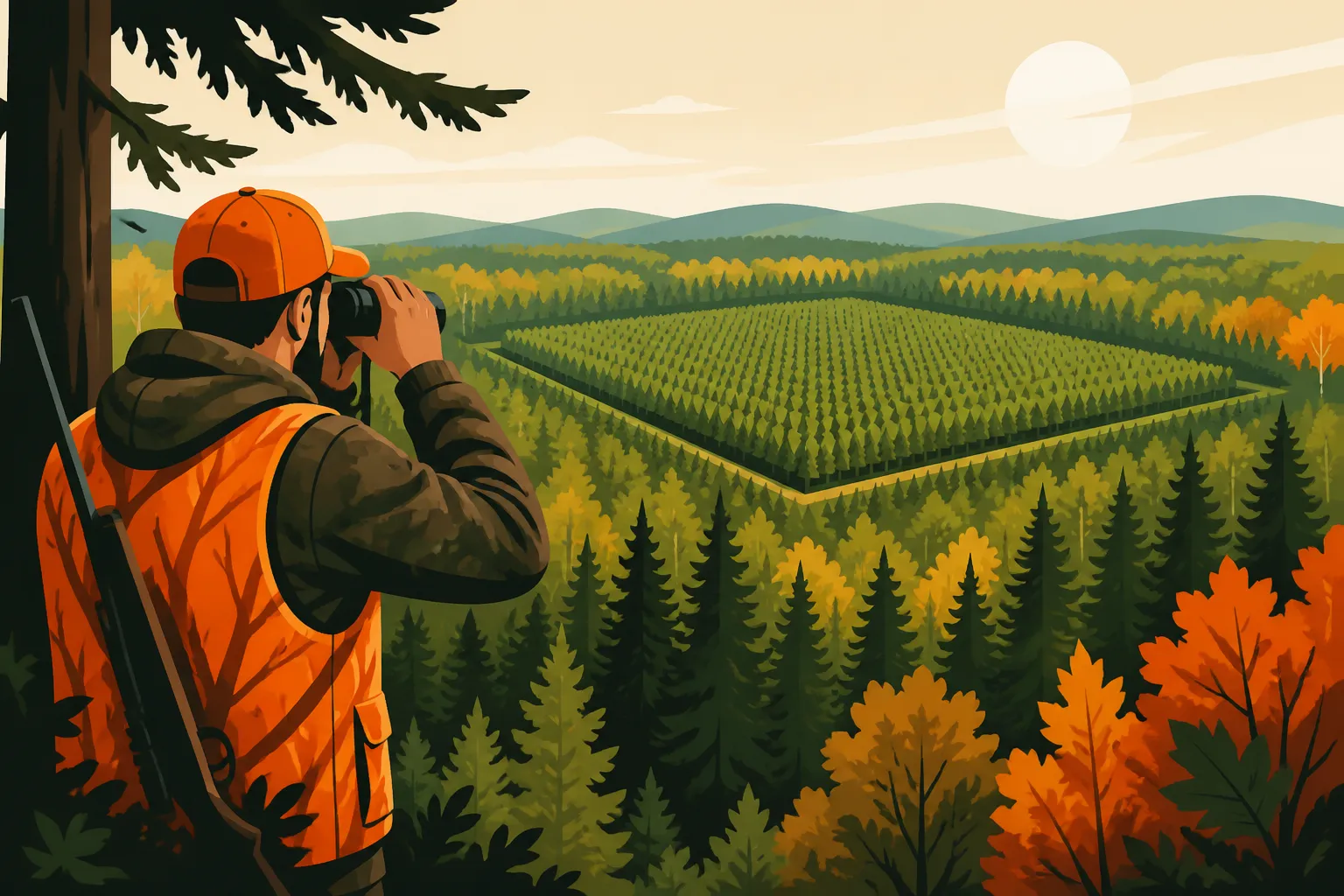
Once you've identified a potential managed forest block and, ideally, secured permission, detailed mapping and scouting become your best friends. These areas are often actively managed, meaning there might be recent clear-cuts, selective logging, or new plantings. These changes create diverse habitats that are prime for wildlife, but they also change the landscape rapidly. Satellite imagery from apps like onX Hunt or GoHunt can show you recent forestry work, helping you pinpoint potential bedding areas, browse lines, and travel corridors that might not be visible on older topographical maps.
Using these apps to drop pins for old logging roads, natural funnels, water sources, or particularly dense cover can give you a massive advantage. You can even plan your approach routes and stand locations from home, saving valuable time and minimizing disturbance in the woods. Pay attention to how the different forest types transition – from mature hardwoods to younger pines, or from a recent cut-block to dense cedar swamp. These "edge habitats" are often where game activity is highest. Scouting With Satellite Imagery in Ontario can provide more tips on how to effectively use these tools.
Hunting Strategies for Managed Forest Blocks
Managed forest blocks offer a unique blend of habitat characteristics, often leading to excellent hunting if you adjust your strategies. You're not necessarily dealing with vast, untouched wilderness, nor are you confined to small woodlots.
Common Game Species in Managed Forest Blocks
Due to the active management and varied habitat, these blocks can be fantastic for a range of species. White-tailed deer are often abundant, especially where there's a mix of mature timber for cover and younger growth or adjacent agricultural fields for browse. The logging activity itself, over time, creates areas of dense regeneration that provide both food and security cover, attracting deer. Whitetail Hunting in Ontario can be particularly rewarding in these areas.
Wild turkeys also thrive in these mixed-forest environments, particularly where there are mast-producing trees like oaks and beeches, coupled with open clearings or field edges. The more open understory from selective logging can make for easier travel for turkeys and better visibility for hunters. Small game like ruffed grouse and snowshoe hare can also be incredibly plentiful, especially in successional habitats created by past logging. Grouse love the thick regeneration that springs up after a cut, while hare will often be found in dense conifer stands or alder thickets.
Adapting Your Approach
The key to hunting a managed forest block successfully is to recognize that the habitat is dynamic. Active forestry means that old stand locations might become obsolete, and new game trails might appear where a logging road once was. This requires constant scouting and adaptability. Look for signs of recent logging: skidder trails, fresh cut stumps, or piles of brush. These areas, while initially disruptive, will eventually regenerate into prime bedding and browsing habitat.
Consider the time of year and the specific management practices. During deer season, areas with recent cuts can draw deer in for browse. If there are adjacent agricultural fields, hunting the edges between the managed forest and these fields can be very productive, especially during the fall. Hunting a Bush Edge often means understanding how deer transition between different cover types. Also, be mindful of any active logging operations; safety dictates you stay clear of heavy machinery and marked operational areas.
Ethical Considerations and Hunter Etiquette
Hunting on managed forest land comes with a heightened sense of responsibility. You are on private property, even if public access is encouraged. This means demonstrating impeccable hunter etiquette is not just good practice, it's essential for maintaining these opportunities for yourself and future hunters. Always carry your permission slip (if required) and your hunting licence. Be acutely aware of property boundaries, especially if the managed block borders residential areas or other private lands where hunting might not be permitted. Using a mapping app like onX Hunt or GoHunt with boundary overlays is absolutely critical here to ensure you don't inadvertently cross onto prohibited land.
Respect all gates, fences, and signs. Leave no trace – pack out everything you pack in, including spent shell casings and trash. Be considerate of other users, as these lands might also be used for hiking, birdwatching, or other outdoor recreation. If you encounter non-hunters, be friendly and courteous. A positive interaction can go a long way in ensuring the landowner continues to welcome hunters. Remember, you are an ambassador for all hunters, and your actions directly influence public perception and future access.
Pros and Cons of Hunting Managed Forest Blocks
Like any hunting opportunity, managed forest blocks come with their own set of advantages and disadvantages. Understanding these can help you decide if pursuing these unique properties is the right fit for your hunting style and goals.
Advantages for the Ontario Hunter
One of the biggest draws of managed forest blocks is the potential for reduced hunting pressure. Unlike popular Crown land areas that can become crowded, especially during opening week, these private lands often see fewer hunters. This can translate into more relaxed game and a more peaceful hunting experience. The active management itself creates incredibly diverse habitats. You're not just looking at a monoculture; you'll find a mosaic of mature trees, dense regenerating stands, clear-cuts, and sometimes even food plots planted as part of the management plan. This varied terrain offers excellent cover, browse, and bedding areas, often concentrating game.
Furthermore, building a relationship with a managed forest landowner can lead to consistent access over many seasons. A trusted hunter who shows respect and responsibility is a valuable asset to a landowner, and that relationship can deepen into a reliable hunting spot year after year. These lands are often located closer to population centres than vast tracts of northern Crown land, making them more accessible for day trips or weekend hunts without extensive travel. This can be a significant benefit for hunters in southern and central Ontario.
Challenges and Considerations
However, managed forest blocks aren't without their quirks. The primary challenge is obtaining access and understanding the specific rules for each property. Unlike Crown land where rules are generally standardized, each managed forest block owner might have different expectations or restrictions. This means more upfront legwork in researching properties and contacting landowners. There's also the ongoing possibility of active forestry operations. You might show up to hunt, only to find loggers are working the block you planned to visit. This requires flexibility and understanding that the primary purpose of these lands, while beneficial to wildlife, is often timber production.
Another consideration is that these properties, being private, are sometimes smaller or more fragmented than what you might find on Crown land. You need to be extra vigilant about property lines, especially if you're hunting with a firearm. The terrain can also be challenging due to logging debris or dense regeneration, making travel more difficult than in open mature woods. Finally, while public access might be encouraged, it's still private land. This means the landowner can revoke permission at any time, or change the rules. It reinforces the need for ongoing positive communication and respect.
Here's a quick comparison to help solidify the differences:
| Feature | Crown Land | Managed Forest Block | Typical Private Land |
|---|---|---|---|
| Ownership | Public (Government) | Private (Individual/Company) | Private (Individual/Company) |
| Access | Generally open, unless specifically restricted | Often permitted/encouraged (with permission) | Requires explicit, direct permission |
| Management | Broad resource management, public use | Active forest management for tax incentive | Owner's discretion, varied goals |
| Hunting Rules | Provincial regulations apply (WMU specific) | Provincial regulations + owner's specific rules | Provincial regulations + owner's specific rules |
| Pressure | Can be high in popular areas | Often lower than Crown, but varies | Highly variable, often very low if exclusive |
| Habitat | Natural, extensive, varied | Actively managed, diverse (cuts, regeneration) | Highly varied (farm, forest, residential) |
| Finding Info | MNRF maps, WMU guides | Local municipality, mapping apps, direct inquiry | Direct inquiry, local knowledge |
| Key Benefit | Vastness, diverse ecosystems | Diverse habitat, potential for low pressure | Exclusivity, tailored experience |
By understanding these nuances, you can approach hunting an Ontario managed forest block with confidence and a strategy tailored to its unique environment. They offer a fantastic opportunity for hunters willing to do a little extra homework.
Disclaimer
This article is for general informational purposes only and does not constitute professional advice. Laws, prices and regulations vary by location and change over time. Consult a qualified professional for guidance on your specific situation.