Winter Road Access in Northern Ontario
Navigating Northern Ontario for a winter hunt can be an incredible experience, but the harsh realities of our northern climate, especially when it comes to road access, can quickly turn an adventure into a nightmare if you're not prepared. Many hunters get caught off guard by rapidly changing conditions, unexpected closures, or simply underestimating the sheer remoteness of the region. This guide is here to walk you through the unique challenges of winter road access in Northern Ontario, helping you plan smart, stay safe, and make the most of your cold-weather hunting opportunities.
The Unique Challenges of Winter Road Access in Northern Ontario
Northern Ontario isn't like the southern parts of the province where plowed roads and gas stations are plentiful. When winter truly settles in, the landscape transforms into a vast, often unforgiving wilderness, and the roads you rely on become entirely different beasts. Understanding these fundamental challenges is the first step to a successful and safe winter hunting trip.
The Vastness and Variability of the Landscape
One of the biggest eye-openers for hunters new to our north is the sheer scale of the place. We're talking about millions of acres of bush, much of it unpopulated and crisscrossed by a network of roads that range from well-maintained highways to barely-there tracks. What might look like a primary road on a summer map can quickly become impassable in winter, swallowed by snowdrifts or simply unplowed. The conditions can also vary wildly even within a few dozen kilometers. One section might be clear, while the next is buried under several feet of fresh powder, especially after a lake effect snow squall or a heavy general snowfall. This variability demands constant vigilance and a flexible mindset.
It's not just about the snow, either. Northern Ontario experiences significant temperature swings, often dipping to -30°C or colder for extended periods, only to warm up briefly, creating slush, and then refreeze into a treacherous sheet of ice. This freeze-thaw cycle can make even heavily trafficked roads slippery and dangerous. The vastness also means that help is often hours, if not days, away, reinforcing the critical need for self-reliance and meticulous planning. Knowing that you might be the only vehicle on a particular stretch for days at a time really changes your perspective on preparation.
Seasonal Road Closures and Conditions
Many of the roads that grant access to prime hunting areas in the summer and fall simply cease to exist, for all intents and purposes, once winter truly sets in. This is particularly true for many logging roads and resource access roads. While some main routes are maintained by logging companies for active operations, others are left to the mercy of the elements. Snow accumulates quickly, creating deep drifts that are impossible for a regular pickup truck to navigate. Bridge washouts or culvert failures that might be minor detours in summer can become impassable barriers under a blanket of snow and ice.
Moreover, certain roads, especially those leading into remote recreational properties or even some sections of Crown land, are intentionally not plowed. These become prime snowmobiling corridors, and attempting to drive them in a wheeled vehicle is not only foolish but often illegal and dangerous to snowmobilers who expect a clear trail. You'll often find gates that are closed and locked specifically for the winter season, sometimes quite a distance from the main road. Always check local regulations and advisories, including those from the Ministry of Natural Resources and Forestry (MNRF) or local municipalities, as well as logging companies operating in the area, to confirm road status before heading out. Understanding ATV Rules on Ontario Crown Land can also be important, as some areas may allow ATVs where full-size vehicles are restricted.
Limited Services and Remote Locations
Another significant challenge is the sheer lack of services once you venture beyond the main towns and highways. Cell service, which can be spotty at the best of times in our northern bush, often completely disappears for vast stretches of road. This means no quick call for a tow truck, no looking up directions on your phone, and no reaching out to your hunting partners if you get separated. Gas stations, mechanics, and even small general stores become fewer and farther between. This isolation requires hunters to be completely self-sufficient.
Imagine you break down 100 kilometers into an unmaintained logging road, the temperature is dropping, and you haven't seen another vehicle all day. This isn't a hypothetical scenario for many seasoned northern hunters; it's a very real possibility. What do you have with you? Is your vehicle properly equipped for sub-zero temperatures? Do you have enough food, water, and warm clothing to spend a night, or even two, out in the elements? The limited services amplify every minor mechanical issue or wrong turn, transforming it into a potentially life-threatening situation. This is why thorough preparation isn't just a suggestion, it's a requirement for safe winter travel up here.
Essential Planning for Winter Road Travel
Heading into the vastness of Northern Ontario in winter without a solid plan is akin to asking for trouble. Successful winter road access hinges on meticulous preparation, from knowing where you're going to having the right gear and a clear communication strategy.
Mapping and Reconnaissance
Before you even think about packing your truck, you need to pore over maps. And I'm not just talking about a simple road atlas. You need detailed topographical maps and reliable digital mapping tools. Services like onX Hunt and GoHunt can be invaluable here. They often have layers showing Crown land boundaries, logging roads, and even contours that can indicate elevation changes and potential trouble spots like steep hills or low-lying areas prone to drifting. Using these tools to scout Scouting With Satellite Imagery in Ontario before you go is absolutely crucial. Look for old logging cuts, bush edges, and potential staging areas for your hunt.
Beyond digital tools, it’s a wise idea to make phone calls. Contact local MNRF offices, nearby outfitters, or even local snowmobile clubs. These folks often have the most up-to-date, ground-level information on which roads are plowed, which are closed, and what conditions are truly like. There’s no substitute for local knowledge, especially when Mother Nature is dictating terms. Always carry physical maps as a backup, because electronics can fail due to cold or lack of battery, and you'll want a compass to go with them. A well-marked paper map can be a literal lifesaver if your GPS goes dark.
Vehicle Preparation and Safety Gear
Your vehicle is your lifeline in Northern Ontario's winter. It needs to be in top mechanical condition. This means fresh oil, antifreeze checked to handle extreme cold, a good battery, and reliable tires. Winter tires, ideally studded, are not just a nice-to-have; they're essential for traction on icy and snow-covered roads. A full-size spare tire (not a donut!) is also non-negotiable. Beyond the basics, consider what you'd need if you got stuck or broke down far from help.
Here’s a quick checklist of safety gear:
| Item | Importance | Notes |
|---|---|---|
| Recovery Gear | Essential for getting unstuck | Winch (front or rear), heavy-duty tow straps, shackles, shovel, traction mats, axe or saw for clearing |
| Emergency Kit | Survival in case of breakdown/stranding | Extra warm clothing (layers!), sleeping bag, emergency blanket, first-aid kit, high-calorie food, water |
| Navigation & Comm. | Staying found and calling for help | Satellite phone or InReach device, physical maps, compass, headlamp with spare batteries, power bank |
| Vehicle Maintenance | Dealing with minor mechanical issues | Jumper cables, tire repair kit, basic tool kit, extra fuel, siphon hose, spare fluids, flares |
| Fire Starting | Warmth and signaling | Waterproof matches, lighter, fire starters, small bundle of kindling |
Remember, carrying enough fuel is also critical. Always top off your tank when you can, and consider carrying extra in approved fuel containers. Running out of gas in -30°C is not an option. Having a Truck Kit for a Northern Ontario Hunt goes a long way.
Communication and Emergency Protocols
The reality of limited cell service in Northern Ontario's hunting areas means you can't rely on your phone for emergencies. This is where a satellite communication device like a Garmin InReach or a satellite phone becomes an absolute must-have. These devices allow you to send and receive messages, track your location, and most importantly, trigger an SOS call to emergency services even when you're far out of cell range. Always make sure these devices are charged, updated, and that your subscription is active.
Beyond the technology, establish a clear emergency protocol with your hunting party and with someone back home. Let a trusted person know your exact route, your expected return time, and who to contact if you don't check in. Share your digital maps and planned travel corridors. Agree on a check-in schedule – maybe once a day, or every time you move to a new area with service. If you're hunting in a group, decide on rendezvous points and procedures if you get separated. Having a plan for What to Do If You Get Turned Around can also reduce panic and improve your chances of getting back on track safely. This proactive communication can literally mean the difference between a minor inconvenience and a serious search and rescue operation.
Navigating Specific Winter Road Types
Northern Ontario's winter roads aren't all created equal. You'll encounter a spectrum of conditions, from regularly plowed routes to seemingly invisible tracks. Understanding what to expect from each type is crucial for choosing the right vehicle, the right speed, and the right approach.
Main Trunk Roads and Plowed Bush Roads
These are your primary arteries in the north. Think of highways like the Trans-Canada or major provincial routes. They are typically well-maintained, plowed frequently, and sanded or salted. However, even these can become treacherous during or immediately after a heavy snowfall or freezing rain event. Visibility can drop to zero in a whiteout, and black ice is a constant danger. Always adjust your speed to the conditions, regardless of the posted limit. Four-wheel drive is a huge asset, but it won't stop you from sliding on ice.
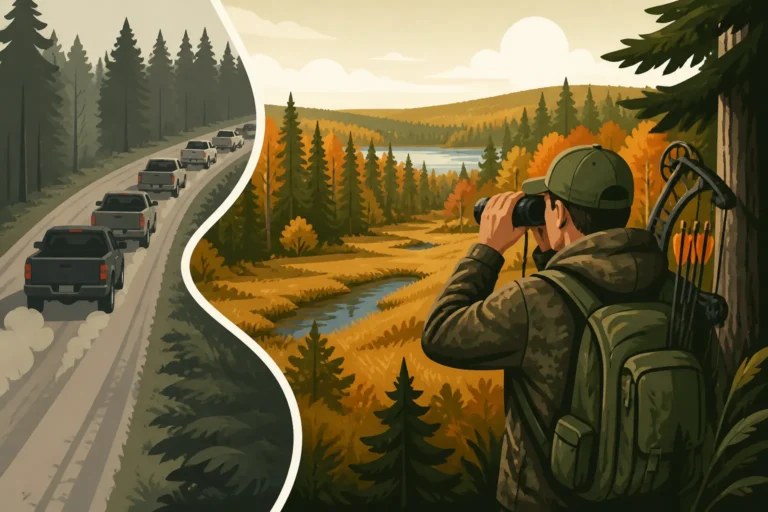
Beyond the main highways, you'll find plowed bush roads. These are often actively used logging roads or roads leading to year-round camps. While plowed, they might not be as wide or as frequently maintained as provincial highways. They can develop deep ruts, be icy in shaded areas, or have sudden drifts. Always assume that heavy industrial traffic (logging trucks!) has the right-of-way, and they often travel at speeds that can catch you off guard around a blind corner. Drive defensively and be prepared to pull over quickly. These roads are your gateway to deeper bush, so treating them with respect is key to accessing good hunting ground.
Unmaintained Logging Roads and Snowmobile Trails
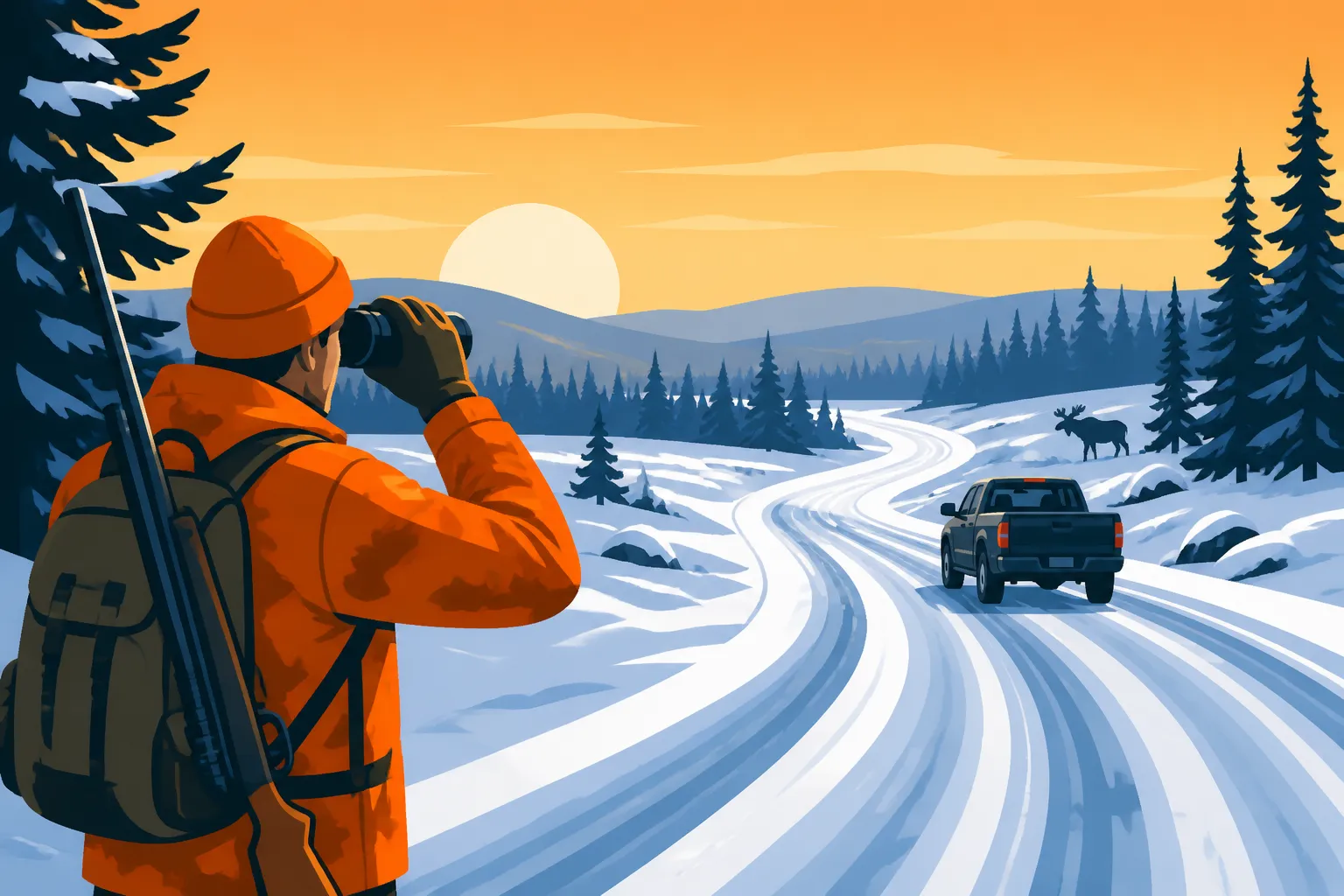
This is where the real adventure – and real risk – begins. Many old logging roads, once the lifeblood of the forest industry, are simply abandoned once an area is cut. In winter, these become prime targets for hunters seeking solitude and less pressured game. However, they are unplowed, often narrow, and can quickly become impassable. Deep snow, downed trees, and hidden obstacles like rocks or frozen puddles make slow going. You'll need a high-clearance 4×4, often with chains, and ideally a winch. Travelling alone on these roads is extremely risky. Always go with another vehicle or at least a highly capable snowmobile, and let someone know your exact route and expected return.
Some of these unmaintained roads also become designated snowmobile trails once the snow flies. It's imperative to know the difference. Driving a truck on a marked snowmobile trail is generally illegal, extremely dangerous for snowmobilers who may be travelling at high speeds, and can lead to severe fines and the loss of hunting privileges. Always check local trail maps and signage. If in doubt, park your vehicle legally and switch to snowshoes, skis, or a snowmobile. Many of the best spots for Hunting Ontario's Northern Lake Country or deep bush are often only truly accessible this way in winter.
Ice Roads and River Crossings
For truly remote access in parts of Northern Ontario, particularly in the far north, ice roads are sometimes established over frozen lakes and rivers. These are usually maintained by local communities or resource companies and allow vehicle access to areas otherwise cut off for much of the winter. However, ice roads are inherently dangerous. Their opening and closing dates are entirely dependent on ice thickness and weather conditions. Always respect weight limits, follow posted signage, and drive at appropriate speeds. Never venture onto an unmarked or unmaintained ice crossing, as the ice thickness can vary wildly, even on seemingly solid surfaces.
River crossings, even smaller ones that are shallow in summer, can become treacherous in winter. The moving water can prevent ice from forming solidly, or cause it to be thinner and weaker. If you must cross a frozen river or stream, exercise extreme caution. Check ice thickness with an auger or spud bar, especially near rapids, inlets, or outlets. Consider alternative routes or walking across on foot if the conditions are at all questionable. Taking a chance on thin ice is a gamble with incredibly high stakes.
Best Practices for Winter Hunting Access
A successful and safe winter hunt in Northern Ontario isn't just about knowing the rules; it's about adopting a mindset of preparedness, respect, and self-reliance. These best practices will help you navigate the unique challenges and maximize your chances of a great experience.
Timing Your Hunt and Monitoring Conditions
Winter hunting in Northern Ontario often means battling the elements as much as it means pursuing game. Timing your trip can make all the difference for road access. Try to plan your trips around periods of stable, colder weather, rather than immediately after a heavy snowfall or during a rapid thaw. A fresh snowfall might be great for tracking, but it can make even main roads impassable for days. Conversely, a warm spell followed by a hard freeze can turn every road into a skating rink.
Constantly monitor weather forecasts, but don't just look at the nearest town. Use localized forecasts for the specific WMU or region you'll be hunting. Pay close attention to wind warnings, as high winds can create massive drifts on open roads very quickly. Sometimes, the best decision is to delay your trip by a day or two to let plows catch up or conditions stabilize. Patience can save you a lot of grief, and a stuck vehicle could turn your hunt for Hunting a Hardwood Ridge for Whitetails into an overnight survival situation.
Respecting Private and Industrial Access
Just because a road looks open doesn't mean you automatically have the right to use it. Many bush roads, especially those that are plowed in winter, are actively used by logging companies or provide access to private camps and properties. Always look for "No Trespassing" signs or signs indicating private property or active industrial operations. Respect these boundaries. Driving on an active logging road without permission can be incredibly dangerous due to heavy machinery and can also lead to legal issues.
If you encounter a locked gate, do not try to bypass it. This is usually there for a reason, whether it's safety, private property, or to manage access for wildlife. If a road appears to be on private land, you absolutely need to obtain permission from the landowner beforehand. This includes checking maps from onX Hunt or GoHunt that show private land ownership boundaries. A simple phone call can save you a lot of trouble and maintain good relationships between hunters and landowners, which is vital for future access. For more information, check out Ontario Trespass Law for Hunters.
Contingency Planning and Self-Reliance
When you're far out in the northern bush in winter, you are truly on your own. A robust contingency plan is not just smart; it's survival. Always carry enough supplies to spend at least two extra nights in your vehicle or in a makeshift shelter, even if you only plan a day trip. This includes extra food, water, warm clothing, a sleeping bag, and a way to start a fire. A fully charged power bank for your electronics (even if only for flashlight use) is also crucial.
Beyond personal survival gear, consider vehicle-specific contingencies. What if your tire goes flat? Can you change it in extreme cold with frozen hands? What if your battery dies? Do you have jumper cables and a way to get a boost, or a portable jump starter? What if you get stuck in a deep drift? Do you have a winch, tow straps, and the knowledge to use them safely? Thinking through these "what if" scenarios before you leave home will highlight any gaps in your preparation. Practicing basic vehicle maintenance and recovery skills in a less stressful environment can save you from a desperate situation when it truly matters. Being self-reliant is the hallmark of a successful northern winter hunter.
Disclaimer
This article is for general informational purposes only and does not constitute professional advice. Laws, prices and regulations vary by location and change over time. Consult a qualified professional for guidance on your specific situation.