The Non-Resident Firearm Declaration
Bringing a firearm across an international border for your long-awaited Ontario hunting adventure can feel like navigating a labyrinth of complex regulations. Many non-residents feel overwhelmed and anxious about making a mistake that could jeopardize their trip before it even begins. This comprehensive guide will meticulously walk you through the Non-Resident Firearm Declaration process, ensuring you understand every detail to enjoy a smooth, hassle-free entry into Canada for your hunt.
Understanding the Non-Resident Firearm Declaration: Why It's Crucial
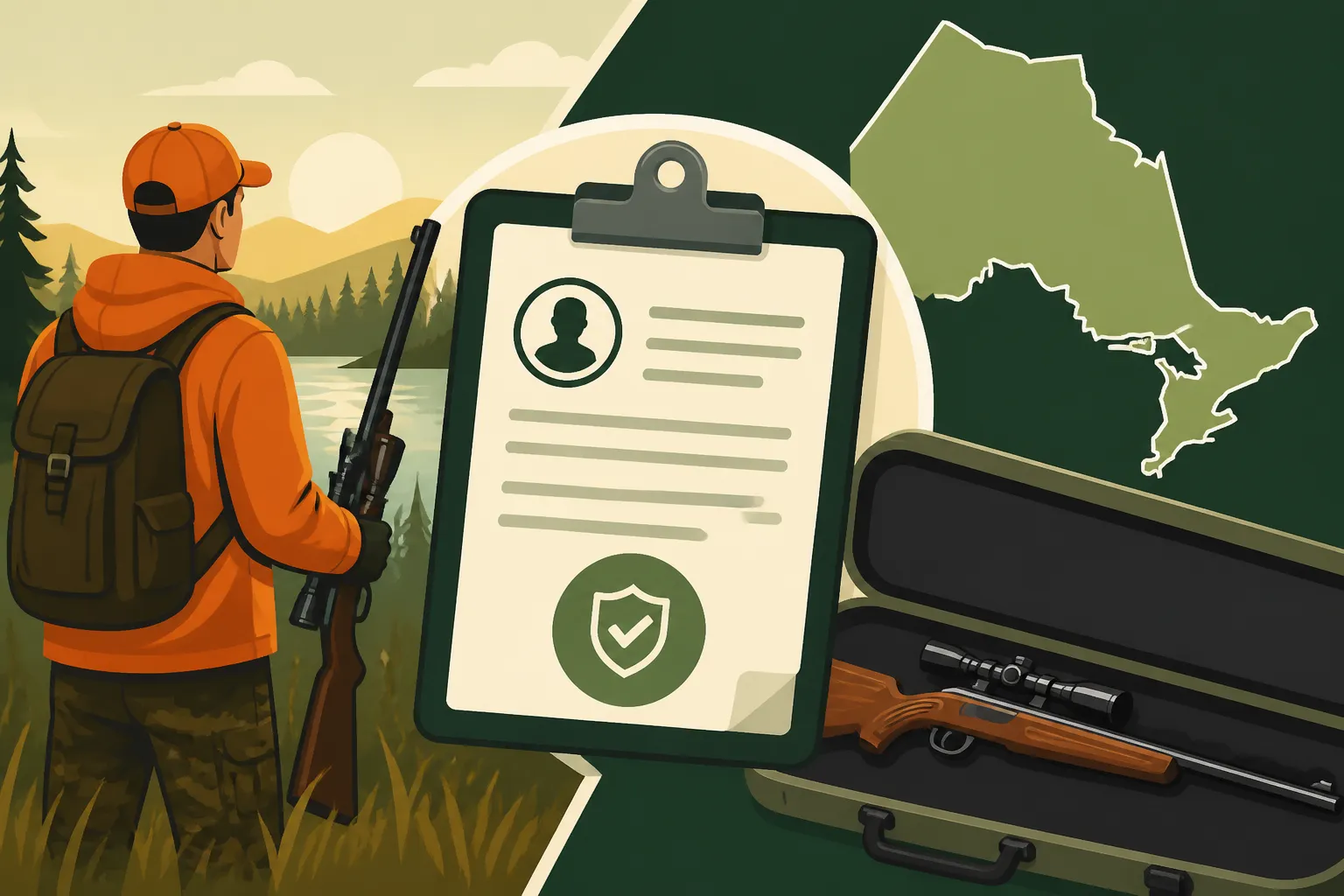
Let's face it, nobody wants to have their hunting trip derailed at the border. The Non-Resident Firearm Declaration (Form RCMP 5589) isn't just a suggestion; it's a mandatory document for anyone visiting Canada and bringing non-restricted or restricted firearms with them. It essentially acts as a temporary registration and license for your firearms while you're in the country, legally permitting you to possess and transport them for approved purposes, such as hunting. Without it, you could face serious legal trouble, including seizure of your firearms, fines, and even a denial of entry.
The critical thing to understand is that Canada has very specific and strict firearm laws, which differ significantly from those in many other countries, particularly the United States. What might be perfectly legal and commonplace where you live could be a serious offense here. This declaration process is Canada's way of maintaining control and ensuring that visitors understand and adhere to these regulations. It's a system designed to verify the legality of your firearms and your intent for bringing them into the country.
Differentiating Firearm Categories in Canada
Before you even think about filling out paperwork, it's absolutely essential to know how Canada classifies your firearms. This distinction dictates which rules apply to your specific situation and, critically, whether your firearm is even permissible for import.
- Non-Restricted Firearms: This category generally includes most common hunting rifles and shotguns. These are the firearms you'll typically be bringing for your Ontario hunting trip. They must meet specific barrel length requirements and not be designed to be easily concealed. For example, your trusty bolt-action rifle or a pump-action shotgun would likely fall into this category. The Non-Resident Firearm Declaration is primarily designed for these types of firearms when brought in for hunting.
- Restricted Firearms: This category includes most handguns and certain semi-automatic rifles that are not prohibited. While it is technically possible to declare these, their import often requires additional authorizations and specific purposes, usually sport shooting competitions, not general hunting. If you're planning on Hunting Wolves in Ontario's North or chasing whitetails, restricted firearms are generally not what you'll be using.
- Prohibited Firearms: This category includes certain types of firearms that are entirely illegal in Canada and cannot be imported under any circumstances. This includes fully automatic firearms, sawed-off shotguns/rifles, and certain handguns and rifles that have been banned by name. Attempting to bring a prohibited firearm into Canada will lead to immediate seizure, arrest, and severe penalties. Always double-check Canada's firearm classification rules before packing any firearm, especially if you have an "assault-style" rifle or pistol-gripped shotgun, as Canadian classifications can be surprising.
Knowing which category your firearm falls into is the first, most crucial step in navigating the declaration process successfully. If you're unsure, consulting the RCMP's Canadian Firearms Program website or speaking to an outfitter or guide who has experience with Rules for Non-Residents Hunting Ontario is highly recommended.
A Step-by-Step Guide to Completing the Declaration
The thought of filling out government forms can be daunting, but the Non-Resident Firearm Declaration is fairly straightforward once you understand the components. The key is to be prepared, accurate, and honest.
Pre-Filling the Form (But Don't Sign!)
You can download and print Form RCMP 5589 from the Canadian Border Services Agency (CBSA) website. It's highly recommended to fill it out before you arrive at the border. This saves time, reduces stress, and allows you to double-check all your information. However, and this is critical, DO NOT SIGN THE FORM until you are in front of a Canadian Border Services Officer (CBSA agent). The form must be witnessed and signed at the point of entry.
Here’s a breakdown of the information you’ll need to provide:
- Your Personal Information: Name, address, date of birth, and contact details. Make sure this matches your passport or other identification exactly.
- Purpose of Importation: Clearly state "Hunting" as your primary reason.
- Firearm Details: For each firearm you're bringing, you'll need its:
- Make (manufacturer)
- Model
- Type (e.g., rifle, shotgun)
- Action (e.g., bolt action, pump action, semi-automatic)
- Caliber or Gauge
- Serial Number
- Barrel Length (in metric, usually centimeters. You might need to convert inches to cm beforehand. 1 inch = 2.54 cm).
- Country of Manufacture
- Ammunition Information: You'll need to declare the type and quantity of ammunition you're bringing for each firearm. Canada has limits on ammunition quantities, so be mindful of these. Generally, you can bring up to 200 rounds per firearm without a special permit, provided it's non-prohibited ammunition.
- Hunting License/Permit Information: If you've already purchased your Ontario Hunting Licences and What They Cost or received confirmation for a guided hunt, have those details handy. While you might not have the physical license yet, proof of booking or intent helps.
Required Documents to Carry
When you present your declaration, you'll need supporting documentation to prove your identity and your purpose for bringing the firearms. Think of this as backing up everything you've written on the form.
- Valid Passport: This is your primary form of identification for international travel.
- Proof of Non-Resident Status: Your passport typically covers this, but having a driver's license from your home country can also be useful.
- Proof of Hunting Trip: This is crucial. It could be:
- A confirmed booking with an Hunting Guides and Outfitters in Ontario.
- A letter of invitation from a Canadian resident if you're hunting on private land or with friends.
- Proof of purchase of your hunting licence (though you might get this once in Ontario, showing intent is key).
- Information about the specific Ontario's Wildlife Management Units where you plan to hunt, which you might research using tools like GoHunt.
- Your Outdoors Card (if applicable): If you've hunted in Ontario before and already have an Ontario's Outdoors Card Explained, bring it along. It shows you're a registered hunter in the province.
- Firearm Ownership Documents (from your home country): While Canada doesn't recognize foreign firearm registrations as a substitute for its own, having proof of legal ownership in your home country can certainly help smooth the process. This could be a purchase receipt, registration card, or concealed carry permit (though these aren't valid for carry in Canada).
Make copies of everything! Keep the originals easily accessible, and store copies separately in your luggage. In the unlikely event an original is lost or damaged, you’ll have a backup.
Preparing for the Border: Documents and What to Expect
The actual crossing can be the most nerve-wracking part, but with proper preparation, it can be quick and efficient. Remember, CBSA agents are there to do their job, which includes ensuring border security and compliance with Canadian law. A calm, respectful, and prepared attitude goes a long way.
Transporting Your Firearms Safely and Legally
Before you even get to the border, you must ensure your firearms are transported in accordance with Canadian law. This applies from the moment you leave your home until you arrive at your destination in Ontario, and then again on your return journey.
- Unloaded: All firearms must be completely unloaded. Double-check, triple-check. There should be no ammunition in the chamber, magazine, or attached to the firearm.
- Trigger Locked: A secure trigger lock or other similar locking device must be engaged on each firearm.
- Securely Cased: Firearms must be transported in a sturdy, non-transparent case that is locked. Hard cases are highly recommended, especially for air travel, but a locked soft case is also generally acceptable for ground transport. The idea is to prevent unauthorized access and to keep the firearm from being readily used.
- Ammunition Storage: Ammunition must be stored separately from the firearms, preferably in its own locked container. It should not be easily accessible.
For a deeper dive into these rules, especially for different types of firearms, you can always refer to guidelines on Bringing Firearms Into Ontario. When you arrive at the border, whether by car or flying into airports like Toronto Pearson or Thunder Bay, you must declare your firearms immediately. Do not wait for an officer to ask you. Volunteer the information right away.
The Border Crossing Experience
When you pull up to the inspection booth or walk through customs at the airport, this is what you can generally expect:
- Initial Declaration: The CBSA officer will ask you your purpose of visit and if you are bringing anything to declare. State clearly: "Yes, I am a non-resident hunter, and I am declaring firearms for a hunting trip."
- Referral to Secondary Inspection: Almost certainly, you will be directed to a secondary inspection area. This is normal and nothing to be alarmed about. It's where the detailed firearm declaration process happens.
- Meeting with a CBSA Officer: At secondary, a dedicated officer will review your documents. Present your pre-filled Form RCMP 5589, your passport, proof of hunting trip, and any other supporting documents.
- Verification of Firearms: The officer will ask to inspect your firearms. You will likely be directed to retrieve them from your vehicle or luggage. They will verify the serial numbers, make, model, and other details against what you've listed on the form. Always follow the officer's instructions precisely when handling firearms. Do not touch them until instructed, and handle them as they direct.
- Payment of Fee: There is a fee for the Non-Resident Firearm Declaration, which is currently CAD$25. This fee is per declaration, not per firearm, and it can be paid by credit card or Canadian cash. Always have a payment method ready.
- Signing the Declaration: Once all details are verified and the fee is paid, the officer will instruct you to sign the declaration. They will then co-sign it, making it a legal document. They will give you a copy to keep with you.
- Return of Firearms and Departure: Your firearms will be returned to you, and you will be free to continue your journey into Ontario.
Here's a quick summary table for what to expect:
| Step | Action Required | Notes |
|---|---|---|
| Preparation (Pre-Arrival) | Download & pre-fill Form RCMP 5589 (DO NOT SIGN) | Ensure all firearm details (serial, barrel length in cm) are accurate. |
| Document Gathering | Passport, Proof of Hunt (outfitter booking, invitation), Hunting License proof | Keep originals accessible, copies separate. |
| Firearm Transport | Unloaded, Trigger Locked, Securely Cased (locked) | Ammunition separate and locked. |
| Border Initial Declaration | "Declaring firearms for hunting" (immediately, verbally) | Do not wait to be asked. Be proactive. |
| Secondary Inspection | Proceed as directed, present documents, retrieve firearms when asked | Be polite, patient, and follow all instructions from CBSA officers. |
| Verification & Payment | Officer verifies firearms, you pay the CAD$25 fee | Have credit card or Canadian cash ready. |
| Signing & Receipt | Sign the form when instructed, receive your copy | Keep your copy of the declaration with your firearms at all times while in Canada. |
Avoiding Common Headaches and Ensuring a Smooth Crossing
Even with all the information, it's easy to overlook small details that can cause significant delays. Many non-residents, especially those on their first trip, encounter similar issues. Let’s tackle some of the most common problems head-on.
Misinformation and Assumptions
The biggest headache usually stems from not knowing the rules, or worse, assuming Canadian rules are the same as back home. This applies particularly to firearm classifications. For example, some common semi-automatic sporting rifles that are perfectly legal in the US might be restricted or even prohibited in Canada. Don't assume. Do your homework. Before you even pack, cross-reference your specific firearm model against Canada's classifications. Resources like GoHunt, along with official government sites, can help you ensure you're on the right track. Many outfitters, especially those that cater to non-residents for Black Bear Hunting in Ontario or moose hunts, are well-versed in these rules and can offer guidance.
Incomplete or Incorrect Paperwork
Even a minor error on Form RCMP 5589 can cause a delay. Forgetting a serial number, getting the barrel length conversion wrong, or not having a clear purpose of visit can prolong your stay at secondary inspection.
- Barrel Length Conversion: This is a surprisingly common mistake. Canada measures in centimeters. Convert accurately (inches to cm: multiply by 2.54).
- Missing Documents: Not having your passport, proof of hunt, or sufficient funds for the fee will undoubtedly slow things down.
- Purpose of Visit: Be explicit. "Hunting" is good, "Hunting deer with ABC Outfitters near Kenora" is even better.
Improper Firearm Storage and Transport
Canadian law is very specific about how firearms must be stored and transported. Failing to meet these requirements is a serious offense, regardless of your intent.
- Unloaded and Locked: Ensure every firearm is unloaded and has a trigger lock or similar device engaged. This isn't just a suggestion; it's the law.
- Secure Cases: Firearms must be in a non-transparent, locked case. This applies whether they're in the trunk of your car, in your boat for Canoe-In Hunting on Ontario Crown Land, or checked on an airline.
- Ammunition Separate: Keep your ammo in a separate, locked container, away from your firearms.
Don't try to "bend" the rules or hide anything. CBSA officers are highly trained and will detect any discrepancies. Honesty and compliance are your best allies for a smooth entry.
Language Barriers and Communication
While Canada is a bilingual country (English and French), sometimes specific regional accents or jargon can lead to miscommunication. Speak clearly, concisely, and answer questions directly. If you don't understand something, politely ask the officer to clarify. It's better to ask than to make a mistake based on a misunderstanding.
By being meticulous in your preparation, understanding the legal requirements, and maintaining a polite and cooperative attitude, you can significantly reduce stress and ensure your Planning an Ontario Hunting Trip starts off on the right foot, with your firearms legally declared and ready for action.
Exiting Canada with Your Firearms
Just as important as entering Canada legally is ensuring your exit is just as compliant. The Non-Resident Firearm Declaration is valid for 60 days from the date of issue. This means you can use the same declaration for both entry and exit, provided you return within that 60-day window.
When you leave Canada, you do not need to "re-declare" your firearms with the CBSA on the way out. However, you must still be able to produce your copy of the valid Non-Resident Firearm Declaration (Form RCMP 5589) if requested by a CBSA officer. They may simply ask to see it as part of routine border checks, especially if they see firearms in your vehicle or among your luggage.
Crucially, all the same safe storage and transport rules apply when leaving Canada. Your firearms must still be unloaded, trigger-locked, and securely cased, with ammunition stored separately. Even though you're heading home, you're still within Canadian jurisdiction until you've physically crossed the border. Maintaining proper firearm safety and compliance right up to the international boundary is essential to avoid any last-minute issues. This diligent practice ensures a clean record for future hunting trips, whether you're planning Moose Hunting Ontario's Northern Bush or chasing White-Tailed Deer Across Ontario again.
Upon re-entry to your home country (e.g., the United States), you will then be subject to their customs and firearm import regulations. It's wise to be familiar with those requirements as well, to avoid any surprises on your return journey. This typically involves having proof of prior possession (e.g., your firearm registration, or a U.S. Customs and Border Protection Form 4457 if you had one filled out before leaving) to demonstrate that the firearms were not purchased abroad.
Disclaimer
The information provided in this guide is for general informational purposes only and is not legal advice. Firearm laws and regulations can change, and interpretations may vary. It is your responsibility to verify all current laws and requirements with official government sources (such as the Canadian Border Services Agency and the Royal Canadian Mounted Police's Canadian Firearms Program) before traveling. Failure to comply with Canadian firearm laws can result in severe penalties, including fines, confiscation of firearms, and imprisonment.