Ontario Wild Turkey Licences and Tags
If you're looking to chase the thrilling gobble of a wild turkey in Ontario, you know it's not as simple as just heading out the door with a shotgun. The licensing and tagging system can feel a bit like trying to untangle a particularly stubborn fishing line, especially for new hunters or those crossing over from other game species. This comprehensive guide is designed to cut through that confusion, giving you a clear, step-by-step understanding of everything you need to know about Ontario's wild turkey licences and tags, ensuring your hunt is both exciting and fully compliant with provincial regulations.
The Foundation: Your Ontario Outdoors Card
Before you can even dream of calling in a big tom or ambushing a fall flock, you absolutely need to have your Ontario Outdoors Card. Think of it as your primary identification for all hunting and fishing activities in the province. Without it, you can't purchase any licences or tags.
Why You Need an Outdoors Card
The Outdoors Card isn't just another piece of plastic; it's the mandatory foundation for participating in Ontario's rich outdoor heritage. It's a permanent identification number that stays with you, streamlining the process of buying various hunting and fishing licences year after year. Every resident and non-resident hunter, regardless of age, must possess a valid Outdoors Card to acquire any hunting licence or tag. It's valid for three calendar years, so while it feels permanent, you do need to keep an eye on that expiry date. Forgetting to renew it can throw a serious wrench into your hunting plans right when you're ready to head afield. It essentially acts as your unique identifier within the provincial system, linking all your hunting courses, previous harvests, and licence purchases.
How to Obtain and Renew Your Card
Getting your Outdoors Card is usually a straightforward process, thankfully. The most common way for residents to obtain or renew their card is through the Fish and Wildlife Licensing Service online portal, which is available 24/7. This is often the quickest and most convenient method, allowing you to pay the fee and receive a temporary card instantly, which is perfectly valid for purchasing licences until your physical card arrives in the mail. Alternatively, you can visit a participating ServiceOntario centre or a licence issuer. For non-residents, the process is similar, often initiated online or through an outfitter. Remember that before you can even apply for an Outdoors Card for hunting, you must have successfully completed the Ontario Hunter Education Course and the Canadian Firearms Safety Course (if you plan to hunt with a firearm). For a detailed walkthrough, check out our guide on Getting an Ontario Outdoors Card. Make sure your personal information is always up to date on your Outdoors Card profile, as incorrect details can cause issues with future licence purchases or tag validations.
Navigating Ontario's Wild Turkey Licence Options
Once your Outdoors Card is in hand, the next step is acquiring the specific licences required for turkey hunting. It’s not just one blanket licence; there are a couple of components you need to understand.
Resident vs. Non-Resident Licences
Ontario operates a two-tiered system for hunting licences: one for residents and another for non-residents. As an Ontario resident, you'll first need a valid resident hunting licence, which acts as your general permit to hunt various game species in the province. This general licence is the prerequisite for purchasing specific game seals or tags, including those for wild turkey. The cost for a resident licence is generally quite reasonable, recognizing your contribution to provincial conservation through taxes and local participation. You can find more details on your options in our article on Ontario Resident Licence Options.
For non-residents, the process involves slightly higher fees and often requires specific endorsements or permits, especially if you’re bringing your own firearms across the border. While a non-resident hunting licence allows you to hunt small game, if you're coming for big game like turkey, you'll need the appropriate big game licence or an outfitter-sponsored licence. It's always advisable for non-residents to check the most current regulations and plan well in advance, as certain requirements, such as a Non-Resident Firearm Declaration Form, need to be sorted out before arriving in Canada.
Understanding the Wild Turkey Licence and Tag
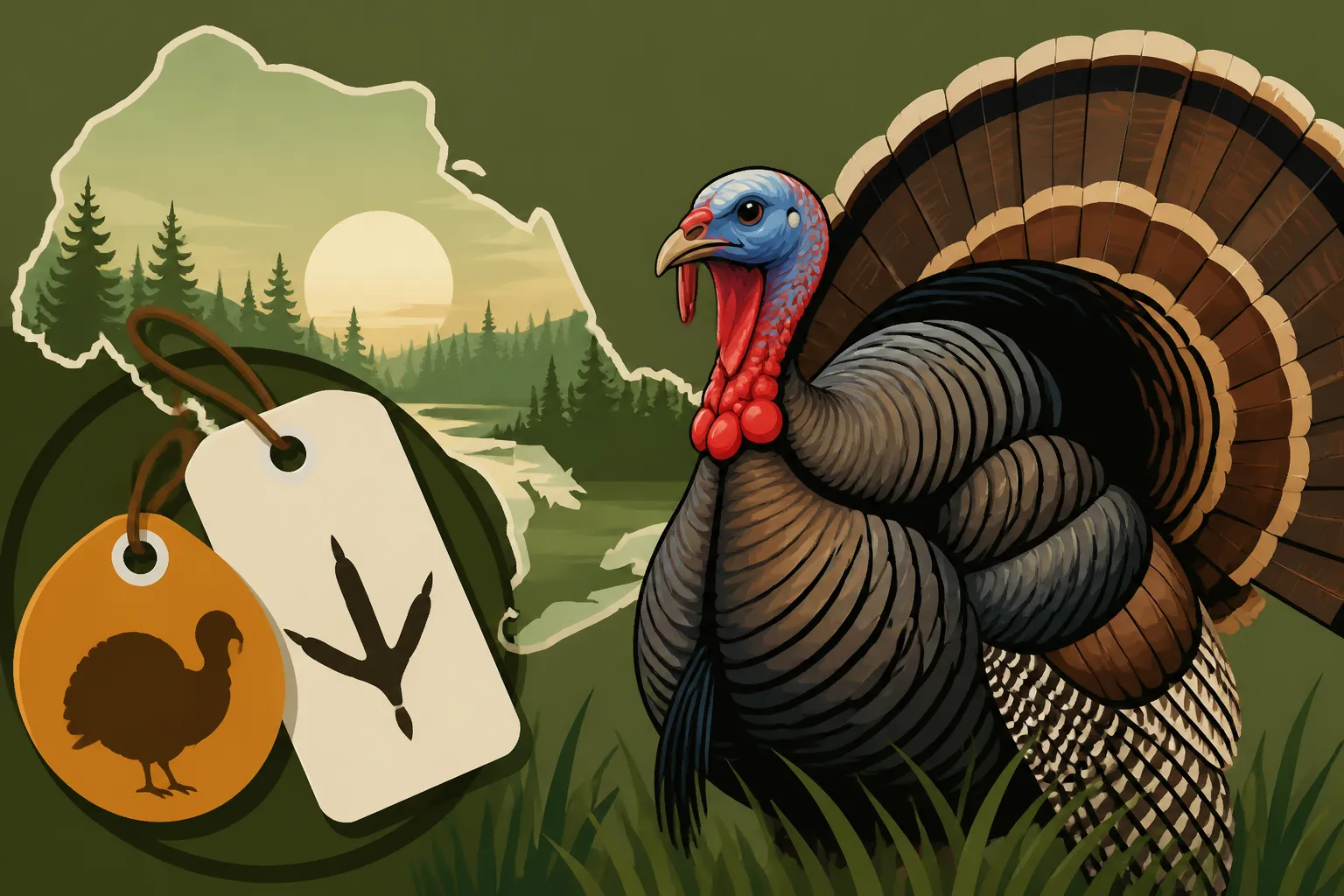
After securing your general resident or non-resident hunting licence, your next crucial step is to purchase a wild turkey licence. This isn't just a piece of paper; it's a specific permit that includes your wild turkey tag. This is a common point of confusion: the licence is the tag, or rather, it grants you the ability to harvest a bird and provides the physical tag. You cannot hunt wild turkeys in Ontario without both your general hunting licence and this specific wild turkey licence/tag.
The cost of the wild turkey licence typically covers the provincial administrative fees and directly supports turkey management and conservation efforts. It's a modest investment for the incredible experience of a turkey hunt. When you purchase this licence, you'll receive a physical tag (or tags, depending on the season) that must be carried with you at all times while hunting. It's imperative that this tag is made of a durable, waterproof material, as it will be exposed to the elements in the field. Double-check your purchase to ensure you have the correct tags for the season (spring vs. fall) and the species (wild turkey) you intend to hunt.
Mastering the Wild Turkey Tagging and Validation Process
Successfully harvesting a wild turkey is a moment of pure exhilaration, but the hunt isn't truly over until you've properly tagged and reported your bird. This is a critical step that ensures legal compliance and contributes valuable data to wildlife management.
Tagging Your Harvest Properly
The instant you've harvested a wild turkey, your next immediate action must be to properly tag it. This isn't something you can put off until you get back to the truck or camp. Ontario's regulations are clear: the tag must be securely attached to the turkey immediately after it's killed, and before the animal is moved from the kill site. The tag usually has perforations or sections that correspond to the date, and you must notch or punch out the correct month and day of the harvest using a permanent marker or a sharp object. This prevents the tag from being reused, which is a serious violation.
For spring turkey hunting, there's an additional requirement regarding "evidence of sex." Since the spring season is primarily for gobblers, you must leave evidence of sex attached to the bird. This typically means keeping the head attached to the carcass until it's delivered to the place where it will be processed for consumption. This allows conservation officers to easily verify that you harvested a legal bird. For more detailed insights into what constitutes a legal bird and how many you can take, refer to our guide on Ontario Turkey Bag Limits. Always carry a pen or permanent marker with you to fill out your tag accurately and legibly.
Mandatory Harvest Reporting
After tagging your bird, the next crucial step is reporting your harvest to the Ministry of Natural Resources and Forestry (MNRF). This isn't optional; it's a mandatory requirement for all wild turkey hunters. This reporting helps wildlife managers track harvest numbers, population trends, and overall turkey health across the province. Without accurate data, it's impossible to make informed decisions about future hunting regulations and conservation efforts.
You can typically report your harvest through the same online Fish and Wildlife Licensing Service portal where you purchased your licence. There's usually a specific section for "Report a Harvest." You'll need to enter information such as your Outdoors Card number, the date of harvest, the Wildlife Management Unit (WMU) where the bird was taken, and the sex of the bird. The deadline for reporting is typically set a few days after the close of the season you hunted in. Failing to report your harvest is a violation and can result in fines or penalties. Make it a habit to report your harvest as soon as you have reliable internet access, don't let it slip your mind! While specific apps might not be for reporting, digital tools like GoHunt can be invaluable for pinpointing your exact location (and thus your WMU) at the time of harvest, ensuring accurate reporting.
Bag Limits and Season Restrictions
Understanding bag limits and specific season restrictions is paramount to legal and ethical turkey hunting. In Ontario, the bag limit for wild turkey typically varies by season.
- Spring Season: Generally, hunters are permitted to harvest one wild turkey during the spring season. This bird must be a male (gobbler or jake) and, as mentioned, evidence of sex must be left attached to the carcass.
- Fall Season: During the fall season, the bag limit also typically allows for one wild turkey, but with a significant difference: it can be either a male or a female (hen). This flexibility makes fall hunting a unique experience.
These bag limits are province-wide, but specific WMU restrictions can apply, so always double-check the current hunting regulations summary before each season. The purpose of these limits is to maintain healthy turkey populations, ensuring sustainable hunting opportunities for years to come. Exceeding the bag limit is a serious offense, and ignorance of the law is not an excuse. Familiarize yourself thoroughly with the current "Ontario Turkey Bag Limits" and "Which Turkey Seasons Allow Either Sex" for the year you plan to hunt. Each wild turkey licence allows you to take one bird, and once that bird is tagged, that specific tag is used up.
Key Season Dates and Wildlife Management Units (WMUs)
Knowing when and where you can hunt is just as important as knowing how to get your licence. Ontario's turkey seasons are specific, and understanding your Wildlife Management Unit (WMU) is non-negotiable.
Spring vs. Fall Turkey Seasons
Ontario offers two distinct wild turkey hunting seasons, each with its own charm and set of rules:
- Spring Season: This is often the more popular season, running through the month of May in most WMUs. It's characterized by the thrilling challenge of calling in a strutting gobbler. The season typically opens around April 25th and runs until May 31st, though exact dates can vary slightly by WMU and year. During the spring, only bearded turkeys (males) may be harvested, and hunters are generally limited to one bird per tag. The focus is on the breeding males, allowing the hens to nest and raise their broods undisturbed. If you're planning a spring hunt, you'll want to review our detailed guide on Ontario Spring Turkey Season Dates. The excitement of hearing that first distant gobble at dawn is something every turkey hunter lives for.
- Fall Season: The fall turkey season is a different beast entirely, usually running through much of October. This season offers a unique opportunity, as hunters are generally permitted to harvest either a male or a female turkey. This can make for a more target-rich environment, but the hunting tactics are vastly different, often focusing on breaking up flocks and calling birds back to you. Fall hunting is often more about observation and stealth rather than aggressive calling. Not all WMUs that have a spring season also have a fall season, so checking regulations is crucial. For specific details on dates and applicable WMUs, consult our article on Ontario Fall Turkey Season Dates.
The tactical differences between these seasons are immense, from the types of calls you use to your approach in the field. It’s worth exploring both to find which suits your hunting style best.
Locating Your Hunting Area by WMU
Ontario is divided into a series of Wildlife Management Units, or WMUs, and these units dictate everything from season dates to bag limits for various species, including wild turkeys. Before you even scout a location, you must identify which WMU it falls within. This is absolutely critical because hunting outside of an open season in a particular WMU, or taking a turkey from a WMU not open for turkey hunting, is a serious offence.
Season dates for both spring and fall turkey hunting can vary from one WMU to another. Some WMUs might have a later start or earlier end date, while others might not have a turkey season at all. Digital tools like GoHunt can be invaluable here, offering detailed maps that clearly show WMU boundaries and often integrate provincial regulations directly onto the map. This allows you to visually confirm your location and ensure you're hunting within the correct zone. When scouting or planning your hunt, always cross-reference your chosen spot with an official WMU map from the MNRF or a reliable mapping application. Even for trip planning, using platforms like GoHunt to mark potential roosts or feeding areas within your chosen WMU can streamline your time in the bush. Take the time to understand the nuances of the WMU system for where you plan to hunt – it will prevent headaches and ensure a legal hunt.
Special Considerations for Youth and Apprentice Hunters
Ontario is committed to fostering the next generation of ethical and responsible hunters. To facilitate this, special programs and rules are in place for youth and apprentice hunters, making it easier and safer for them to learn the ropes under experienced guidance.
The Apprentice Hunter Program
The Apprentice Hunter Program is a fantastic initiative designed to introduce new hunters of all ages to the sport under the direct supervision of an experienced, licenced hunter. It's specifically tailored for individuals who have completed their Hunter Education Course but have not yet completed their Canadian Firearms Safety Course (CFSC), or for those who simply want to gain practical experience before venturing out on their own.
Under this program, an apprentice hunter can hunt while accompanied by a fully licenced mentor. The mentor must be at least 18 years old, hold a valid hunting licence for the game being hunted, and have held an Ontario hunting licence for at least three years. The mentor must directly and actively supervise the apprentice at all times. This means they must be close enough to take immediate control of the firearm or bow and provide direct instruction. For turkey hunting, the apprentice would need to purchase their own wild turkey licence and tag. This program is invaluable for hands-on learning, safety instruction, and instilling a deep respect for wildlife and regulations. It’s an excellent way to gain confidence and practical skills. You can learn more about the specifics in our article on Ontario Apprentice and Youth Hunting.
Youth Hunting Opportunities
Beyond the general Apprentice Hunter Program, Ontario also has specific provisions that encourage younger individuals to get involved in hunting. For youth under 16, there are often reduced licence fees, making it more accessible. However, all youth must still complete the mandatory Hunter Education Course and, if using a firearm, the Canadian Firearms Safety Course, just like adults.
The emphasis for youth hunters is heavily on safety and ethical conduct. When a youth hunter is in the field, they must be accompanied by an adult who holds a valid hunting licence and has either an Outdoors Card or has completed the Hunter Education Course. The adult is responsible for ensuring the youth understands and follows all hunting laws. Many youth find their initial turkey hunting experiences during the spring season, often alongside a parent or guardian, learning the art of calling and patience. These early experiences are vital for shaping responsible hunters who understand their role in conservation. Encouraging youth participation through safe, supervised opportunities helps ensure the future of hunting and wildlife management in Ontario.
Strategies for a Successful and Compliant Turkey Hunt
Beyond the paperwork, a successful wild turkey hunt hinges on solid preparation and an understanding of ethical hunting practices. Being compliant means more than just having the right tags; it's about making smart, informed decisions in the field.
Pre-Season Planning and Scouting
The most successful turkey hunters don't just show up on opening day; they've put in the legwork long before the season begins. Pre-season planning and scouting are absolutely crucial for wild turkey hunting. Turkeys are creatures of habit, often roosting in the same areas, using specific travel corridors, and feeding in predictable spots. Using maps, particularly detailed topographical maps and aerial imagery, is your first step. Digital tools like GoHunt offer excellent satellite imagery and property line overlays that can really give you an edge in identifying potential roosting timber, open fields where turkeys might feed, and water sources.
Once you have a few promising spots identified on your map, it's time for boots on the ground. Scouting involves looking for fresh turkey sign: tracks, droppings, feather piles (especially under roost trees), and dusting bowls. Listen for distant gobblers at dawn and dusk, trying to pinpoint their roost locations. This pre-season intelligence helps you formulate a game plan, whether you're trying to set up on a known roost or predict where a fall flock might be feeding. Knowing the lay of the land, including access points and potential ambush spots, is invaluable. For spring gobblers, understanding their roosting habits is key to getting into position before first light, as highlighted in "Calling a Gobbler Off an Ontario Roost."
Equipment and Best Practices
Having the right equipment and employing best practices will significantly increase your chances of success and ensure a safe, ethical hunt. For firearms, shotguns are most common, typically 12 or 20 gauge, loaded with specialized turkey loads that deliver dense patterns at extended ranges. Ensure your shotgun is patterned correctly with your chosen ammunition before the season. Archery hunters will need a powerful bow and broadheads designed for quick, humane kills on game birds. Always carry a rangefinder to ensure you are within your effective killing range.
Decoy placement is an art form in turkey hunting. Depending on the season and the pressure on the birds, your setup can make or break your hunt. For pressured spring gobblers, subtle, realistic setups often work best, as discussed in "Decoy Placement for Pressured Ontario Gobblers." Camouflage from head to toe, including a face mask and gloves, is essential, as turkeys have incredibly keen eyesight. Beyond equipment, ethical shot placement is paramount. Aim for the head and neck, if possible, to ensure a quick, clean kill. Always be absolutely certain of your target and what lies beyond it. When hunting the fall season, the tactics shift, sometimes involving breaking up flocks and calling them back, as explored in "Hunting the Fall Turkey Season With a Bow." Practice your calling, practice your shooting, and always prioritize safety.
Avoiding Common Pitfalls
Even experienced hunters can make mistakes, but being aware of common pitfalls can help you avoid them. One of the most frequent issues is not thoroughly checking the current year's regulations. Season dates, bag limits, and WMU-specific rules can change annually, so always consult the latest Ontario Hunting Regulations Summary before you head out. Don't rely on last year's knowledge or hearsay.
Another pitfall is improper tag validation or reporting. Forgetting to notch your tag immediately, not properly attaching it, or failing to report your harvest are all serious violations. Keep a permanent marker attached to your tag. Lastly, trespassing is a major issue. Always know who owns the land you are hunting on and obtain explicit permission before hunting on private property. Even if you're hunting Crown Land, be sure you understand the boundaries and any specific restrictions. A small mistake in these areas can turn a memorable hunt into a costly and frustrating experience. Take the extra time to plan, prepare, and double-check everything; it's always worth it.
| Feature / Season | Spring Wild Turkey Season | Fall Wild Turkey Season |
|---|---|---|
| Typical Dates | Late April to May 31st | October 1st to 31st |
| Bag Limit | One (1) wild turkey | One (1) wild turkey |
| Legal Harvest | Bearded turkeys ONLY (Gobblers/Jakes) | Any sex (Gobbler, Jake, Hen) |
| Evidence of Sex | Head must remain attached to carcass | Not required to remain attached |
| Hunting Style | Calling gobblers, roost hunting, decoys | Breaking up flocks, scatter calling, ambushing |
| Permitted Weapon | Shotgun, Bow, Crossbow | Shotgun, Bow, Crossbow |
| Licence Required | General Hunting Licence + Wild Turkey Licence/Tag | General Hunting Licence + Wild Turkey Licence/Tag |
| Reporting | Mandatory | Mandatory |
| Key Challenge | Luring wary gobblers, patience | Locating and scattering flocks, re-calling |
Disclaimer
Please remember that hunting regulations in Ontario are subject to change. While this guide aims to be as accurate and comprehensive as possible, it is your responsibility as a hunter to consult the most current official Ontario Hunting Regulations Summary published by the Ministry of Natural Resources and Forestry before each hunting season. This document is the definitive source for all legal requirements and updates.