Hunting a Fencerow Between Two Fields
You've found that perfect stand location overlooking a sprawling field, but the deer seem to materialize out of thin air, always just out of range, never quite where you expect them. It’s a classic frustration, isn't it? Many hunters overlook the subtle, linear features that funnel deer like a magnet: the humble fencerow. This guide is your deep dive into understanding, scouting, and effectively hunting these often-underestimated game highways right here in Ontario.
Why Fencerows Are Ontario Deer Magnets
Fencerows, those narrow strips of uncultivated land often lined with trees, shrubs, and old fence posts, might seem insignificant in the grand scheme of a vast Ontario landscape. Yet, for deer and other wildlife, they are nothing short of vital. They’re the subtle highways and hidden cafeterias that connect disparate habitats, offering security and sustenance in a world increasingly carved up by agriculture and development. Ignoring them is like ignoring the main road in favour of bushwhacking; you might get there, but you’re missing the obvious, well-trodden path.
Natural Travel Corridors and Edge Habitat
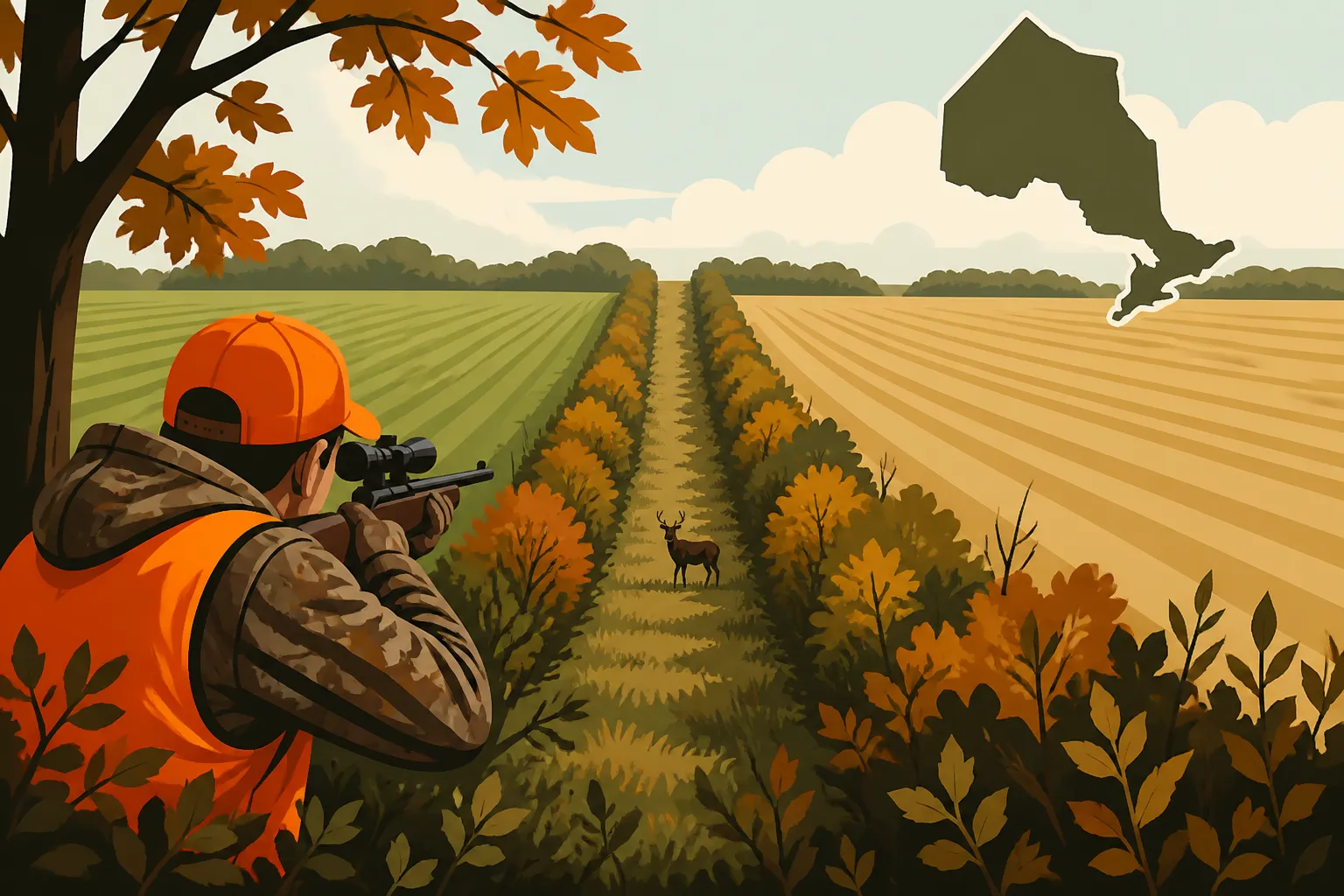
Imagine you're a whitetail deer trying to get from a thick woodlot where you bed down during the day to a rich field of standing corn or winter wheat where you plan to feed all night. Do you walk right out into the wide-open, exposed field where every hawk, coyote, or human eye can spot you? Not if you can help it. This is where the fencerow shines. It offers a continuous line of cover, a leafy tunnel that allows deer to move with a sense of security between these critical bedding and feeding areas. They can travel unseen, often only a few yards from an open field, using the natural screening of the saplings, mature trees, and tangled brush that have grown up along these boundaries.
This phenomenon is often called the "edge effect." The transition zone where the fencerow meets the cultivated field creates a microhabitat that is incredibly rich. You'll find a greater diversity of plant life – the field crops on one side, and the native trees and shrubs of the fencerow on the other. This means more food options, from the protein-rich alfalfa or clover in a hayfield to the wild berries, acorns, or woody browse growing right in the fencerow itself. Deer don't just use them for travel; they'll often hold up in a particularly thick section of a fencerow during the day, especially if it offers a good vantage point to observe the surrounding area before venturing out. It's a prime example of how deer leverage every piece of available cover to their advantage, making the fencerow a critical piece of their daily routine, whether you're hunting deer in Southern Ontario farmland or those more scattered bush lots further north.
Food Sources and Thermal Cover
Beyond being mere travel routes, fencerows are often veritable pantries for deer and other game. Because these strips of land are typically left undisturbed by farming equipment, they become havens for a variety of native plants that deer browse on throughout the year. Think about the wild apple trees that might have sprouted from an old dropped core, the patches of wild raspberry or blackberry bushes, or the oak and beech trees dropping acorns in the fall. These natural food sources complement the agricultural offerings of the adjacent fields. A deer might pick through a fencerow for various browse and berries before hitting the corn or bean field, adding dietary diversity and reducing their exposure time in the open.
Furthermore, these linear patches of dense vegetation provide invaluable thermal cover. When those biting Ontario winds whip across open fields in late fall or deep winter, a thick fencerow can offer significant shelter. Deer will often bed down on the leeward side, protected from the worst of the elements. In the heat of early season, the shade provided by mature trees within the fencerow offers a cool respite. This dual benefit of food and shelter makes fencerows incredibly attractive, year-round. It's not just deer either; you'll often find rabbits, pheasants, and even wild turkeys utilizing these same features, seeking cover, food, and escape routes. Understanding this complete ecosystem that a fencerow creates is key to unlocking its full potential as a hunting ground.
Scouting and Interpreting Fencerow Sign
You can’t just walk up to any fencerow and expect to find prime hunting. Like any good whitetail spot in Ontario, it requires meticulous scouting. The beauty of fencerows is that deer sign often gets concentrated and is easier to read compared to vast, open woods. However, you need to know what you're looking for and how to interpret the subtle clues the deer leave behind. Tools like GoHunt can be invaluable for initial mapping and identifying potential hotspots from home before you even set foot in the field, allowing you to visualize terrain and cover that might be less obvious on the ground.
Reading Tracks and Rubs
When you’re walking a fencerow, the ground itself becomes your storybook. Fresh deer tracks are the most obvious indicators of activity. Look for clear, sharp impressions in soft earth, especially after a rain or a light snow. The key is freshness: older tracks might be blurred by weather, but fresh tracks will have crisp edges. Pay close attention to the direction of travel. Are most tracks heading from a woodlot towards a field in the evening, or vice-versa in the morning? This helps establish the daily pattern of movement. If you find multiple, well-worn trails running parallel to each other within the fencerow, or converging at a specific point, you’ve likely found a primary travel route. Sometimes, if the fencerow is particularly overgrown, you might even spot tunnels or "runways" worn into the vegetation where deer consistently push through.
Rubs are another critical piece of the puzzle. As bucks move along fencerows, especially during the pre-rut and rut, they'll often stop to rub their antlers on small trees and saplings. Look for these signs, paying attention to the size of the rub – bigger rubs often indicate bigger bucks. Fresh rubs will have bright, raw wood exposed, while older ones will start to darken. The location of rubs can tell you a lot about a buck's travel patterns. Are they scattered, indicating casual movement, or are they concentrated along a particular stretch, signaling a preferred travel route or an area where a buck might be marking territory? Identifying a "rub line" along a fencerow, especially one leading towards a known bedding area or a funnel, is a major breakthrough in your scouting efforts and gives you solid intelligence for hunting the rut in early to mid November.
Locating Scrapes and Entry/Exit Points
While rubs show where bucks are expressing dominance, scrapes are more direct communication hubs, particularly significant during the breeding season. A scrape is an area on the ground, usually under an overhanging branch (the "licking branch"), that a buck has pawed clean, then urinated and deposited scent from glands on his legs and forehead. Primary scrapes are often larger and are revisited repeatedly, sometimes year after year. Secondary scrapes are smaller and more numerous, scattered along travel routes. Along a fencerow, look for scrapes, especially at junctures, bends, or where the fencerow meets a distinct change in habitat. These are places where bucks feel secure enough to stop and leave their calling card for does.
Even more crucial than scrapes, in many cases, are the specific entry and exit points deer use to slip into and out of fields from the fencerow. These are often subtle and can be just a narrow break in the brush, a dip in the fence, or a slightly more worn path. These points are the prime ambush locations. Deer typically choose the path of least resistance and often prefer to enter a field where they can quickly assess their surroundings before committing. Wind direction is incredibly important here; deer will almost always try to approach an open field with the wind in their favour, or at least quartering, allowing them to scent-check for danger. By identifying these specific ingress/egress points and understanding how the wind affects a deer's approach, you can narrow down your stand placement to precise, high-odds spots. Using a digital mapping system like GoHunt to mark these points, along with prevailing wind directions, can transform your scouting into a strategic hunting plan.
Effective Hunting Strategies for Fencerows
Once you've done your homework and identified promising fencerows and key deer sign, it's time to think about putting theory into practice. Fencerows demand a specific set of tactics because of their linear nature and the way deer interact with them. It’s not just about finding a fencerow, but understanding how to hunt that specific fencerow effectively. This involves careful stand placement, meticulous scent control, and impeccable timing.
Stand Placement and Wind Direction
This cannot be stressed enough: wind direction is absolutely paramount when hunting a fencerow. Deer use fencerows for security, and they rely heavily on their sense of smell to detect danger. If your scent is blowing into the fencerow or out into the field where deer are likely to approach, your hunt is over before it begins. You need to set up so your scent cone blows away from where the deer are expected to come from and travel. This often means having multiple stand locations for different wind directions, or at least understanding when a particular fencerow is huntable based on the wind. For example, if deer are entering a field from the east along a north-south fencerow, you’d want a west wind to blow your scent into the open field and away from their approach.
When it comes to the type of setup, you have options. A tree stand is often ideal if there are mature trees within or along the edge of the fencerow, offering elevation and a better view into both the fencerow and the adjacent field. Hanging a stand on an Ontario bush edge or within the fencerow itself can provide excellent camouflage, especially for bowhunting during when Ontario's bow season runs. If suitable trees are scarce or you prefer to hunt from the ground, a well-placed ground blind can work wonders. Ensure your blind is brushed in naturally and blends seamlessly with the fencerow's vegetation. The key is to be absolutely undetected. This includes careful approach and exit paths, using the fencerow's cover to slip in and out without spooking deer. Before heading out, always double-check the wind forecast and consult your GoHunt app for marked stand locations and how they relate to the predicted wind for the day.
Timing Your Hunt and Approach
The "when" and "how" of your hunt are just as critical as the "where." For fencerows, especially those connecting bedding and feeding areas, the prime hunting times are almost always dawn and dusk. Deer will be using these corridors to move from bedding to feeding in the late afternoon and evening, and back to bedding in the morning. However, during the peak of the rut, bucks might cruise fencerows at any time of day, searching for does. This is when sitting all day in an Ontario blind can pay off, as activity can be sporadic but intense.
Your approach to the stand must be as stealthy as possible. Avoid walking directly down the fencerow if you can help it, as this will contaminate the very travel corridor you're trying to hunt. Instead, use parallel cover, the edge of an adjacent field (if it offers concealment), or even a ditch line to get to your setup without alerting deer. Scent control is paramount during this phase too. Wear clean clothes, use scent-eliminating sprays, and play the wind to ensure your approach is undetected. Once in your stand, remain still and minimize movement. Remember, deer are using these fencerows for security; any deviation from what they perceive as normal will quickly put them on high alert. During the rut, don't be afraid to try rattling and calling Ontario whitetails from your fencerow stand. The confined nature of the fencerow can make calling very effective, as the sounds tend to funnel along the corridor.
Common Mistakes and How to Avoid Them
Even with the best intentions and thorough scouting, hunting fencerows can present unique challenges. It’s easy to make a mistake that sends deer scattering, turning a promising location into a barren stretch overnight. Learning from common pitfalls is just as important as mastering the effective strategies.
Overlooking Pressure and Scent Management
One of the biggest mistakes hunters make when targeting fencerows is underestimating the impact of human pressure and poor scent management. Because fencerows are such well-defined travel corridors, they can quickly become "burned out" if not hunted carefully. Every time you walk down a fencerow to scout or access your stand, you're leaving a significant scent trail. Deer are incredibly sensitive to human odour, and a single careless entry or exit can cause them to abandon that particular stretch for days, or even weeks. It's a cruel truth: the easier a spot is to access, the more likely it is to be pressured.
To avoid this, treat every step you take near or within a fencerow as if a deer is watching you. Prioritize scent control for whitetails in Ontario religiously. This means washing your hunting clothes in scent-free detergent, storing them in airtight containers, wearing rubber boots to minimize ground scent, and using scent-eliminating sprays on your person and gear. Most importantly, always, always play the wind. Have alternative stand locations for different wind directions, and if the wind isn't right for your primary spot, don't hunt it. It’s better to stay home or hunt a less ideal spot with the right wind than to compromise a prime fencerow with poor scent discipline. Remember, deer might tolerate some pressure in larger woodlots, but in linear features like fencerows, they feel more exposed and are quicker to reroute if they detect danger.
Ignoring Adjacent Cover and Field Edges
Another common pitfall is focusing so intently on the fencerow itself that you neglect the broader landscape it's part of. While fencerows are excellent travel routes, deer rarely exist in isolation. They are constantly interacting with the surrounding habitat – the sprawling fields, the distant woodlots, the hidden swamps, and even other smaller patches of cover. If a fencerow becomes too pressured, or if deer sense danger on it, they might very well skirt it entirely, using parallel cover, a ditch, or even just the very edge of the field, just out of effective range.
A savvy hunter needs to view the fencerow as a component of a larger system. How does it connect to a cedar swamp edge where deer might yard up in deep snow? Does it lead to an old growth forest or a thick clear-cut? Observe the field itself – is it a standing corn field edge that provides additional cover and food, or a freshly cut soybean field at dusk where deer might be more wary? Sometimes the deer will use the fencerow to get close to the field, then cut out into the field slightly, or use a low dip in the terrain to travel just off the fencerow. Be prepared to adapt. This might mean setting up slightly off the fencerow, or having a secondary stand that allows you to cover these subtle alternative travel routes. Think of the fencerow not as the only option, but as the primary conduit within a network of deer movement. Understanding this entire network is what turns a good hunter into a consistently successful one.
Here's a quick look at how various factors influence your fencerow stand choice:
| Factor | Ideal Fencerow Stand Placement | Considerations to Avoid |
|---|---|---|
| Wind Direction | Upwind of expected deer travel, blowing scent into open field or non-deer areas. Multiple setups for varying winds. | Downwind or crosswind of primary travel routes, blowing scent directly into the fencerow. Relying on a single stand regardless of wind. |
| Cover/Concealment | Within dense brush or a mature tree that breaks up your outline, offering a clear shot but keeping you hidden from multiple angles. Natural back cover. | Exposed position against the sky or open field. Setting up where movement will be easily detected. Too much foliage obstructing shooting lanes. |
| Access Route | Approach and exit silently using topography, parallel cover (ditches, other tree lines), or the field edge (if under cover of darkness) to avoid contaminating the fencerow. | Walking directly down the fencerow itself. Walking across open fields in daylight. Not having a distinct, quiet entry/exit path. |
| Deer Sign | Overlooking a fresh rub line, active scrape, or consistent tracks at a pinch point or entry/exit. Positioning overlooking a primary travel route or funnel. | Setting up where sign is old or sporadic. Ignoring the specific entry/exit points in favor of a "general" spot. |
| Time of Day | Morning: Position between feeding and bedding. Evening: Position between bedding and feeding. During rut: Any time, but focused on cruising bucks. | Hunting midday during non-rut periods when deer activity is typically low. Not adjusting tactics for seasonal changes in deer movement. |
| Shot Opportunities | Clear shooting lanes for bow or firearm at expected deer ranges. Maximize visibility down the fencerow and into adjacent field edges. | Overly dense foliage blocking shots. Setting up too far from primary travel routes, resulting in only long shots. |
Disclaimer
Hunting is an inherently dangerous activity. Always prioritize safety, adhere to all local, provincial, and federal hunting regulations, and be aware of your surroundings. The information provided here is for educational and entertainment purposes only and should not replace proper hunter education and experience. Ensure you have all necessary licences and validations before heading into the field.