Breaking Up a Fall Turkey Flock
There's nothing quite as frustrating as seeing a massive flock of fall turkeys, all strutting and feeding, only to have them totally ignore your most persuasive calls. It feels like you're talking to a brick wall, right? Fall turkey hunting often demands a completely different approach than the spring, and this guide is here to walk you through one of the most effective strategies: breaking up that stubborn flock to turn the odds in your favour.
Understanding Fall Turkey Behavior and Why Scattering Works
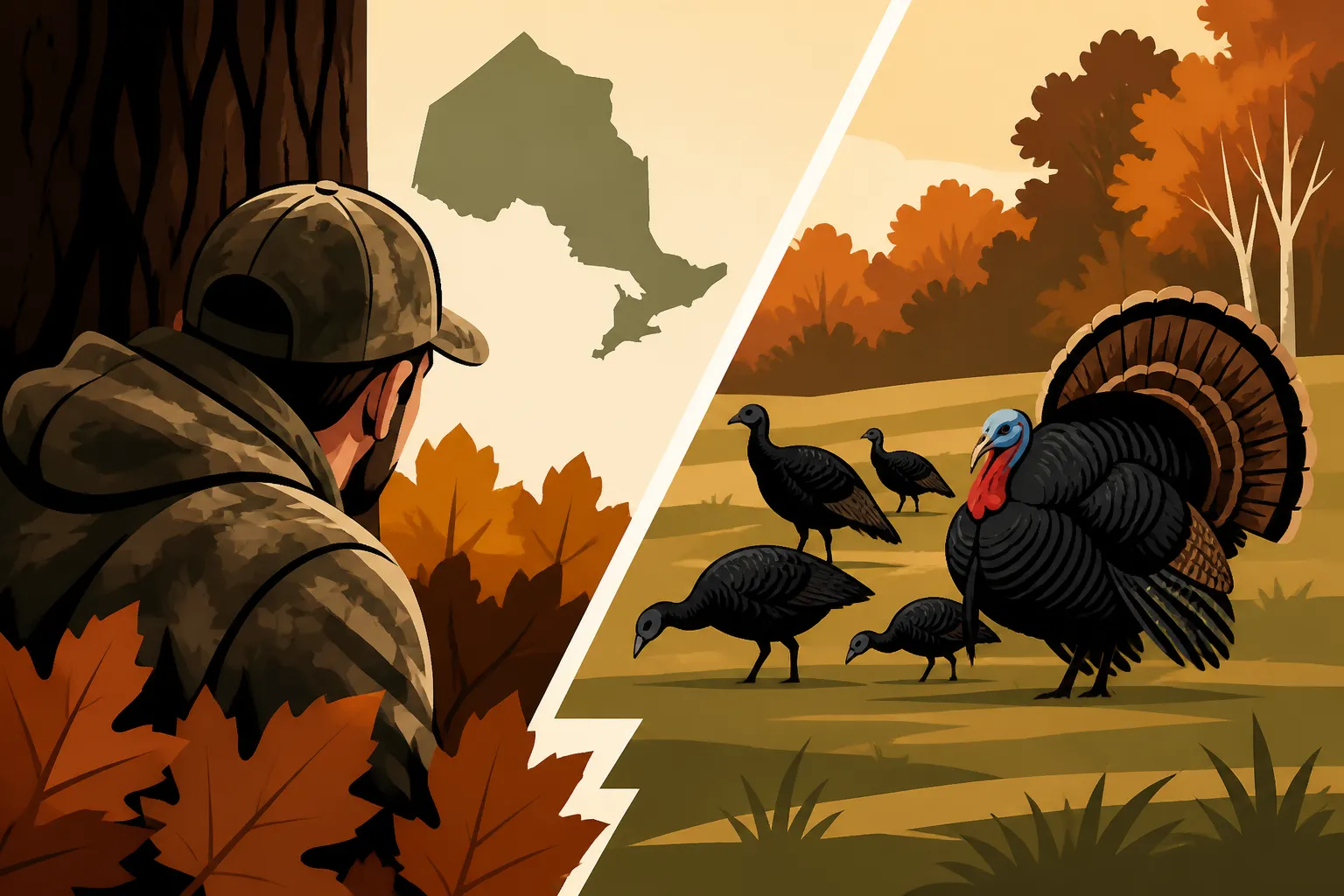
When you’re out in the Ontario bush in the fall, you’ll quickly notice that turkeys behave a lot differently than they do in the spring. Gone are the days of territorial gobblers strutting and responding aggressively to hen calls. In autumn, the focus shifts to survival, food acquisition, and maintaining the social structure of the flock. These birds often form large, cohesive groups, primarily led by experienced hens with their broods, joined by jakes and even some satellite gobblers. They move across the landscape as a unit, feeding on acorns, agricultural leftovers in farm country, and insects, constantly communicating through soft clucks and purrs to keep everyone together.
This strong social bond is precisely why scattering a fall flock is such a potent tactic. Turkeys have an innate, powerful drive to regroup once they've been separated. It’s a survival mechanism; a single, lost turkey is far more vulnerable to predators than one within a large group. When you break up a flock, especially a family group, you’re not just scattering birds; you’re activating their deep-seated instinct to re-establish contact and gather back together. This primal urge is what makes them responsive to calling after the initial chaos, which is often not the case when they're together and content.
The trick lies in leveraging this instinct. Instead of trying to call a content, cohesive flock, which rarely works, you force them into a situation where they want to be called to. Think of it like a lost child crying for its mother – the urgency is entirely different. By creating that feeling of being lost and alone, you make them vulnerable to your imitations of their assembly calls. This strategy is incredibly effective for fall turkeys, whether you're targeting hens, jakes, or even the more elusive fall gobblers that might be tagging along with a hen flock.
The Art of the Flush: Executing the Breakup
Successfully breaking up a fall turkey flock is a dynamic, exhilarating part of the hunt that requires careful planning and swift action. It’s not just about running in screaming; it’s a calculated manoeuvre designed to achieve maximum dispersal.
Scouting for the Right Opportunity
Before you can break up a flock, you need to find one, and finding them means good scouting. Fall turkeys are creatures of habit, often frequenting specific feeding areas like oak ridges loaded with acorns, cornfields, or soybean fields. They also have preferred roosting sites, usually tall, mature trees near water or protective cover. Early morning and late afternoon are prime times to locate birds as they move to and from roosts or active feeding areas. Listen for their distinctive yelps, clucks, and purrs, especially first thing in the morning when they fly down from the roost. A great tool like GoHunt can be invaluable here, allowing you to use satellite imagery to identify potential food sources, roosting timber, and access points. You can mark areas where you find fresh sign – droppings, scratchings in leaves, or feathers – indicating recent turkey activity. If you're hunting in Southern Ontario farmland, these patterns can be quite predictable around agricultural fields and woodlots.
Once you’ve located a flock, the next step is to observe them. How many birds are there? What direction are they moving? Are they feeding casually or are they already on edge? Understanding their current activity helps you plan your approach. If they’re feeding out in the open, it might be harder to get close without detection. If they’re moving through thicker timber, you might have a better chance to close the distance.
The Stalk and the Surprise Attack
The approach is critical. Your goal is to get as close as possible to the flock without being detected, then rush in and scatter them in every direction. Use terrain features like hills, ditches, and dense cover to conceal your movement. Pay close attention to the wind, as turkeys have an excellent sense of hearing and sight, but their sense of smell isn't as developed. Moving quietly, perhaps taking a circuitous route, will help you get within effective flushing range, which is typically 50-75 yards. You don't want to be too far away, or they might just run a short distance and regroup.
When you’re ready to make your move, it's all about shock and awe. This isn't a stealthy stalk for a shot; it's a full-on charge. Run directly at the flock, shouting, waving your arms, and making as much noise as possible. The objective is to create absolute pandemonium. You want them to panic and fly or run in as many different directions as possible. The more scattered they are, the better your chances of calling them back in. Don't worry about being quiet or subtle; subtlety is the enemy here. You want chaos.
Observing the Dispersal and Setting Up
As the turkeys explode into the air or sprint into the underbrush, pay close attention to which way they go. Note where the majority of the birds fly or run. Did they fly across a creek? Did they run up a specific ridge? This information is gold, as it tells you where they aren't and helps you predict where they might try to regroup. This is also where having a hunting partner can be a huge advantage. One hunter can execute the flush while the other observes the dispersal from a strategic vantage point, noting flight paths and landing zones.
Once the dust settles, the most important thing is to resist the urge to immediately start calling or moving after them. You need to give the birds time to settle down and feel truly "lost." Find a good, concealed spot to set up, ideally near the point of the flush, but in a location that offers good visibility and clear shooting lanes in the directions you anticipate birds will return from. A big tree with good back cover, or a natural blind along a bush edge or a hardwood ridge, can work perfectly. The waiting game now begins.
It's tempting to think you need to chase them, but patience is your best friend at this stage. Give them 15 to 30 minutes, sometimes even longer if the area is particularly thick or if the initial scatter wasn't as wide as you'd hoped. During this time, the turkeys will start to feel the isolation, and their instinct to re-flock will intensify.
Calling Strategies After the Flock is Scattered
Once you’ve successfully scattered the flock and found your hiding spot, the real calling game begins. This isn’t like spring gobbler hunting where you’re trying to entice a dominant tom. In the fall, you’re playing on the turkeys’ deep-seated need to find each other again.
The Waiting Game and First Calls
The absolute first rule after a flush is patience. Resist the urge to call immediately. The birds are disoriented and likely still on high alert. Give them at least 15 to 20 minutes, sometimes even a half-hour, to settle down and start feeling the separation anxiety. They’ll likely be trying to get their bearings and listening for familiar sounds.
Your first calls should be soft, almost hesitant, mimicking a lost turkey trying to re-establish contact. Think about a young poult or hen that has lost its family. The most effective calls are the "ke-ke" run or assembly yelps.
- Ke-ke Run: This is a series of sharp, pleading whistles, often followed by a few soft yelps. It sounds like a lost young bird. You can create this with a diaphragm call or a high-pitched box call. Start with a few ke-kes, then listen intently. Wait several minutes. If no response, try again, perhaps a little louder.
- Assembly Yelps: These are typically longer, more drawn-out yelps than what you might use in spring, often in a series of 5 to 10 notes, signifying a bird trying to gather the flock. These calls are meant to be heard from a distance.
The key is to listen more than you call. Turkeys will often respond with soft clucks, purrs, or even distant yelps. Pinpoint the direction of the response, and then adjust your calling to sound like you’re coming from that direction, or simply continue with the lost calls to draw them in. You might even find success with specific calls for different situations, such as when you are Calling a Gobbler Off an Ontario Roost if you know a tom was part of the scattered group.
Decoy Use in Fall
While not as universally critical as in spring, decoys can sometimes play a role in fall hunting after a breakup. A single hen or jake decoy can offer visual reassurance to an approaching bird that is still a bit wary. However, be cautious; some hunters find fall turkeys to be more wary of decoys if they've been pressured. If you do use them, keep them simple and realistic. Don't overdo it with multiple, aggressive-looking decoys. A simple lone hen or jake, positioned where approaching birds can see it, is often enough. For more tips on visual aids, you might refer to advice on Decoy Placement for Pressured Ontario Gobblers.
Mastering the Setup
Your setup location is paramount. You need to be completely concealed, as turkeys have incredible eyesight. Back yourself up against a wide tree or into a dense thicket. Ensure you have clear shooting lanes in the direction(s) you expect birds to approach from. Turkeys are notorious for "hanging up" just out of range, especially if they spot something amiss. They will circle, they will come in silently, and they will test your patience.
When a turkey responds, don't overcall. Let the bird do most of the work. Call just enough to keep its interest, but don’t give away your exact location. Soft clucks and purrs, mimicking a content bird, can often be the final convincing notes. If the bird seems to be hung up, a very soft, subtle call might just be the ticket. Sometimes, silence is the best call of all, forcing the turkey to come investigate the last known location of the "lost" bird.
Common Challenges and Troubleshooting in the Fall Woods
Even the best-laid plans can hit snags in the dynamic world of fall turkey hunting. Understanding common challenges and having a few troubleshooting tactics up your sleeve can make all the difference between a frustrating day and a successful one.
Reluctant Flocks and Poor Dispersal
Not every flock will scatter perfectly. Sometimes, a flock will only run a short distance, or fly to a nearby tree and simply observe you, seemingly unfazed. This is particularly common if you fail to get close enough before the flush or if the terrain funnels them into a tight group instead of scattering them wide. If this happens, don't despair, but recognize that your chances of calling them back in quickly are diminished.
- Re-flush: If they didn't scatter well, you might need to attempt another flush. Circle around, try to get ahead of them, and hit them again with another aggressive charge. The goal is maximum confusion and dispersal.
- Change Tactics: If a re-flush isn't feasible, or if they've completely shut down, it might be time to change your location. Move to another area you've scouted, or consider still-hunting for a while, perhaps along a Hunting a Hardwood Ridge for Whitetails or a promising Hunting a Bush Edge. Sometimes, just giving them a lot of space and time will cause them to regroup later, offering another chance.
The Dreaded "Hang-Up"
This is perhaps the most common frustration for turkey hunters, regardless of the season. A bird responds enthusiastically, comes closer, and then suddenly stops, just out of range, often behind some cover, clucking or putting nervously. They know something isn’t quite right.
- Soft Calls and Silence: If a bird hangs up, reduce your calling dramatically. Switch to very soft clucks and purrs, or even go completely silent. Make the turkey believe you are simply a contented bird going about your business, no longer actively trying to find the flock. This can sometimes make them curious enough to take those last few steps.
- Crawling and Adjusting: In some situations, if you have sufficient cover and the wind is in your favor, a very slow, careful crawl to adjust your position might work. However, this is risky. Turkeys are incredibly vigilant.
- Strategic Movement: If you have a partner, one person can try to circle wide and come in from a different angle, making soft calls to draw the bird past the static hunter. This requires excellent communication and safety protocols.
Weather and Environmental Impacts
Weather conditions can significantly impact fall turkey behavior and calling effectiveness.
- Rain: Light rain can actually make turkeys more vocal as they try to keep track of each other. However, heavy rain or strong winds can make it incredibly difficult for you to hear responses and for your calls to carry. On very windy days, try to hunt in more sheltered valleys or dense timber where sound travels better.
- Temperature Swings: Early fall in Ontario can still be quite warm, while late fall can bring freezing temperatures. Turkeys will adjust their feeding patterns based on available food sources and energy needs. Cold weather often makes them more focused on feeding, and therefore potentially more responsive to calls that imply a food source or safe gathering.
Hunting Pressure and Private Land Access
Ontario's public lands, particularly accessible Crown Land, can see significant hunting pressure, especially on opening weekends. This pressure can make turkeys more wary and less likely to respond predictably. If you notice signs of other hunters (trucks parked, boot prints), consider moving to a less pressured area. Using a mapping application like GoHunt can help you identify less accessible pockets of public land or help you visualize land ownership if you’re looking to gain permission on private property. For those Hunting Deer in Southern Ontario Farmland, private land access is often the key to finding undisturbed turkeys. Always respect private property boundaries and seek permission before hunting. Understanding Ontario Trespass Law for Hunters is essential for any hunter.
Patience Above All
Perhaps the single most important "troubleshooting" tip is simply patience. Fall turkey hunting, especially after a breakup, is often a waiting game. It takes time for the birds to settle, time for them to feel lost, and time for them to commit to your calls. Don’t rush it. Sit tight, stay still, and listen. The reward of seeing a lost turkey come searching for its flock is incredibly satisfying.
Fall Turkey Calling Comparison
Here's a quick look at common fall turkey calls and how they're typically used after a flock breakup:
| Call Type | Description | Primary Purpose After Flush | Notes |
|---|---|---|---|
| Ke-Ke Run | A series of high-pitched, pleading whistles (ke-ke-ke) often followed by soft yelps. | Imitate a lost poult/young hen, create urgency. | Start soft, listen for responses. Don't overdo it. Highly effective for eliciting responses from scattered birds. |
| Assembly Yelp | A series of 5-10 distinct yelps, often longer and more drawn out than spring yelps. | Call the scattered flock back together. | Mimics a hen trying to gather her brood. Can be louder to reach distant birds, but adjust volume based on response. |
| Lost Cluck | A series of soft, single clucks, sometimes with a slight pause between each. | Soft reassurance, confirming presence. | Used to draw a bird the last few yards or to respond to nervous clucks without being too aggressive. |
| Putt (Soft) | A single, sharp alarm note, but when used softly, can signify inquiry or slight unease. | Rarely used intentionally as a primary call. | Avoid using loud putts as they indicate alarm. A very soft, questioning putt might work if a bird is very close and curious, but it's risky. Stick to ke-kes and yelps. |
| Plain Yelp | A generic turkey yelp, similar to spring but generally less enthusiastic. | General communication, can be used sparingly. | Can be mixed in with assembly yelps. Less effective as a primary call for scattered birds than ke-kes or assembly yelps. |
Disclaimer: Hunting laws and regulations in Ontario are subject to change. Always consult the most current Ontario Hunting Regulations Summary available from the Ministry of Natural Resources and Forestry (MNRF) before heading into the field. This guide is for informational purposes only and does not supersede official regulations. Stay safe and hunt ethically.