Hunting a Muskeg Island of Spruce
Ontario spruce islands within muskeg wetlands provide secure habitats and thermal cover for thriving northern game animals.
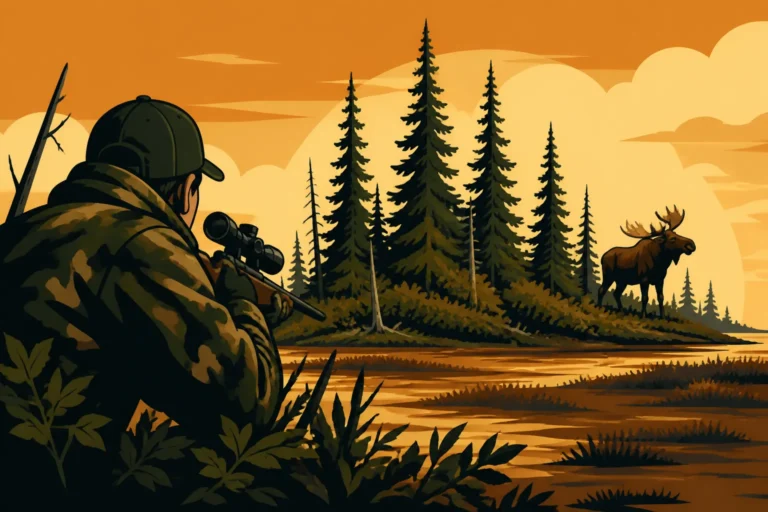
Ontario spruce islands within muskeg wetlands provide secure habitats and thermal cover for thriving northern game animals.
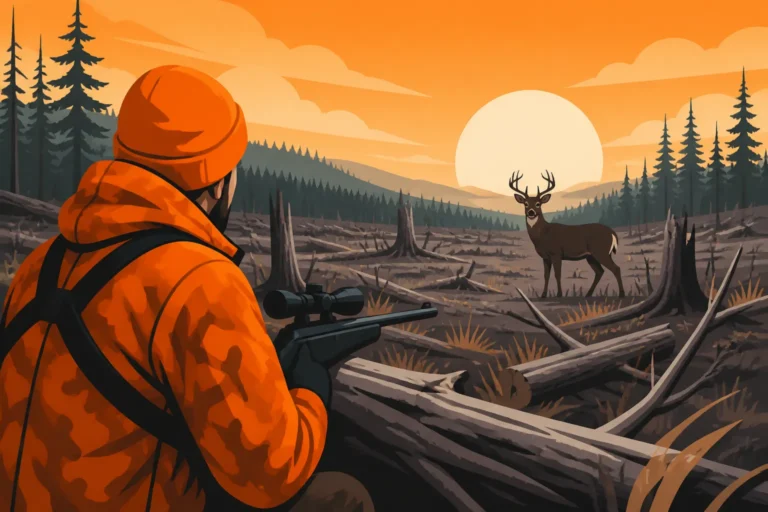
Northern Ontario cutover blocks attract big game, explaining how habitat stages help hunters find moose, deer, and bears.
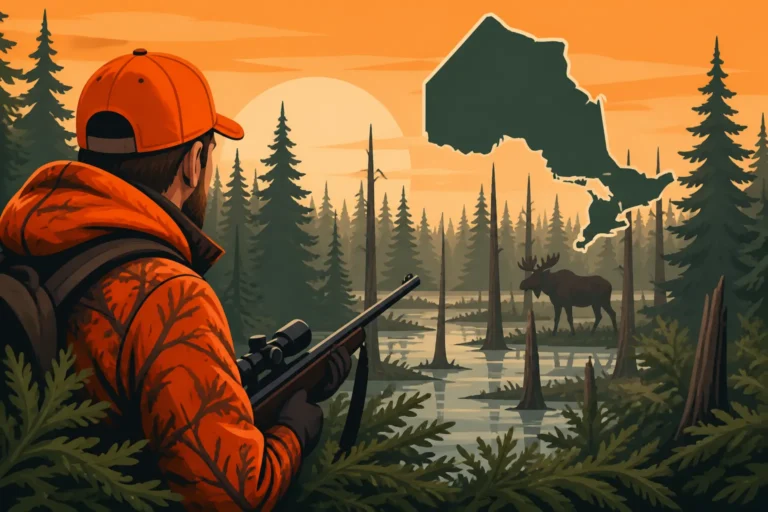
Ontario crown land cedar swamp hunting strategies help hunters locate whitetail deer using thermal cover and winter protection.
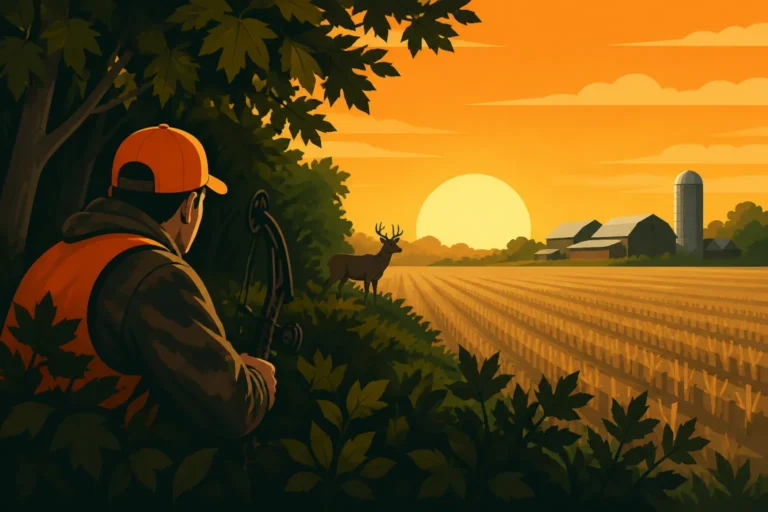
Ontario bush lots bordering active farmland offer deer food and cover, creating predictable movement patterns for hunters.
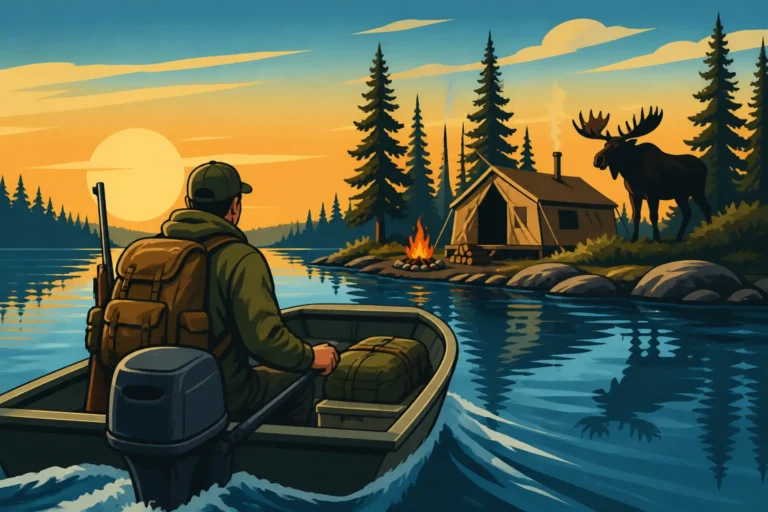
Ontario Crown Land camping by boat explains how to access remote wilderness areas, escape crowds, and hunt deer, moose, or bear.
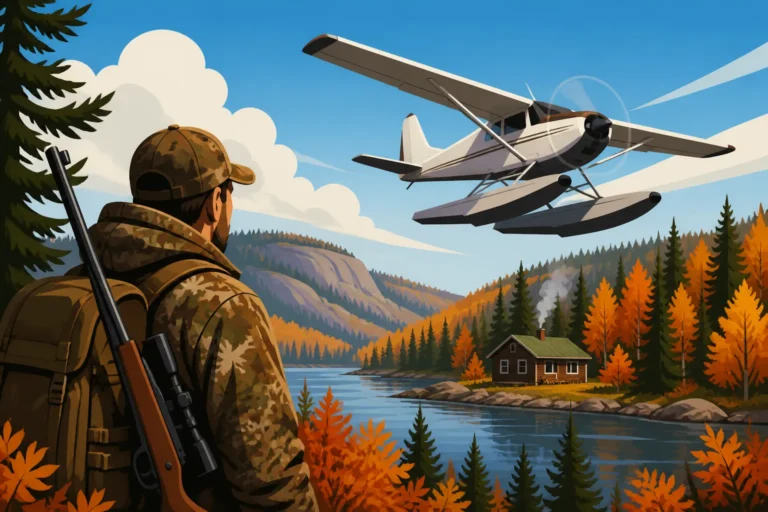
Remote Ontario fly-in camps provide hunters access to untouched wilderness, low pressure moose, black bear, and upland birds.
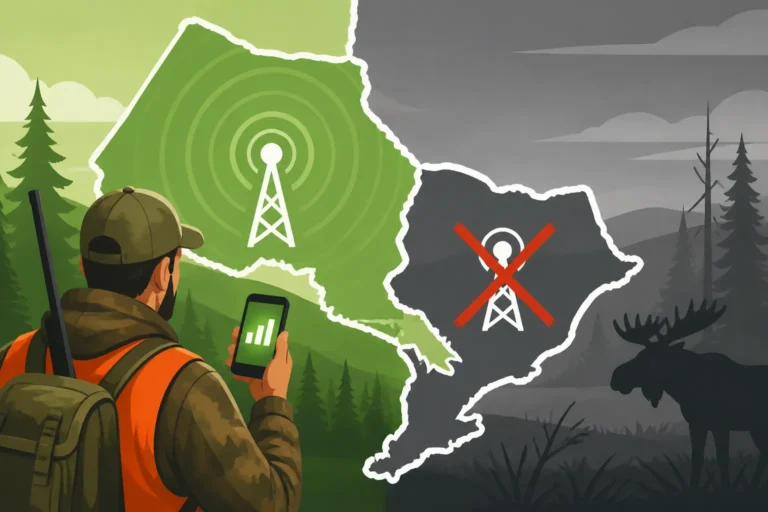
Ontario cell coverage in hunting country vanishes due to remote terrain, Canadian Shield geography, and distance from towers.
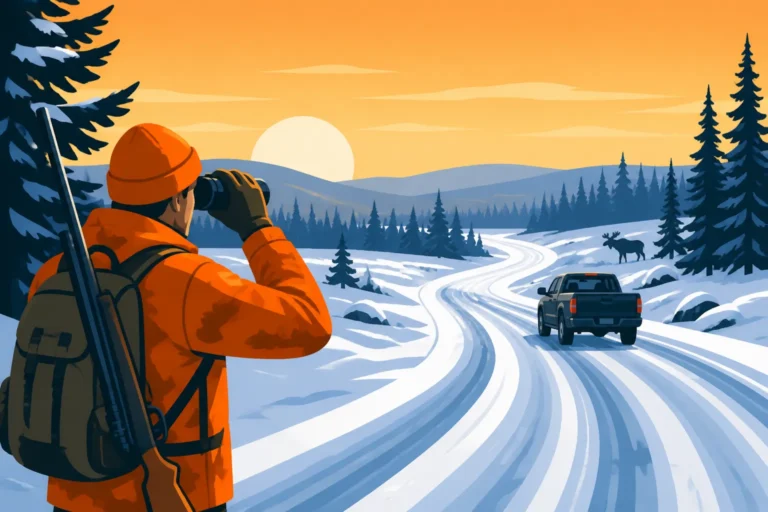
Winter road access in Northern Ontario involves deep snowdrifts, freezing temperatures, and unpredictable seasonal closures for hunters.
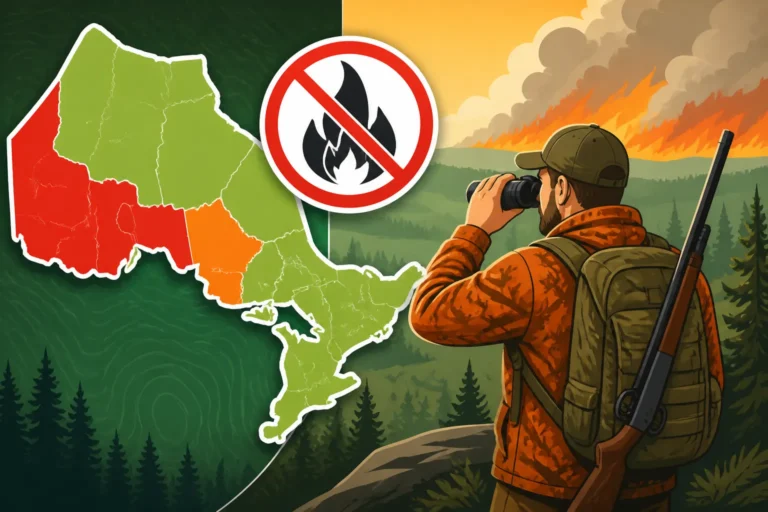
Ontario wildfire closure maps help hunters interpret restricted areas, check access routes, and make safe decisions during hunting trips.
Ontario land closures sources include the Ministry of Natural Resources and Forestry, municipalities, and Conservation Authorities.