Ontario’s Record Black Bear
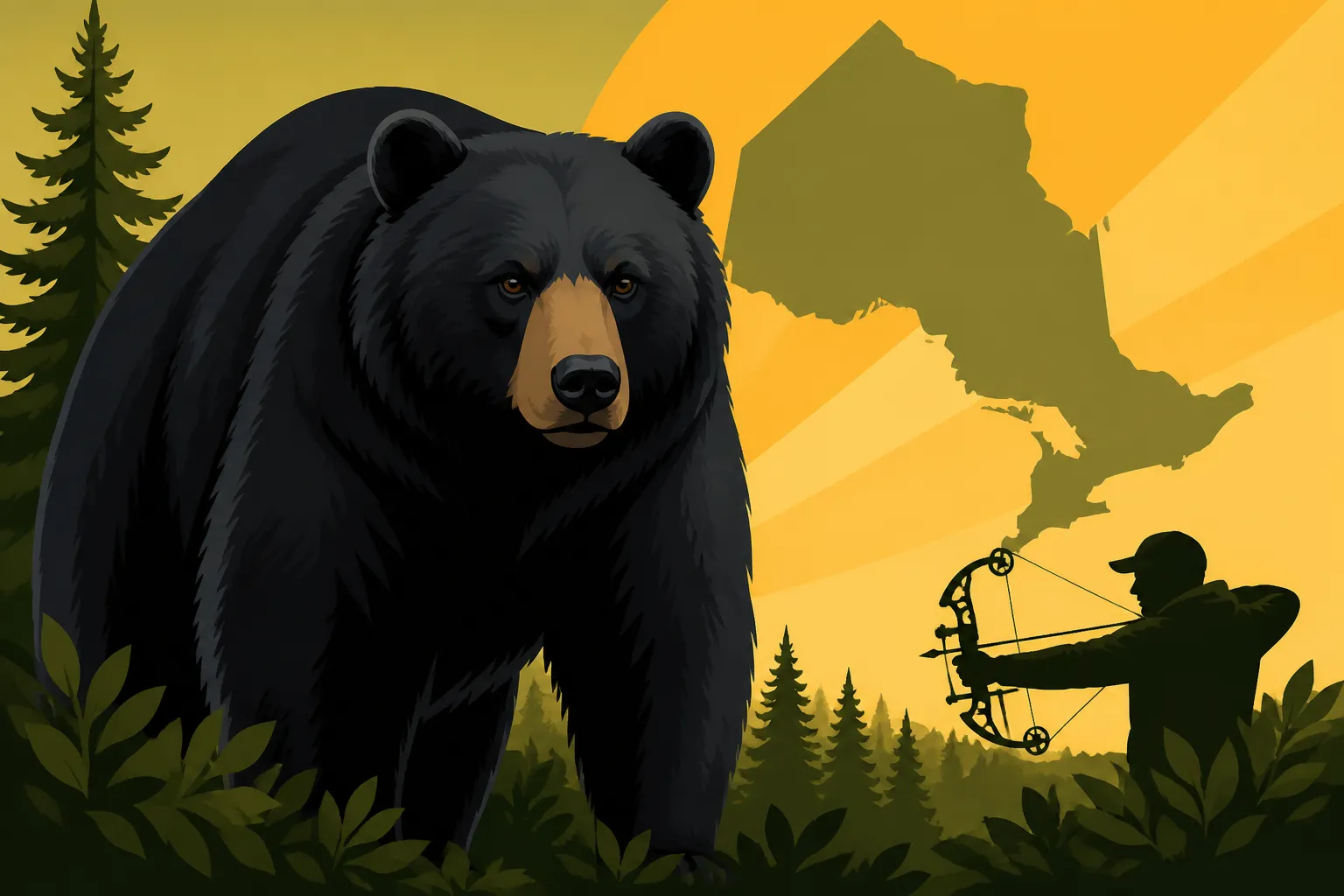
For many hunters, the pursuit of a record-book black bear in Ontario is a dream that fuels countless hours of scouting and planning. It’s not just about taking any bear; it’s about the challenge, the dedication, and the sheer awe of encountering one of these magnificent animals that has grown to truly incredible proportions. This guide will walk you through what it means to hunt for, and potentially harvest, one of Ontario’s legendary black bears, delving into the factors that create these giants and the dedication required to find them.
The Allure of Ontario's Black Bear Records
Ontario’s wilderness, from the dense northern boreal forests to the mixed woodlands further south, is home to a robust black bear population. While seeing any bear is a thrill, the quest for a truly exceptional animal, one that could potentially make it into the record books, is a different beast entirely. Many hunters spend a lifetime pursuing deer or moose, but the sheer power and elusiveness of a truly massive black bear captivates like few other species. It's the ultimate test of patience, woodsmanship, and sometimes, a little bit of luck. The thought of encountering an animal that has thrived for decades in the wild, reaching an almost mythical size, is what drives this particular passion.
Why Ontario Bears Get So Big
You might wonder what it is about Ontario that consistently produces such impressive black bears. It's a combination of several critical factors. First, sheer geographic size and low human population density in vast tracts of the province mean bears have enormous territories to roam with minimal disturbance. They can live out their full lifespans, which is crucial for a bear to reach its maximum size. Secondly, Ontario offers an incredibly diverse and abundant food supply. From early spring vegetation to summer berries like blueberries and saskatoons, fall mast crops such as acorns and beech nuts, and even agricultural crops in some areas, bears have a smorgasbord to fatten up on. These consistent, high-calorie food sources are vital for bears to pack on the weight and grow those massive skulls that record keepers look for.
Genetics play a significant role too; certain regions seem to have populations with a predisposition for larger body and skull sizes. Combine good genes with an undisturbed habitat and a consistent diet, and you have the perfect recipe for a trophy-class animal. Moreover, effective game management strategies have helped maintain healthy bear populations, ensuring that mature bears have the opportunity to continue to contribute to the gene pool. Understanding these elements helps a hunter appreciate the incredible natural process behind every record-class bear.
The Thrill of a Trophy Bear Hunt
There’s an undeniable rush that comes with hunting any big game animal, but the black bear adds a layer of primal excitement. They are intelligent, powerful, and notoriously shy. Tracking a large bear through its territory, trying to decipher its movements and patterns, is an intellectual puzzle as much as it is a physical challenge. The satisfaction of a well-executed hunt, especially when you're targeting a truly exceptional animal, is immense. It’s not just about the size of the animal, but the story of the pursuit itself – the early mornings, the long days spent scouting, the careful setup of a bait site, or the quiet stalk through dense bush.
Many hunters value the experience of being out in the vastness of Ontario's wild places, knowing that a truly enormous bear could be just around the next bend. The focus shifts from merely filling a tag to truly connecting with the wilderness and the formidable creatures that inhabit it. This deep respect for the animal and its environment is a hallmark of ethical hunting, and it’s especially prominent when you're after a once-in-a-lifetime trophy. The memories and the stories forged during such a hunt become cherished parts of a hunter’s legacy, far outlasting the physical trophy itself.
Understanding Ontario's Record Keeping for Black Bears
When people talk about a "record black bear," they're typically referring to bears whose skull measurements meet specific criteria set by recognized conservation and record-keeping organizations. Unlike antlered game, where horn or antler size and symmetry are key, it's the sheer size of the bear's skull that determines its record status. This requires a different kind of appreciation for what makes a trophy bear, moving beyond visual estimation to precise measurement.
Boone and Crockett vs. Pope and Young
The two primary organizations that maintain North American big game records, and specifically black bear records, are the Boone and Crockett Club and the Pope and Young Club. The fundamental difference lies in the hunting method. The Boone and Crockett Club recognizes animals taken with a firearm, while the Pope and Young Club is dedicated to animals harvested with archery equipment. Both organizations use the same rigorous scientific method for measuring skulls, ensuring consistency and fair comparison across all entries. For black bears, it's all about the skull. A bear's skull continues to grow throughout its life, with older bears generally having larger, heavier skulls. This is why age is such a critical factor in producing a record-book animal.
To enter the records, a bear's skull must first meet a minimum score, which varies slightly between the two clubs for their different categories (e.g., Awards, All-Time). An official scorer, certified by the respective club, must measure the skull after it has been properly cleaned and dried for a specific period (usually 60 days) to account for any shrinkage. This meticulous process ensures that only truly exceptional animals, taken under fair chase principles, are recognized for their remarkable size. You can learn more about specific rules in publications like Ontario's Black Bear Rules.
The Skull Measurement Process
The measurement of a black bear skull for record book entry is a precise science, not a casual observation. It involves taking two key measurements: the greatest length of the skull and the greatest width of the skull. These measurements are taken using specific calipers, and fractions are rounded to the nearest eighth of an inch. The total score is the sum of these two measurements. For example, if a skull measures 13 inches in length and 8 inches in width, its score would be 21 inches. This seemingly simple calculation hides a lot of nuance; the scorer must ensure the skull is completely clean of all flesh and membrane, and it must be naturally dry for at least 60 days to prevent further shrinkage.
The greatest length is measured from the most anterior projection of the premaxillae to the most posterior projection of the occipital bone. The greatest width is measured at the widest point of the zygomatic arches. No artificial manipulation or alteration of the skull is permitted. This strict adherence to protocol ensures that every entry is judged on an equal footing, celebrating the natural magnificence of the animal. If you're fortunate enough to harvest a large bear, proper field dressing and skull preparation are crucial steps toward potential record book recognition, and understanding the process helps you properly care for your trophy.
Where Ontario's Biggest Bears Come From
When you hear about colossal black bears being harvested, they often come from specific regions or types of habitat. While a big bear can turn up almost anywhere in the province where bears roam, certain areas offer consistently better odds due to their ecological characteristics and hunting pressure. It’s about more than just numbers; it’s about the quality of the habitat.
Prime Bear Habitat Across the Province
Ontario’s prime black bear country generally lies north of the agricultural belt, stretching across vast expanses of forest. Northwestern Ontario, with its endless tracts of boreal forest, vast lakes, and diverse terrain, is legendary for producing immense bears. Areas around places like Kenora, Dryden, and Thunder Bay are often cited. The mix of wetlands, dense timber, and remote access allows bears to grow old and large without encountering much human interference. Similarly, parts of Northeastern Ontario, including the famous Clay Belt and regions around Sudbury and Timmins, also offer ideal conditions. These areas combine extensive forested areas with natural food sources and often less hunting pressure than more accessible regions. This allows bears to mature, and with age comes size. When you're Scouting a Wildlife Management Unit, look for these characteristics.
The key across these prime areas is a combination of cover, abundant natural food sources, and crucially, minimal disturbance. Bears are creatures of opportunity, and consistent access to high-quality forage throughout the spring, summer, and fall is what fuels their growth. Healthy, mature forests with a diverse understory producing berries, nuts, and other forage are gold mines for bears. Think about areas where they can truly be bears, undisturbed, for years on end.
The Role of Food Sources and Age
The old adage "you are what you eat" holds incredibly true for black bears. A consistent, high-quality diet is paramount for bears to not only survive but thrive and reach their maximum genetic potential. Areas with reliable annual berry crops (blueberries, raspberries, saskatoons), hard mast (acorns, beech nuts), and even agricultural handouts (corn, oats, apples in orchards) contribute significantly to a bear's ability to put on weight. This weight gain isn’t just for survival through winter hibernation; it directly contributes to bone and skull growth. A bear that consistently has access to rich food sources will generally grow larger and heavier than one in a leaner environment. This is why Why Berry Crops Move Ontario Bears is such a critical factor in hunting.
However, food alone isn’t enough. Age is the ultimate determinant of skull size. A bear's skull continues to grow throughout its life, albeit at a slower rate once they reach maturity. A record-book bear is almost invariably an old bear – often 10, 15, or even 20+ years old. These bears have survived numerous hunting seasons, avoided other predators, and navigated the challenges of their environment for a significant portion of their lives. This longevity, coupled with excellent nutrition, is what ultimately culminates in those truly massive skull measurements that redefine "trophy." When you're looking at What a Big Boreal Black Bear Weighs, remember it often correlates directly to how old that bear is.
Pursuing a Record Black Bear in Ontario
Hunting a record-class black bear in Ontario is not for the faint of heart; it requires dedication, strategy, and an unwavering commitment to ethical hunting practices. It's a journey that often spans multiple seasons and takes you deep into the heart of Ontario's wild lands.
Scouting for Monster Bears
Scouting for a truly large black bear goes beyond simply looking for tracks or scat. It means understanding bear behaviour, recognizing prime habitat, and spending significant time in the field before the season even opens. Look for signs of older, larger bears, such as enormous rubs on trees, exceptionally wide track prints, or droppings containing large amounts of undigested food in areas with abundant natural forage. Focus your efforts on remote, undisturbed areas where older bears are more likely to reside. This could mean deep bush access, far from roads, or areas with difficult terrain that deters other hunters. Utilizing mapping tools like those offered by GoHunt can be incredibly helpful for identifying potential hotspots, logging cuts, dense cover, and traditional travel corridors.
Understanding seasonal food patterns is crucial. Bears will move to exploit the most abundant food sources. In spring, they might focus on fresh greens and carrion. In summer, they shift to berries. And in the fall, it's all about nuts and any remaining agricultural crops. Identify areas with consistent food supplies, especially in remote locations, and you'll increase your chances of finding an older, larger bear. Consider also areas that have historically produced big bears, as genetics often play a role in local populations. For detailed insights, consult resources on topics like Black Bear Hunting in Ontario and Spring Bear Hunting in Ontario.
Patience and Persistence: The Key to Giants
Hunting a record-book black bear is often a long game. These are not typically animals you stumble upon by accident (though it does happen!). It requires immense patience, whether you are sitting over a well-maintained bait site for hours on end, waiting for a mature boars to show up, or still-hunting through prime habitat, moving slowly and deliberately. You might spend days, or even weeks, without seeing the specific animal you’re after. The willingness to put in the time, to endure the bugs, the weather, and the long stretches of quiet, is paramount. Many hunters will tell you that the biggest bears are the wariest, the most nocturnal, and the least likely to make a mistake.
Persistence also means adapting your strategy if necessary. If a bait site isn't producing the kind of bear you're looking for, don't be afraid to move it or change your approach. If still-hunting isn't yielding results, consider other methods where legal and appropriate. Learning from each outing, even the unsuccessful ones, is part of the process. Remember, these bears have survived for many years by being smart and cautious. Outwitting them requires an equal measure of dedication and cunning. Looking at how an outfitter manages a hunting area can offer insights, as seen in details about Booking an Ontario Black Bear Hunt.
Ethical Hunting and Bear Management
The pursuit of a record-book bear must always be grounded in ethical hunting practices and respect for the animal. This means knowing and adhering to all Ontario's Black Bear Rules, including bag limits, season dates, and reporting requirements. It also means making clean, ethical shots, and ensuring swift recovery of any harvested animal. The goal is to celebrate the animal, not merely to accumulate trophies. For a hunt party, understanding specific rules like Why You Cannot Shoot a Sow With Cubs is critical, and identifying the sex and age of a bear before taking a shot is a key skill to develop when Judging a Boar From a Sow With Cubs.
Beyond individual ethics, hunters play a vital role in bear conservation. Licence fees contribute to wildlife management and research, ensuring healthy populations for future generations. Respecting the resource means understanding that not every hunt will result in a record-book animal, and that the value is in the experience and the sustainable management of the species. Responsible hunting is about striking a balance between personal aspiration and the long-term health of the wildlife we cherish. For non-residents, understanding the requirements for an export permit is key to transporting your trophy, as outlined in Getting a Non-Resident Export Permit.
Factors Contributing to a Trophy Black Bear
| Factor | Description | Hunter's Influence |
|---|---|---|
| Age | Older bears have had more time for their skulls to grow and mature. Many record bears are 10+ years old. | Focus on identifying mature animals, often by physical characteristics like large head, sway back, or worn teeth; sometimes this means passing on smaller bears. |
| Genetics | Some regional bear populations naturally have a predisposition for larger body and skull sizes. | Research historically productive areas. While you can't change genetics, choosing a hunting location known for larger bears increases odds. |
| Food Availability | Abundant, high-calorie food sources (berries, nuts, agricultural crops) allow bears to grow larger and healthier throughout their lives. | Scout areas rich in diverse and consistent food sources. If baiting, ensure the bait is highly attractive and nutritious. |
| Habitat Quality | Undisturbed, vast wilderness with plenty of cover, water, and low human pressure allows bears to live longer and thrive. | Hunt remote areas, away from roads and high-pressure zones. Utilize mapping tools to identify ideal habitat characteristics. |
| Hunting Pressure | Areas with lower hunting pressure allow more bears to reach older age classes, increasing the likelihood of truly mature animals. | Seek out less accessible WMUs or portions of WMUs. Consider going deeper into Crown Land where fewer hunters venture. GoHunt can assist with identifying low-pressure areas. |
| Hunter Skill | Knowledge of bear behaviour, tracking, baiting techniques, and patience are crucial for consistently encountering trophy animals. | Continuous learning, practicing woodsmanship, understanding wind direction, and perfecting your setup are all vital. Consider a guided hunt with a reputable Outfitter to gain experience and local knowledge. |
Ontario truly holds some magnificent black bears, and the pursuit of a record-class animal is a testament to the wild spirit of both the hunter and the hunted. It’s a journey steeped in respect for nature, demanding skill, patience, and a deep appreciation for the opportunities our province offers. Whether you’re setting a bear bait site in Ontario, spending time scouting a Wildlife Management Unit, or patiently Hunting a Fall Bear Bait in September, the experience of being in bear country, knowing a giant might be nearby, is reward enough. The dream of Ontario's Record Black Bear keeps many of us coming back year after year.
Disclaimer
This article is for general informational purposes only and does not constitute professional advice. Laws, prices and regulations vary by location and change over time. Consult a qualified professional for guidance on your specific situation.